

In any functioning democracy, the state’s foremost obligation is clear: protect lives, secure territory, and uphold the rights of citizens. Yet in today, a troubling contradiction continues to define the national security landscape—one that raises urgent questions about priorities, strategy, and political will under the leadership of and the ruling .
Across various parts of the country, citizens have watched a familiar pattern unfold. Peaceful protesters—often unarmed and exercising constitutionally guaranteed rights—are met with swift, coordinated deployments of police and, at times, military personnel. Streets are sealed off, force is projected, and dissent is contained with urgency. The message is unmistakable: the state is capable of rapid mobilization when it chooses to be.
Yet, in stark contrast, the same level of decisiveness appears elusive in the prolonged fight against insurgency. Since 2009, Nigeria has grappled with violent extremism, particularly from groups like and . Despite repeated military campaigns and official assurances, these groups have demonstrated a persistent ability to regroup, adapt, and, in some instances, operate with unsettling visibility.
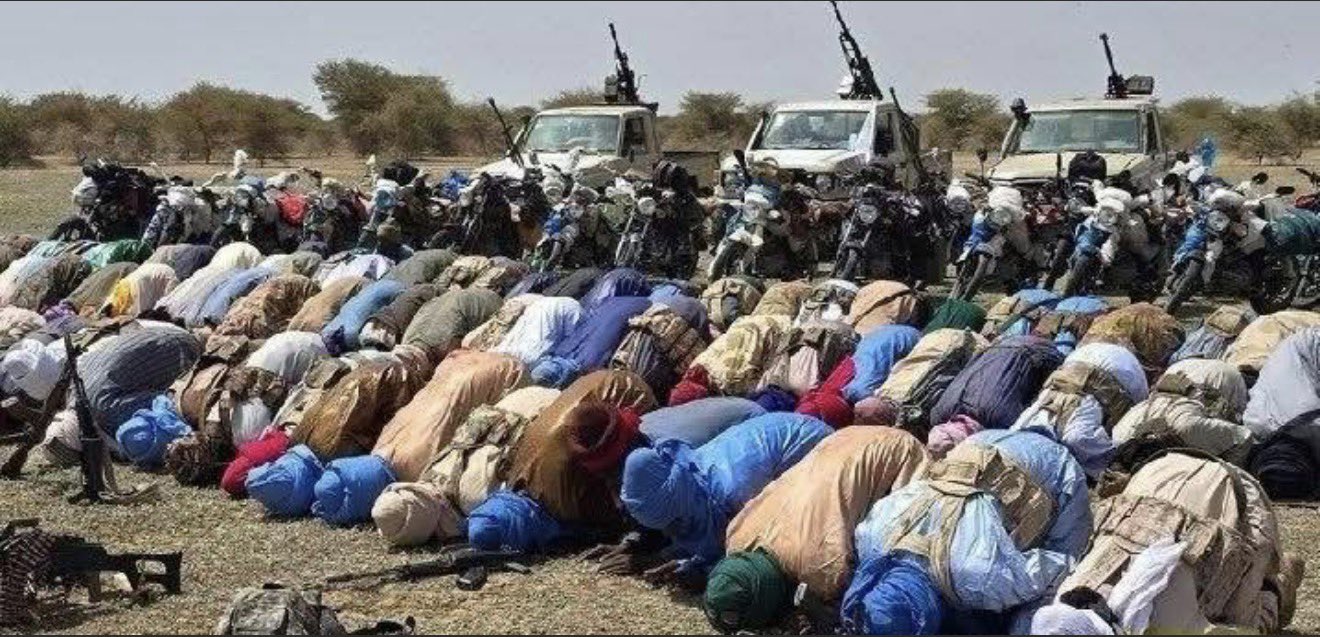
Reports and local accounts—especially from conflict-affected regions—have fueled public anxiety. The imagery is jarring: heavily armed non-state actors reportedly moving in convoys, sometimes in broad daylight, while communities remain vulnerable. Whether every such account is independently verified or not, the consistency of these narratives has deepened a crisis of confidence in the state’s counterterrorism posture.
This disparity—between the state’s assertiveness toward protesters and its perceived restraint or inefficiency against terrorists—has become a defining critique of the current administration. It is not merely a question of optics; it is a question of trust. Why does force appear more immediate and organized when directed at unarmed citizens? Why does the fight against terrorism seem protracted, opaque, and, to many, inconclusive?
Defenders of the government argue that managing protests is a preventive necessity—that any gathering can escalate into violence if left unchecked. They point to the complexities of asymmetric warfare, where insurgents exploit terrain, intelligence gaps, and local grievances to sustain their operations. These are valid considerations. But they do not fully address the perception that the balance is skewed—that the state is more visible in controlling voices than in eliminating threats.
Silence, or at best cautious communication, has further compounded the issue. In moments when citizens expect clarity, reassurance, and demonstrable resolve, official responses often fall short of providing a coherent picture of progress, setbacks, and strategy. This communication gap leaves room for speculation—ranging from allegations of incompetence to darker insinuations of compromise.
For the government, the stakes are profound. Security is not just another policy area; it is the foundation upon which legitimacy rests. When citizens begin to feel that those who bear arms illegally are not being confronted with the same urgency as those who protest peacefully, the social contract begins to fray.
Nigeria’s security crisis is undeniably complex. It demands more than brute force—it requires intelligence-driven operations, community engagement, economic interventions, and regional cooperation. But complexity cannot become an excuse for inconsistency, nor should it justify a posture that appears selective in its application of power.
Ultimately, the question confronting the Tinubu administration is simple yet consequential: What is the true priority of the Nigerian state? Until there is a clear, consistent alignment between words, actions, and outcomes—one that places the protection of citizens above all else—the paradox will endure, and so too will the public’s growing disillusionment.


