

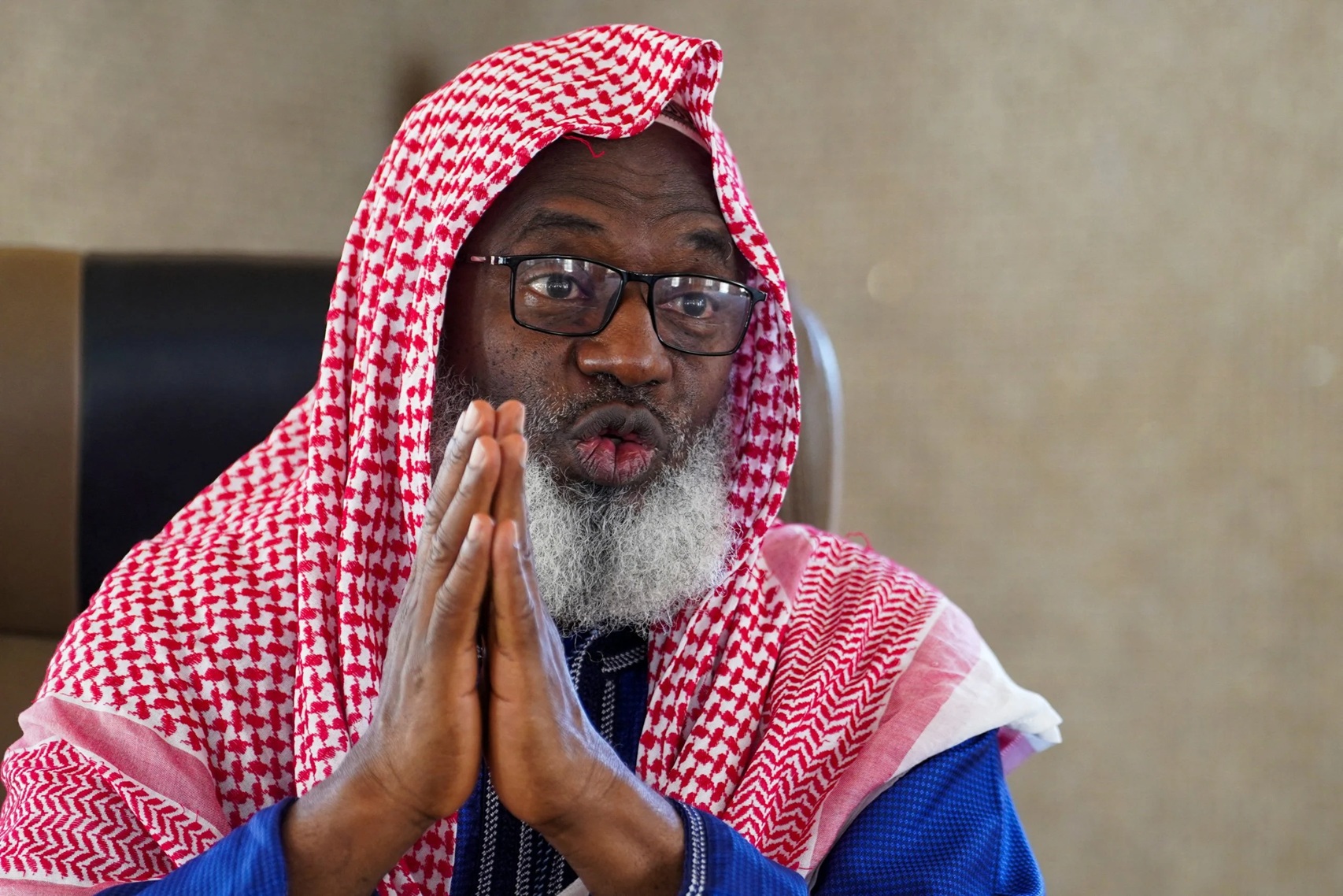
Prominent Islamic cleric, Ahmad Gumi, has once again stirred public debate after questioning the Federal Government’s designation of armed bandit groups as terrorists and advocating renewed dialogue as a pathway to ending insecurity in Nigeria’s North-West region.
In a video clip aired by TVC News that has circulated widely online, Gumi argued that the 2022 classification of bandit groups as terrorists makes negotiation more difficult and could potentially prolong the cycle of violence.
The cleric, who has for years engaged with armed groups and visited bandit camps in efforts he says are aimed at promoting peace, maintained that dialogue and reconciliation remain essential tools for resolving the crisis.
His comments, however, triggered a wave of criticism from many Nigerians who view any engagement with bandit groups as unacceptable due to the scale of atrocities attributed to them.
Critics accused Gumi of appearing to justify or sympathise with criminal groups responsible for widespread killings, kidnappings, sexual violence, displacement of communities, and the destruction of livelihoods across several northern states.
Some commentators also renewed calls for security agencies to investigate or arrest the cleric, arguing that his freedom contrasts with the continued detention and legal challenges faced by other controversial figures, including the leader of the proscribed Indigenous People of Biafra (IPOB), Nnamdi Kanu.
Supporters of Gumi, however, argue that his position has been misunderstood, insisting that his engagement with bandits is based on conflict-resolution strategies aimed at encouraging disarmament and reducing bloodshed rather than supporting criminal activities.
They point out that dialogue has been used in various conflict zones around the world as part of broader peace-building efforts, although such approaches remain highly contested when dealing with groups accused of serious human rights violations.
Nigeria’s security crisis, particularly in the North-West, has been marked by repeated attacks on villages, mass abductions, attacks on schools, and ransom demands that have left thousands of people dead or displaced.
The Federal Government designated certain bandit groups as terrorist organisations as part of efforts to strengthen military operations and legal actions against them.
Security analysts note that the debate over whether to negotiate with violent non-state actors remains one of the most divisive aspects of Nigeria’s fight against insecurity.
While some believe dialogue can create opportunities for peace and reintegration, others insist that negotiations reward criminality and may encourage further attacks.
The renewed controversy surrounding Gumi’s comments highlights the deep public frustration over the persistent insecurity affecting many communities and the urgent demand for effective solutions.
As Nigeria continues to confront the challenges of banditry and terrorism, discussions over military action, justice for victims, and possible pathways to lasting peace are likely to remain central to the national conversation.


