

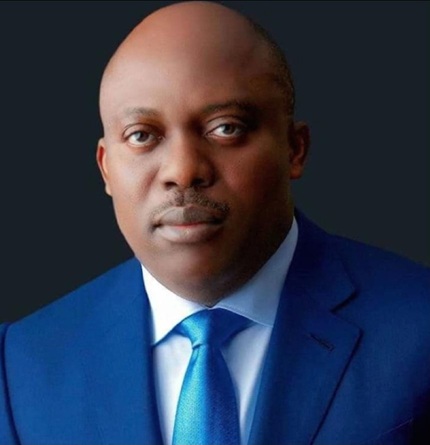
Rivers State Governor Siminalayi Fubara has declared an end to the prolonged political crisis in the state, announcing his support for President Bola Ahmed Tinubu’s re-election bid in 2027 and endorsing Kingsley Chinda as his preferred successor.
The governor made the announcement while addressing supporters, describing the development as the beginning of a new era of political reconciliation and stability in Rivers State. He said he had rejoined the political coalition led by former Rivers State Governor and Minister of the Federal Capital Territory, Nyesom Wike, calling on his supporters to embrace peace and unity.
According to Fubara, the decision was taken in the interest of the state and its people, stressing that political disagreements should not hinder governance or development.
He urged members of the coalition to work together toward achieving shared political and developmental goals ahead of the 2027 general election.
As part of the reconciliation, Fubara publicly endorsed President Tinubu for a second term in office, expressing confidence in the administration’s commitment to national development and political stability.
The governor also threw his support behind Kingsley Chinda as the preferred candidate to succeed him at the end of his tenure, describing the lawmaker as a capable leader with the experience to sustain development in Rivers State.
The announcement marks a significant shift in Rivers politics following a prolonged power struggle between Fubara and his political mentor, Nyesom Wike. Their disagreement, which began shortly after Fubara assumed office in 2023, led to months of political tension, institutional disputes and divisions within the state’s political establishment.
Political observers believe the reconciliation follows sustained efforts to restore peace, including interventions by President Tinubu aimed at resolving the crisis and preventing further instability in the oil-rich state.
Fubara linked the renewed political alliance to ongoing development initiatives, including the proposed Rivien Medical Industry project, which he said is expected to create employment opportunities and stimulate economic growth in Rivers State.
He argued that political stability would provide a stronger foundation for attracting investment, improving infrastructure and delivering better public services to residents.
The governor’s endorsement has generated mixed reactions across the political spectrum. Supporters described the move as a demonstration of political maturity and statesmanship, arguing that reconciliation would allow the government to focus fully on governance and development.
Critics, however, questioned the political implications of the decision, with some describing it as a major concession in the long-running rivalry that reshaped Rivers politics over the past two years.
Political analysts note that Rivers State remains one of Nigeria’s most strategically important political battlegrounds, making any realignment involving its key actors significant ahead of the 2027 elections.
They also caution that endorsements, while politically influential, do not determine electoral outcomes, which ultimately depend on party primaries, campaign dynamics and the choices made by voters at the polls.
As preparations for the next general election gather pace, the reconciliation between Fubara and Wike is expected to reshape political calculations within Rivers State and influence broader coalition-building efforts across the South-South region.
Observers say the durability of the peace agreement will be tested by how effectively the parties involved manage their renewed alliance and translate political reconciliation into tangible development outcomes for the people of Rivers State.


