

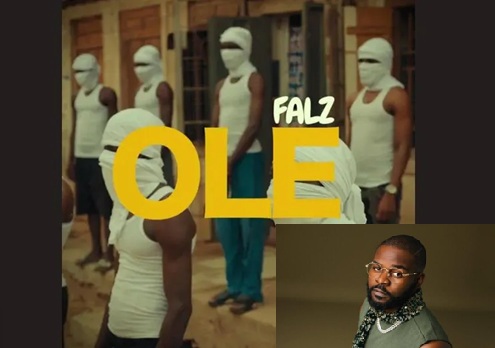
Nigerian rapper and activist Falz has released a new politically charged single titled Ole, using music as a platform to criticize corruption, insecurity, and the broader challenges confronting Nigeria.
The song, whose title translates to “thief” in the Yoruba language, delivers sharp commentary on issues including alleged government failures, the rising cost of living, the deaths of security personnel, kidnappings, and the country’s approach to negotiating with armed groups.
“Ole” serves as the lead single from Falz’s forthcoming extended play (EP), Break Time, scheduled for release on June 26. The project marks another chapter in the artist’s long-standing tradition of blending entertainment with social and political commentary.
The rapper, born to renowned human rights lawyer Femi Falana, has built a reputation as one of Nigeria’s most outspoken musicians, frequently addressing national issues through his art and public engagements.
His latest release follows a line of socially conscious records, including the widely discussed 2018 track This Is Nigeria, which examined themes such as corruption, social inequality, and governance.
Musically, “Ole” combines hard-hitting hip-hop elements with a gritty, melodic production, allowing Falz to deliver direct lyrical criticism while maintaining his signature storytelling style.
The song has generated significant reactions on social media and streaming platforms, where many listeners praised the rapper for using his voice to challenge injustice and speak on issues affecting ordinary citizens.
Supporters described the track as a return to pure conscious hip-hop and applauded its fearless criticism of those they believe contribute to Nigeria’s political and economic struggles.
However, some critics argued that Falz’s political themes have become repetitive, suggesting that artists should explore broader subjects beyond governance and social criticism.
The differing reactions highlight the enduring debate over the role of musicians in political discourse and whether entertainment figures should actively challenge those in power.
For years, Falz has remained among a generation of Nigerian artists who see music not only as a source of entertainment but also as a tool for activism, public awareness, and social change.
His outspoken stance on national issues has made him a prominent voice among young Nigerians, especially during major moments of civic engagement, including campaigns against police brutality and calls for institutional reforms.
As anticipation builds for the release of Break Time, “Ole” has already reignited conversations about corruption, accountability, insecurity, and the responsibility of leaders in addressing the challenges facing the country.
Whether viewed as a bold protest anthem or another chapter in his activist catalogue, the song underscores Falz’s commitment to using his artistry to reflect the realities of Nigerian society and provoke public conversation.


