

Written by Akor Christian Oche (Due Process)
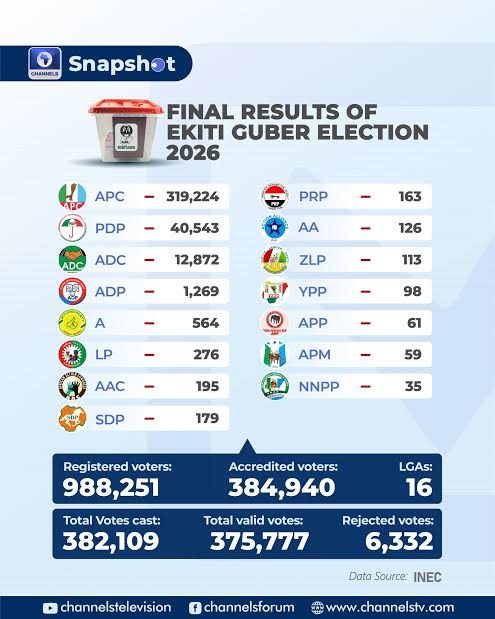
The just-concluded governorship election in Ekiti State offers important lessons for opposition parties preparing for the 2027 general elections. Beyond the debates over vote buying, one reality stands out: elections are not won on social media, television appearances, or public sympathy alone. They are won through organization, grassroots mobilization, voter turnout, and effective election-day operations.
For parties seeking to challenge the ruling All Progressives Congress in 2027, several strategic recommendations emerge:
1. Build Structures Before Campaigns
Many opposition parties become active only a few months before elections. By contrast, successful political organizations maintain active ward, local government, and state structures throughout the electoral cycle. Every polling unit should have trained volunteers, coordinators, and agents long before campaigns officially begin.
2. Present Credible and Relatable Candidates
Nigerian voters are increasingly interested in competence, character, and track record. Candidates who have demonstrated measurable achievements in public service, business, or community development are more likely to inspire confidence than those imposed by political elites.
3. Intensify Voter Registration and PVC Mobilization
No strategy can succeed without voters. Opposition parties should focus heavily on encouraging eligible citizens to obtain and transfer their Permanent Voter Cards (PVCs), especially among youths, women, and first-time voters. High voter turnout reduces the relative impact of vote buying.
4. Invest in Civic Education
Many voters accept inducements because they see elections as their only opportunity to benefit from public resources. Continuous civic education can help citizens understand the long-term consequences of selling votes and the importance of voting based on policies and performance.
5. Strengthen Election-Day Monitoring
Political parties should recruit, train, and deploy agents to every polling unit. Their role should be lawful and focused on monitoring compliance with electoral guidelines, documenting irregularities, and promptly reporting violations through established legal channels.
6. Form Strategic Alliances
Nigeria’s electoral landscape often favors broad coalitions. Opposition parties with similar objectives may need to collaborate, share resources, and avoid unnecessary fragmentation that could divide votes and benefit their opponents.
7. Utilize Technology for Transparency
Digital reporting systems can enable polling-unit agents to transmit results, incidents, and observations in real time. Such systems improve accountability and help parties respond quickly to emerging challenges.
8. Focus on Issues, Not Personalities
The 2027 campaign should be centered on practical solutions to economic hardship, insecurity, unemployment, inflation, education, and healthcare. Voters are more likely to respond to clear policy alternatives than to attacks on political opponents.
9. Prepare Legal Teams in Advance
Electoral disputes often begin before election day. Parties should establish legal teams capable of documenting violations, advising agents, and pursuing legitimate remedies where necessary.
10. Promote Non-Violent Democratic Participation
The most sustainable response to electoral malpractice is greater citizen participation, vigilance, and adherence to the rule of law. Violence, intimidation, or unlawful disruptions can undermine democratic legitimacy and expose participants to legal consequences.
The Bigger Picture
The lesson from Ekiti is not simply that money influences elections; it is that organization often defeats enthusiasm. Any political movement hoping to win in 2027 must transform public support into a disciplined grassroots network capable of mobilizing voters, monitoring elections, and sustaining engagement long after campaign rallies end.
If opposition parties can combine credible leadership, strong grassroots structures, voter education, and effective election-day oversight, they may significantly improve their competitiveness in 2027. Ultimately, the strength of Nigeria’s democracy will depend not only on political parties but also on citizens who insist that their votes—not inducements—determine electoral outcomes.


