

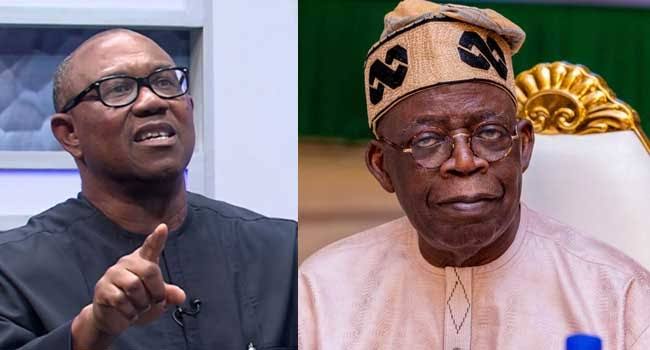
Abuja, Nigeria — Social media has reignited debate over the educational credentials of President Bola Ahmed Tinubu and the Nigeria Democratic Congress (NDC) presidential candidate, Peter Obi, with users drawing comparisons between their publicly available educational histories.
A post that has gained traction online lists Peter Obi’s educational background as:
St. Augustine’s Primary School, Anambra – 1973
Christ the King College (CKC), Onitsha – 1978
University of Nigeria, Nsukka (UNN) – Bachelor’s degree, 1984
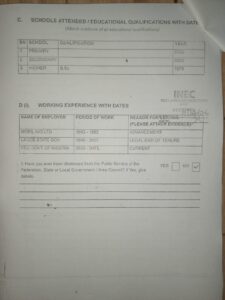
The same post points to the educational information contained in President Tinubu’s nomination documents as uploaded on the Independent National Electoral Commission (INEC) website, noting that the form lists a Bachelor of Science degree (1979) while the sections for primary and secondary education are left blank. Based on this, the post poses the provocative question: “How are we sure Tinubu isn’t a ghost?”
The comparison has generated widespread reactions across social media platforms. Supporters of Peter Obi argue that the information underscores the importance of transparency in public office, while supporters of President Tinubu dismiss the comparison as political rhetoric aimed at discrediting the President.
Questions surrounding President Tinubu’s educational records have featured prominently in political and legal debates in recent years. Tinubu has consistently maintained that he graduated from Chicago State University in 1979, and the university has publicly confirmed awarding him a bachelor’s degree. However, aspects of his educational records and documentation have continued to attract public and legal scrutiny.
Peter Obi, now the NDC presidential candidate for the 2027 general election, has continued to present his educational and professional background as part of his campaign message on transparency, accountability, and competent leadership.
With the 2027 general election drawing closer, political observers expect issues relating to candidates’ educational qualifications, public records, governance performance, and policy agendas to remain central to Nigeria’s electoral discourse.


