
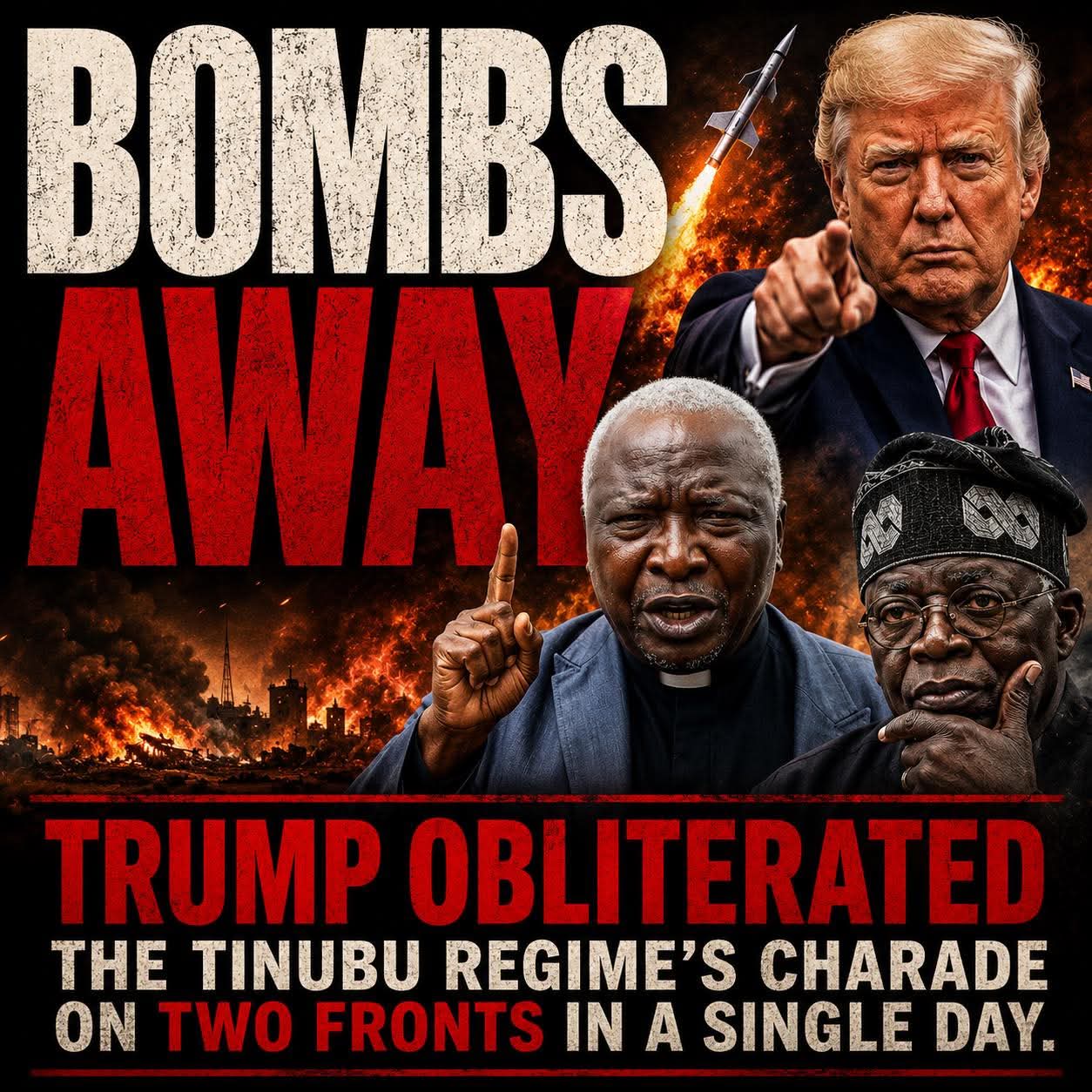
The dramatic developments surrounding President Donald Trump’s latest statements on Nigeria have ignited international controversy and reopened troubling questions about the credibility of the counterterrorism narrative promoted by the administration of President Bola Ahmed Tinubu.
What unfolded was not merely another geopolitical statement. It was a direct collision between Washington’s public disclosures and the Nigerian government’s previous security claims — a contradiction now fueling serious global scrutiny.
At the center of the controversy is Abu-Bilal al-Minuki, an ISIS commander whom Trump announced had been eliminated in a recent American military operation allegedly conducted in Nigeria. The problem for Nigerian authorities, however, is that the same terrorist figure had reportedly already been declared dead by Nigeria’s military in February 2024.
The contradiction has triggered outrage, confusion and renewed allegations of misinformation surrounding Nigeria’s anti-terror war.
The response from Nigeria’s Defence Headquarters — suggesting terrorists often use similar names — has done little to calm public skepticism. Critics argue that such explanations only deepen concerns about the reliability of official security communications coming from the government and the office of National Security Adviser Nuhu Ribadu.
Security analysts note that high-ranking ISIS provincial commanders are not positions casually duplicated or confused. The implication that the same senior terror figure was “eliminated” twice has now become a major embarrassment for Nigeria’s security establishment.
More damaging for the Tinubu administration was Trump’s simultaneous amplification of the viral video of Pastor Ezekiel Dachomo on Truth Social. The emotional footage reportedly showed the cleric standing among mass graves in Plateau State, mourning Christians allegedly killed by jihadist attackers.
That singular act elevated a local tragedy into a global political issue.
For years, victims and activists from parts of Northern and Middle Belt Nigeria have accused both Nigerian authorities and foreign lobbyists of downplaying the scale of religiously motivated killings. Trump’s decision to spotlight the issue directly to his international audience has now shattered what critics describe as a carefully managed public relations narrative.
The controversy has also drawn attention to the activities of DCI Group, the Washington lobbying firm reportedly hired by the Nigerian government to improve its international image amid worsening security concerns. Critics allege that expensive foreign lobbying contracts have been prioritized over confronting the humanitarian catastrophe unfolding across vulnerable communities.
Particularly controversial are allegations that some foreign media reports defending the Nigerian government’s narrative were produced under unusually close supervision by Nigerian security authorities. Opponents argue that embedded access journalism cannot substitute for independent investigations into mass killings, displacement camps and rural attacks affecting thousands of Nigerians.
The broader danger here is not simply reputational damage abroad. It is the erosion of public trust at home.
When governments are perceived as manipulating security information, minimizing civilian suffering or politicizing terrorism, citizens begin to lose confidence in state institutions. Once credibility collapses, every future security announcement becomes suspect.
Nigeria today faces a grave national challenge: terrorism, banditry, communal violence and deepening religious tensions continue to threaten national unity. What the country urgently needs is transparency, accountability and honest leadership — not competing propaganda campaigns.
The Tinubu administration must understand that modern information warfare cannot permanently suppress realities experienced daily by affected communities. In the digital age, mass graves, displaced populations and grieving families eventually speak louder than official press statements.
The international attention generated by Trump’s intervention has now ensured that the Nigerian government’s handling of insecurity will face even greater global examination in the months ahead.
For Nigeria, this moment should serve as a warning. Democracies survive not through image laundering or foreign lobbyists, but through truth, competence and the protection of human lives above political calculations.
EDITORIAL: Trump’s Intervention Has Exposed Nigeria’s Dangerous Credibility Crisis

- Advertisement -

