
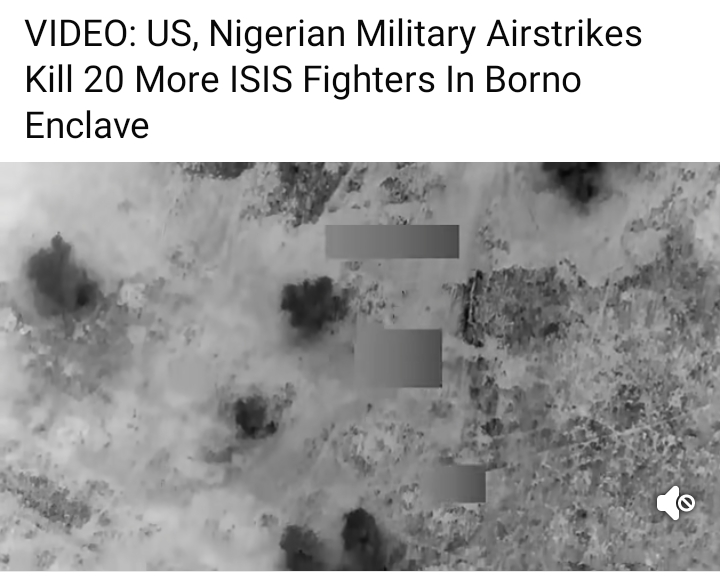
The reported killing of more than 20 ISWAP terrorists in fresh coordinated airstrikes between Nigerian forces and the United States marks another major moment in the long and painful battle against insurgency in Nigeria’s North-East.
For years, communities across Borno State and the wider Lake Chad Basin have lived under the shadow of terrorism. Villages have been destroyed, military formations repeatedly attacked, and countless civilians displaced by the brutal campaigns of Boko Haram and its offshoot, the Islamic State West Africa Province (ISWAP). The latest bombardment around Metele therefore represents more than a military operation; it reflects a renewed determination to deny terrorists the freedom to regroup and operate openly within Nigerian territory.
What makes this development particularly significant is the increasing visibility of international collaboration in Nigeria’s counterterrorism campaign. The involvement of U.S. intelligence and airstrike coordination suggests that the insurgency in the Lake Chad region is no longer viewed merely as a domestic Nigerian problem, but as part of a broader global security threat linked to transnational extremist networks.
The reported elimination of top ISIS-linked figures, including Abu-Bilal al-Minuki, alongside the destruction of terrorist enclaves, sends a powerful message to extremist groups attempting to establish operational strongholds in West Africa. It also demonstrates the growing sophistication of intelligence-led military operations compared to the earlier years of the insurgency when attacks were often reactive and poorly coordinated.
However, while military victories are important, they are not sufficient on their own to guarantee lasting peace.
Nigeria has witnessed several phases where insurgents were declared weakened, only for violence to resurface in new forms. Terrorism survives not only because of weapons, but because of poverty, weak governance, porous borders, unemployment, ideological indoctrination, and the humanitarian crisis affecting displaced populations. Unless these root causes are addressed alongside military operations, the cycle of violence may continue.
Another critical issue is transparency and accountability. Citizens deserve credible information about military operations, casualty figures, civilian safety measures, and the long-term objectives of foreign military cooperation on Nigerian soil. Public trust is strengthened when security operations are accompanied by clear communication and adherence to international humanitarian standards.
The renewed offensive must also translate into tangible safety for ordinary Nigerians. Farmers must be able to return to their lands. Highways in Borno must become safe for travelers. Schools and markets must function without fear of attacks or abductions. Ultimately, the true measure of success is not simply the number of terrorists killed, but the restoration of normal life in communities devastated by years of bloodshed.
The latest strikes may represent a tactical success, but the broader war against terrorism will require sustained military pressure, regional cooperation, economic rebuilding, intelligence reform, and political will. Nigeria cannot afford another decade of insecurity in the North-East.
For now, the elimination of over 20 terrorists is a significant operational gain. The challenge is ensuring that such victories become the foundation for enduring peace rather than temporary headlines in a conflict that has already claimed far too many lives.
Editorial: Renewed US-Nigeria Airstrikes Signal Escalation in War Against Terror

- Advertisement -

