

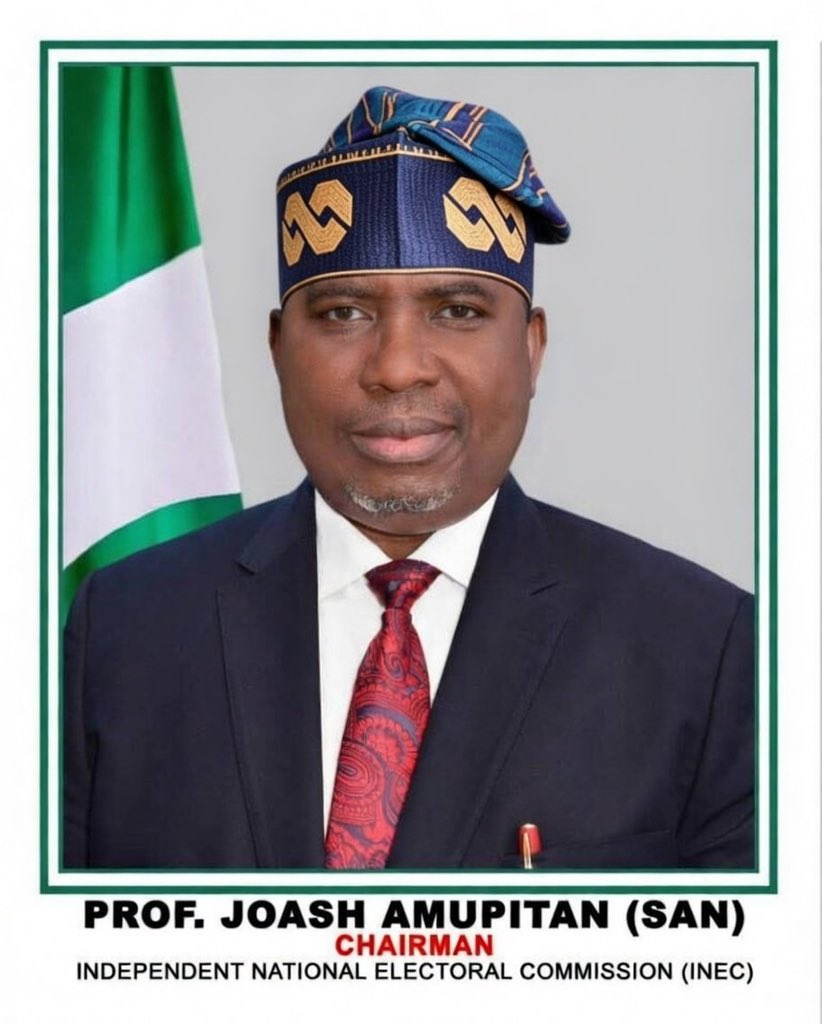
From Godswill Akpabio to Amupitan, a troubling question echoes across Nigeria’s public space: how can one be a judge in their own matter?
The controversy surrounding the alleged connection between Amupitan and a social media account that reportedly promoted the candidacy of Bola Ahmed Tinubu and the All Progressives Congress during the 2023 general elections has struck at the heart of public trust in democratic institutions. At a time when neutrality is paramount, even the perception of partisanship can be as damaging as proven bias.

In response to mounting public outcry, the Independent National Electoral Commission (INEC) has announced plans to engage an independent forensic examiner to investigate the allegations. While this step signals an acknowledgment of the seriousness of the issue, it also raises deeper concerns about institutional credibility and accountability.

The crux of the matter goes beyond whether Amupitan held political preferences—after all, personal views are not uncommon. The real issue lies in the alleged denial of statements attributed to him, which, if proven otherwise, would directly contradict the ethical standards expected of a public official entrusted with overseeing elections. For someone operating within or around the leadership structure of INEC, credibility is not optional—it is foundational.

Public servants, particularly those linked to electoral oversight, are held to a higher moral standard because of the sensitive nature of their responsibilities. Elections are the bedrock of democracy, and any hint of compromised neutrality risks eroding confidence in the entire process. When officials appear to be both subjects and arbiters of scrutiny, the principle of fairness is called into question.
This is why the notion of independent investigation must not only be pursued but must also be seen to be genuinely impartial. Transparency in the process, clear communication of findings, and accountability where necessary are essential to restoring public trust.
Nigeria’s democracy cannot thrive on ambiguity or selective accountability. Institutions like INEC must remain above suspicion, not merely through declarations, but through consistent and verifiable conduct.
In the end, the question remains as urgent as ever: in matters of public trust, who watches the watchmen—and who ensures that justice is not only done, but seen to be done?


