

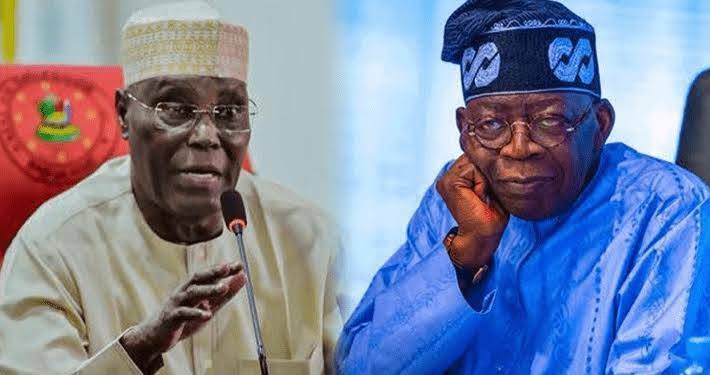
Former Vice President Atiku Abubakar has questioned the impact of Nigeria’s economic growth figures under President Bola Tinubu’s administration, arguing that official statistics must translate into better living conditions for ordinary citizens.
Atiku made the remarks while commenting on the state of the economy, stating that Nigerians are more concerned about their ability to afford basic needs than improvements reflected in economic indicators. His statement, “Nigerians can’t eat GDP,” has renewed debate over how economic progress should be measured.
The former vice president’s comments come amid public concerns over inflation, rising living expenses, and the pressure faced by households across the country. He argued that government policies should be assessed based on their effect on citizens’ daily lives rather than only on reported economic growth figures.
The issue has attracted reactions from different sections of society, with some supporting Atiku’s argument that economic success should improve people’s welfare. Others have pointed to the government’s reform agenda, arguing that policies introduced to address structural problems may require time before their full impact is felt.
The discussion is important because GDP remains one of the most widely used measures of economic performance, but economists often emphasize that it does not provide a complete picture of citizens’ well-being. Factors such as job creation, purchasing power, poverty levels, and access to basic services are also key indicators of economic progress.
The Tinubu administration has defended its economic policies, maintaining that reforms introduced since 2023 are designed to stabilize the economy, attract investment, and create a foundation for long-term development. Officials have acknowledged existing challenges while arguing that the measures are necessary to address deeper economic issues.
Atiku Abubakar, who served as Nigeria’s vice president from 1999 to 2007, has remained a major opposition voice in national politics. He contested the 2023 presidential election under the platform of the Peoples Democratic Party. President Bola Tinubu, who took office in May 2023, continues to face public discussions over the effects of his administration’s economic reforms and their impact on Nigerians.


