

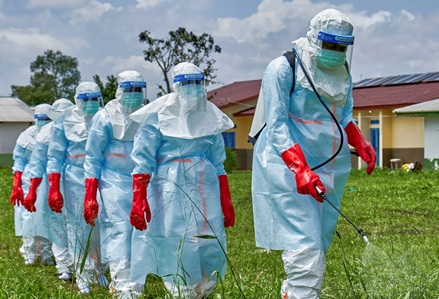
The Democratic Republic of the Congo (DRC) is facing a worsening Ebola outbreak, with the death toll approaching 1,000, raising renewed concerns among health authorities over the spread of the deadly viral disease.
Health officials reported that the outbreak has affected several communities, placing immense pressure on the country’s healthcare system and prompting intensified emergency response efforts.
The World Health Organization (WHO), alongside the Congolese government and international humanitarian partners, has continued to support surveillance, contact tracing, laboratory testing, treatment and vaccination campaigns aimed at containing the virus and preventing further transmission.
Medical experts warn that Ebola remains one of the world’s deadliest infectious diseases, with fatality rates varying depending on the virus strain, the speed of diagnosis and the availability of medical care.
The disease is transmitted through direct contact with the blood or bodily fluids of infected individuals or contaminated materials, making rapid detection and strict infection prevention measures essential to controlling outbreaks.
Communities affected by the outbreak have been urged to report suspected cases immediately, avoid direct contact with infected persons and cooperate with public health officials conducting surveillance and contact-tracing activities.
Health authorities have also intensified public awareness campaigns to educate residents on symptoms of the disease, which commonly include sudden fever, severe weakness, muscle pain, headache, sore throat, vomiting, diarrhoea and, in severe cases, internal and external bleeding.
International health organisations continue to deploy medical personnel, protective equipment and emergency supplies to support frontline healthcare workers battling the outbreak.
Public health experts caution that conflict, population displacement and limited access to healthcare in parts of eastern DR Congo continue to complicate response efforts, making it more difficult to identify cases quickly and interrupt chains of transmission.
Neighbouring countries have heightened surveillance at border crossings and strengthened preparedness measures to reduce the risk of cross-border spread.
The Congolese government has reaffirmed its commitment to working with international partners to contain the outbreak, strengthen healthcare capacity and provide treatment for affected communities.
Humanitarian agencies have called for increased international funding to sustain emergency operations, support vaccination programmes and protect healthcare workers who remain at the forefront of the response.
Although significant progress has been made in Ebola treatment and prevention over the past decade, health experts stress that early detection, community cooperation and sustained public health interventions remain critical to bringing the current outbreak under control.
As response efforts continue, authorities are urging the public to rely on verified health information, follow official medical guidance and support measures designed to limit the spread of the virus and save lives.


