

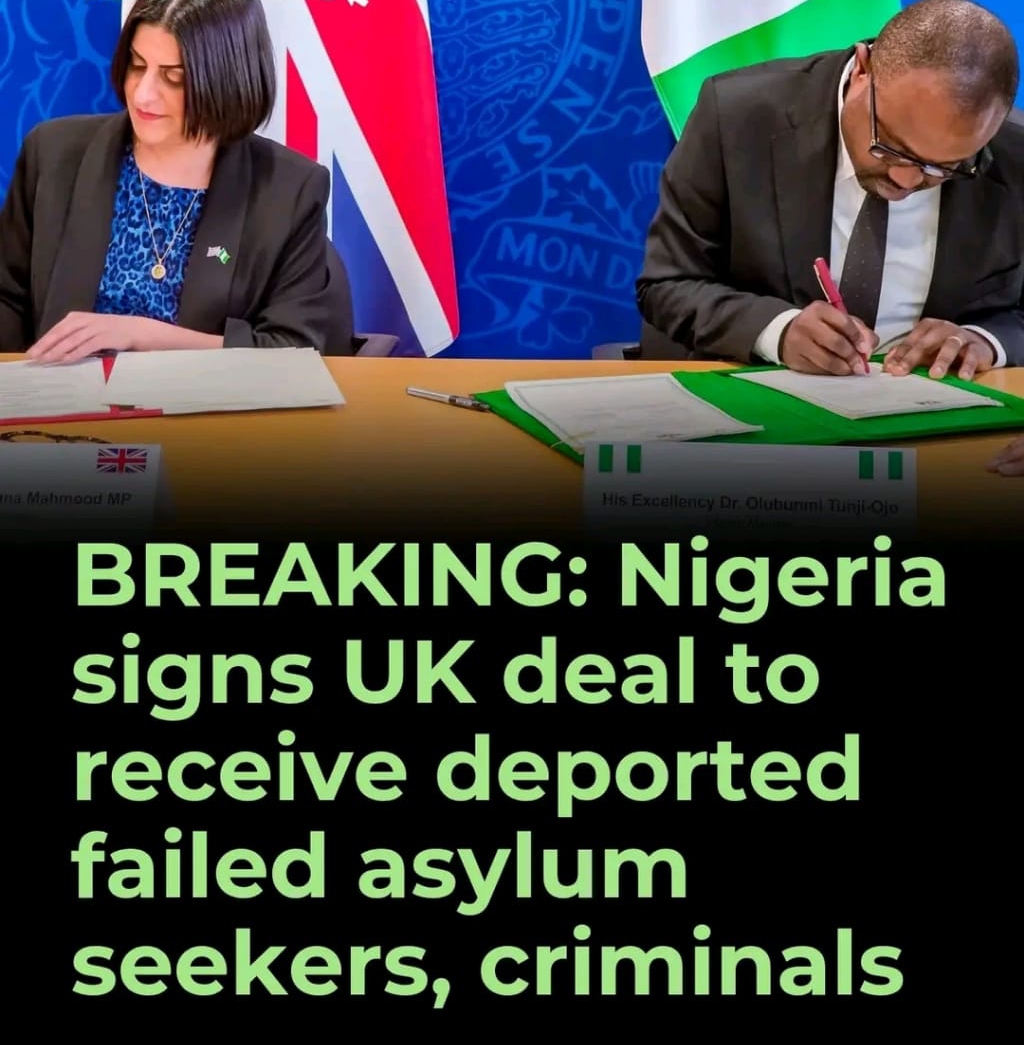
Nigeria has entered into a new bilateral agreement with the United Kingdom that will allow UK authorities to deport thousands of failed asylum seekers and convicted criminals back to Nigeria.
The deal was formalized during President Tinubu’s state visit to the UK, with Nigeria’s Minister of Interior, Olubunmi Tunji-Ojo, signing on behalf of the Nigerian government. The UK was represented by Home Secretary Shabana Mahmood, according to an announcement from the British Home Office on Thursday.
Under the agreement, the UK will be empowered to return Nigerian nationals whose asylum applications have been rejected, as well as individuals convicted of crimes, to Nigeria. The move is part of broader efforts by the UK government to tighten immigration controls and accelerate deportation processes.
Officials say the agreement reflects growing cooperation between both countries on migration management, border control, and security. However, the development is expected to generate debate within Nigeria, particularly over the country’s capacity to reintegrate returnees and manage the potential social and economic implications.
Critics are already raising fundamental concerns about the rationale behind such deportations, questioning why individuals would be returned to conditions many initially fled. Issues such as insecurity, terrorism, unemployment, unreliable power supply, and widespread economic hardship are frequently cited as key drivers of migration from Nigeria. For many, these underlying challenges remain largely unresolved, raising fears that deported individuals could face the same pressures that pushed them to leave in the first place.
While proponents argue that the deal strengthens diplomatic and security ties, critics warn it could place additional pressure on Nigeria’s already strained infrastructure and labour market, especially if large numbers of deportees are returned within a short period.
The agreement marks one of the most significant outcomes of President Tinubu’s UK visit, signaling a new phase in Nigeria-UK relations centered on migration and enforcement policies.


