

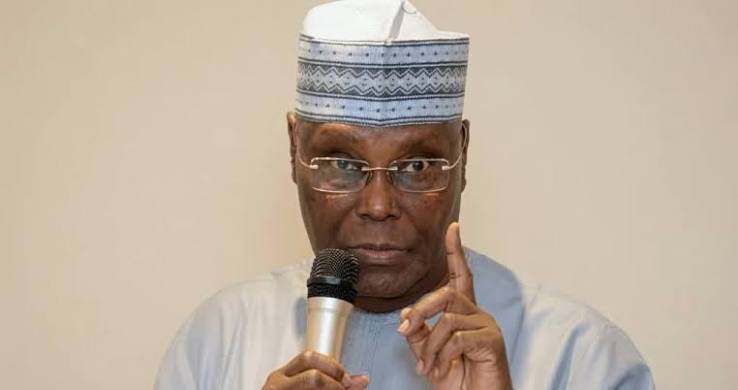
Former Vice President and African Democratic Congress (ADC) presidential candidate, Atiku Abubakar, has criticised President Bola Tinubu over comments concerning the use of his first name, saying the Nigerian presidency is a public office rather than a private institution.
Atiku made the remarks in response to a statement attributed to Tinubu during a recent political engagement. The former vice president argued that Nigerians should be free to address public officials by their names without being accused of disrespect.
According to Atiku, the presidency belongs to the Nigerian people and should not be treated as a shrine or an ancestral stool. He said public officeholders must remain accountable to citizens and open to scrutiny.
“The presidency is not a shrine, nor is it an ancestral stool,” Atiku reportedly said while responding to the controversy surrounding the President’s first name, Bola.
The exchange has added to the growing political tension between the two politicians ahead of the 2027 presidential election. Atiku, who is seeking the presidency under the ADC, has increasingly criticised the Tinubu administration over economic policies, governance and the rising cost of living.
The former vice president has particularly questioned the impact of government decisions on fuel prices, inflation and household purchasing power. He has also accused the administration of worsening economic hardship, claims the government and its supporters have disputed.
The controversy over the President’s name reflects broader disagreements about political communication, public accountability and the relationship between elected officials and citizens.
Tinubu assumed office as Nigeria’s president on May 29, 2023, after winning the 2023 presidential election. Atiku, who contested the election under the Peoples Democratic Party, challenged the result through the courts.
As political parties prepare for the 2027 election, exchanges between leading political figures are expected to focus increasingly on governance records, policy proposals and the conduct of public office. The latest disagreement is therefore part of a wider political debate over leadership, accountability and the role of the presidency in Nigeria’s democracy.


