

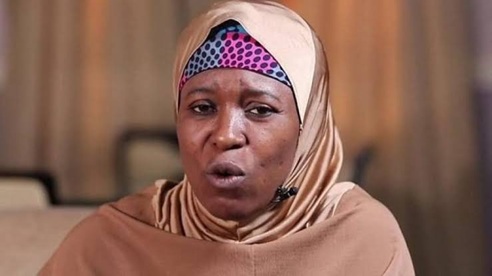
Fresh details have emerged over the internal dispute within the Nigeria Democratic Congress (NDC) involving prominent activist and politician Aisha Yesufu, following revelations by party leaders concerning the allocation of elective positions ahead of future elections.
According to NDC National Leader, Senator Henry Seriake Dickson, the party leadership, in consultation with the presidential candidate, Peter Obi, offered Yesufu an unopposed ticket to contest for the House of Representatives seat representing the AMAC/Bwari Federal Constituency in the Federal Capital Territory (FCT).
Dickson disclosed that the offer was made after Yesufu joined the party relatively late compared to many founding members and early entrants who had been actively involved in building the party’s structures.
However, the activist reportedly declined the House of Representatives ticket, insisting instead on contesting for the FCT Senatorial seat.
The senatorial position had already been allocated to another aspirant, Amanda Pam, a longstanding party member who, according to party officials, had spent considerable time building grassroots support and participating in the party’s organizational activities before the arrival of newer entrants.
The disagreement has become one of the most widely discussed internal challenges facing the NDC as it seeks to consolidate its structures and establish itself as a major political force ahead of the 2027 general elections.
Prior to the latest developments, Yesufu had announced her withdrawal from the senatorial race, citing concerns about what she described as a flawed and manipulated selection process. She alleged that proper primary elections were not conducted and questioned aspects of the party’s internal procedures.
Her criticisms sparked intense debate among party supporters and political observers, with some backing her call for greater transparency while others defended the decisions taken by the party leadership.
Supporters of Yesufu argue that political parties must demonstrate commitment to democratic principles by ensuring open, transparent, and credible candidate selection processes. They contend that internal democracy remains essential for any political organization seeking public trust and legitimacy.
On the other hand, supporters of the NDC leadership maintain that political parties must balance inclusiveness with fairness to longstanding members who have invested time, resources, and effort in building party structures from the ground up.
They argue that granting priority to individuals who joined shortly before the nomination process could discourage dedicated members and undermine organizational stability.
The controversy comes at a critical period for the NDC, a relatively young political platform that has experienced rapid growth since its emergence as a vehicle for political realignment ahead of the 2027 elections.
The party is led by presidential candidate Peter Obi and has attracted several prominent political figures, including former Kano State governor Rabiu Musa Kwankwaso, who has been presented as Obi’s running mate.
Political analysts note that disagreements over nominations and candidate selection are common in growing political parties, particularly those experiencing rapid expansion and the influx of influential new members.
Despite the dispute, NDC leaders have repeatedly emphasized their commitment to unity and reconciliation. Following recent consultations involving Obi, Dickson, and other stakeholders, party officials stated that efforts are ongoing to address grievances and strengthen internal cohesion.
Observers believe the party’s ability to manage such disputes effectively will play a significant role in determining its strength and credibility as preparations for the 2027 elections continue.
As discussions persist, many party members have called for dialogue, transparency, and mutual respect to ensure that internal disagreements do not distract from the broader goal of building a viable alternative political platform capable of competing effectively in the next general elections.


