

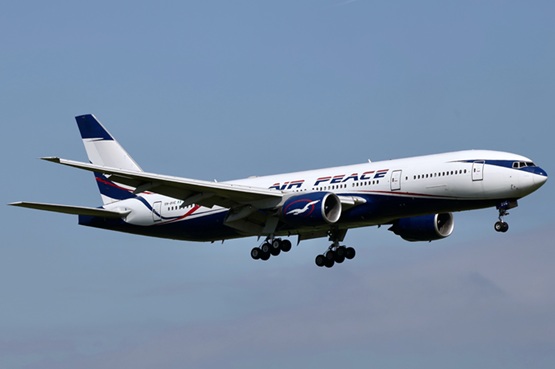
Air Peace has disclosed that it has lost about $42 million in revenue following repeated damage to its aircraft by ground-handling companies, raising fresh concerns over the operational and financial impact of aircraft handling at Nigerian airports.
The airline said three of its aircraft had suffered major damage within the past 12 months, with two of the incidents occurring in 2026. According to the carrier, the frequency of such incidents has become a significant concern, with aircraft reportedly damaged by ground-handling operations about twice a year.
Air Peace spokesperson, Efe Whiskey, said the financial consequences extended beyond the direct cost of repairing damaged aircraft. He explained that when an aircraft is grounded following an incident, the airline loses revenue from the flights it would otherwise have operated.
“The revenue lost so far, especially from one aircraft, is $42m,” Whiskey said, stressing that the handling companies typically cover the cost of physical damage but do not compensate the airline for the revenue lost while aircraft remain out of service.
The airline identified the two major ground-handling companies involved as Skyway Aviation Handling Company Plc, known as SAHCO, and the Nigerian Aviation Handling Company Plc, NAHCO.
Air Peace said the handling companies had agreed to pay $3.8 million for repairs to its most recently damaged aircraft. It also disclosed that $3.2 million had already been paid for repairs to another aircraft damaged on Boxing Day in December 2025.
The airline, however, said the financial burden associated with aircraft damage goes beyond repair bills. In some cases, damaged components have to be removed and transported abroad for specialised repairs, resulting in additional expenses.
According to Whiskey, the airline has also incurred costs relating to the transportation of damaged components, towing and cleaning operations following incidents at airports. He said some repairs require specialists to be brought into Nigeria or aircraft components to be transported overseas.
The development highlights the importance of ground-handling operations to the safety and efficiency of Nigeria’s aviation sector. Ground handlers perform essential functions around aircraft while they are on the ground, including baggage handling, towing and other support services. Poor coordination or mishandling of equipment can therefore result in significant operational disruptions and financial losses.
Air Peace said it was concerned that similar incidents could occur in the future, pointing to what it described as a recurring pattern of aircraft damage. The airline said previous experience had informed its concern that another incident could happen before the end of the year.
One of the incidents referenced by the airline occurred on December 26, 2025, when ground-handling equipment damaged one of its newly acquired Embraer 195-E2 aircraft at the Murtala Muhammed International Airport in Lagos. The incident affected the aircraft’s operations and contributed to flight disruptions.
The airline had also raised concerns over previous incidents involving ground-handling equipment at Nigerian airports, including an incident involving NAHCO equipment in January 2023.
The latest allegations are likely to renew calls for stronger oversight of ground-handling operations and improved safety procedures at Nigerian airports. For airlines, damage to aircraft can translate into substantial losses through repair costs, cancelled flights, replacement arrangements and lost passenger revenue.
As Nigeria seeks to strengthen its aviation industry and improve the reliability of domestic air travel, the recurring dispute over aircraft handling underscores the need for greater accountability and stricter adherence to safety standards across airport operations.
For Air Peace, the reported $42 million revenue loss demonstrates that the consequences of aircraft damage can extend far beyond the immediate cost of repairing the affected aircraft.