

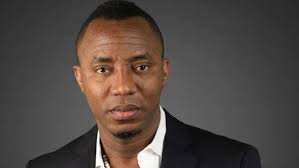
The African Action Congress (AAC) has officially selected Omoyele Sowore as its consensus presidential candidate for the 2027 general elections, signaling the party’s early preparations for Nigeria’s next political cycle.
The announcement was made following consultations among party leaders and stakeholders who reportedly agreed to adopt Sowore as the party’s preferred candidate ahead of the presidential race.
Party officials described the decision as a strategic move aimed at strengthening the AAC’s political structure and consolidating support around a familiar figure within the party.
Sowore, a former presidential candidate and activist, has remained one of the most vocal opposition figures in Nigeria, known for his criticism of government policies, advocacy for social justice, and calls for political reforms.
According to AAC leaders, adopting him as a consensus candidate reflects confidence in his leadership style, political consistency, and ability to represent the party’s vision in the next presidential election.
“We believe Sowore represents the ideals and aspirations of the African Action Congress,” a party official said during the announcement. “The party is united behind his candidacy for 2027.”
The decision has already generated reactions across Nigeria’s political space, with supporters welcoming the move while critics questioned the party’s chances in what is expected to be another highly competitive presidential contest.
Political analysts say the AAC’s early endorsement of Sowore demonstrates how political parties are gradually beginning to reposition ahead of the 2027 elections despite the current administration still being midway into its tenure.
Observers also believe the move could help the AAC focus on grassroots mobilization, coalition discussions, and long-term campaign planning earlier than some rival parties.
Sowore previously contested the Nigerian presidency in the 2019 and 2023 general elections under the AAC platform.
Although he did not secure victory in either election, he built a strong reputation among sections of Nigerian youths, activists, and reform-minded voters who viewed his campaign as representing alternative politics outside the country’s dominant political establishment.
The politician and media entrepreneur gained national prominence through activism and his role in promoting civic engagement and government accountability.
He has consistently criticized corruption, insecurity, economic hardship, and governance failures, often positioning himself as a voice for systemic political change.
Supporters of Sowore argue that his consistency and activism have helped distinguish him from many traditional politicians in Nigeria.
“He has remained committed to his principles over the years,” one AAC supporter said. “The party believes he can inspire young Nigerians and those seeking genuine reform.”
However, political commentators note that the AAC still faces significant challenges in competing against larger and more established political parties with broader national structures and financial resources.
Nigeria’s political environment has historically been dominated by major parties with extensive grassroots networks and strong regional alliances.
Analysts say smaller parties like the AAC may need strategic coalitions, expanded membership, and stronger state-level structures to improve their electoral chances in future contests.
Despite these challenges, supporters of the AAC believe the growing dissatisfaction among some Nigerians over economic hardship, insecurity, and governance issues could create opportunities for alternative political movements.
The announcement of Sowore’s candidacy also comes at a time when conversations about youth participation in politics continue to gain attention nationwide.
Many young Nigerians have increasingly demanded greater representation in leadership and governance, particularly following recent election cycles marked by strong youth-driven political engagement.
Political observers believe Sowore’s activist background and social media influence may continue to attract younger voters interested in reform-oriented politics.
However, critics argue that electoral success in Nigeria often depends heavily on coalition-building, regional balance, financial strength, and grassroots political organization.
Meanwhile, reactions to the AAC’s decision have remained mixed on social media and within political circles.
Some supporters praised the party for making an early decision and maintaining ideological consistency, while others questioned whether the move could limit broader internal competition within the party.
Political analysts also note that early endorsements may help parties build momentum but can sometimes trigger debates over internal democracy and candidate selection processes.
The AAC leadership, however, insisted that the consensus arrangement emerged through consultations and agreement among party stakeholders.
As preparations for the 2027 elections gradually begin to shape Nigeria’s political environment, more parties are expected to intensify internal discussions, strategic planning, and alliance-building efforts.
For now, the AAC’s endorsement of Sowore has officially placed the activist-politician back at the center of national political conversations ahead of another anticipated presidential race.


