

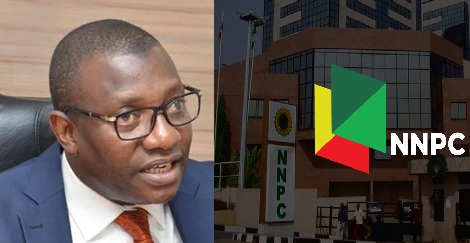
A former Group General Manager of the National Petroleum Investment Management Services (NAPIMS), Bala Wunti, has dismissed allegations that ₦210 trillion is missing from the accounts of the Nigerian National Petroleum Company Limited (NNPC Ltd.), describing the claims as misleading and lacking factual basis.
Wunti made the clarification while responding to public concerns over reports alleging that a massive sum had disappeared from the national oil company’s financial records. He maintained that the figures being circulated had been taken out of context and did not represent missing or stolen public funds.
According to the former NAPIMS chief, NNPC Ltd.’s financial statements are prepared in accordance with internationally recognised accounting standards and are subject to regular internal and external audits. He explained that financial figures contained in audited reports often include various accounting entries, liabilities, operational expenditures, receivables and other transactions that may be misunderstood when viewed without proper technical interpretation.
He urged Nigerians to avoid drawing conclusions from incomplete information, stressing that the petroleum industry’s financial reporting is highly specialised and should be interpreted by qualified professionals familiar with corporate accounting practices.
Wunti further noted that the transition of the Nigerian National Petroleum Corporation into the Nigerian National Petroleum Company Limited under the Petroleum Industry Act introduced a more transparent corporate governance framework, including stricter financial reporting obligations and enhanced accountability mechanisms.
He explained that the company’s audited financial statements provide detailed breakdowns of its revenues, expenses, investments, assets and liabilities, making it inaccurate to conclude that large financial figures automatically represent missing funds.
The former NAPIMS executive also warned that the circulation of unverified financial allegations could undermine public confidence in Nigeria’s petroleum sector and discourage potential investors at a time when the country is seeking greater investment in oil and gas exploration, refining and energy infrastructure.
His comments come amid growing public scrutiny of the operations and financial management of NNPC Ltd., particularly as stakeholders continue to demand greater transparency in the administration of Nigeria’s oil revenues.
Civil society organisations and anti-corruption advocates have consistently called for improved public access to financial information relating to the country’s petroleum sector, arguing that greater transparency is essential for strengthening public trust and promoting accountability.
Economic analysts note that while public scrutiny of state-owned enterprises remains necessary, allegations involving public finances should be supported by verifiable evidence and interpreted within the context of audited financial reports and applicable accounting standards.
They also stress that where legitimate concerns arise, appropriate oversight institutions—including the National Assembly, the Office of the Auditor-General, anti-corruption agencies and independent auditors—should be allowed to examine the records and communicate their findings to the public.
Industry experts have further emphasised that corporate financial statements often contain complex accounting adjustments that can easily be misunderstood outside their proper context. They therefore encourage informed public debate based on official documents and professional analysis rather than speculation.
As discussions continue over transparency and accountability in Nigeria’s oil and gas sector, Wunti reiterated that no credible evidence has established that ₦210 trillion is missing from NNPC Ltd.’s accounts. He called for responsible public discourse and urged stakeholders to rely on verified financial information while allowing relevant oversight institutions to continue their statutory responsibilities.


