

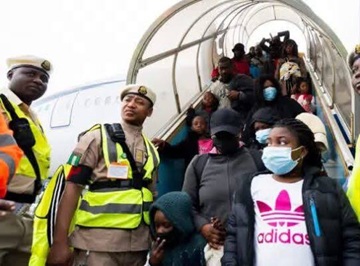
The Federal Government has evacuated 1,490 Nigerians from South Africa following renewed concerns over xenophobic attacks and rising insecurity targeting foreign nationals in parts of the country.
The evacuation exercise, coordinated through the Federal Ministry of Foreign Affairs in collaboration with the Nigerian High Commission in Pretoria and other relevant agencies, was undertaken to safeguard the lives of Nigerian citizens who expressed fears for their safety amid escalating tensions.
Government officials said the operation forms part of Nigeria’s commitment to protecting its citizens abroad and ensuring that those affected by violence or intimidation receive timely assistance and safe passage back home.
The returnees, comprising men, women and children, arrived in phases through organised evacuation arrangements. Authorities stated that priority was given to vulnerable persons, including families, the elderly, students and individuals whose businesses and livelihoods had been disrupted by the unrest.
The latest evacuation follows reports of renewed xenophobic incidents in some South African communities, where foreign nationals have allegedly faced harassment, attacks on businesses and threats to their personal safety. Nigerians have frequently been among those affected during previous outbreaks of anti-immigrant violence in the country.
Speaking on the development, government officials reassured Nigerians in the diaspora that the welfare and protection of citizens remain a top priority. They explained that diplomatic engagements with the South African Government are continuing to ensure the safety of Nigerians who have chosen to remain in the country.
The Federal Government also expressed appreciation to South African authorities for their cooperation during the evacuation process and called for sustained efforts to protect all foreign nationals in accordance with international law and bilateral agreements between the two countries.
Upon arrival in Nigeria, the returnees were received by officials of relevant government agencies, who commenced registration, health screening and documentation procedures. Authorities said arrangements had been made to provide temporary accommodation where necessary, medical assistance and psychosocial support for those traumatised by their experiences.
The government further indicated that reintegration programmes would be implemented to assist affected Nigerians in rebuilding their lives through access to vocational training, entrepreneurship support and other social intervention initiatives.
The evacuation comes amid growing calls from public officials and civil society organisations for stronger diplomatic action to address recurring xenophobic attacks against Nigerians living in South Africa. Many have urged both governments to deepen cooperation on migration management, community policing and the protection of foreign residents.
Security analysts have noted that repeated outbreaks of xenophobic violence continue to strain relations between the two African nations despite their longstanding diplomatic and economic ties. They argue that addressing unemployment, misinformation and criminality—factors often associated with anti-immigrant sentiment—will be critical to preventing future attacks.
The development also follows recent appeals by several political leaders and state governments urging the Federal Government to take proactive measures to safeguard Nigerians abroad. Observers say the large-scale evacuation demonstrates Abuja’s readiness to respond to emergencies affecting its citizens while reinforcing its responsibility to protect Nigerians regardless of where they reside.
As the returnees begin the process of reintegration, the Federal Government has reaffirmed its commitment to maintaining close diplomatic engagement with South Africa to ensure lasting protection for Nigerians who continue to live, work and study in the country while promoting peaceful coexistence between citizens of both nations.


