

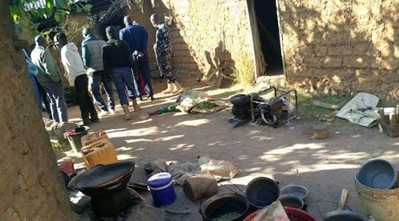
A youth leader in Plateau State has raised fresh concerns over the worsening security situation in the state, revealing that he has witnessed the complete annihilation of at least five families in recent attacks on communities, underscoring the devastating human toll of the persistent violence.
The President of the Berom Youth Moulders Association, Dalyop Mwantiri, made the disclosure while speaking on the recurring attacks affecting several communities in Plateau. According to him, entire family lineages have been erased as a result of the sustained violence, leaving communities traumatized and struggling to recover from repeated assaults.
“I’ve seen five families wiped out in Plateau attacks,” Mwantiri said, describing the killings as heartbreaking and calling for urgent intervention to halt the bloodshed.
He lamented that many residents now live in constant fear, with attacks often occurring without warning and forcing survivors to flee their ancestral homes. According to him, the destruction has extended beyond the loss of lives to the displacement of families, destruction of farmlands, and worsening humanitarian conditions in affected communities.
The youth leader appealed to the Federal Government and security agencies to intensify efforts to protect vulnerable communities and ensure that perpetrators of the attacks are identified, arrested, and prosecuted. He argued that ending the cycle of violence requires both improved security deployment and the political will to hold those responsible accountable.
Plateau State has experienced recurring episodes of communal and armed violence over the years, particularly in rural communities where disputes over land, farming, grazing, and ethnic differences have often escalated into deadly clashes. The insecurity has claimed thousands of lives, displaced entire communities, and disrupted economic activities, especially agriculture, which remains the primary source of livelihood for many residents.
Recent attacks have renewed calls for stronger security measures as community leaders, civil society organizations, and religious groups continue to express concern over the frequency and scale of the violence. Humanitarian agencies have also warned that the growing number of displaced persons is placing additional pressure on already limited resources.
Mwantiri urged authorities to move beyond condemning attacks after they occur and instead adopt proactive measures capable of preventing further bloodshed. He stressed that affected communities deserve justice and long-term protection rather than temporary security responses.
Security analysts have repeatedly emphasized the importance of strengthening intelligence gathering, improving collaboration between security agencies and local communities, and addressing the underlying drivers of conflict, including competition over land and resources. They also advocate dialogue, reconciliation initiatives, and the prosecution of criminal elements to prevent reprisals and restore public confidence.
The Plateau State Government has consistently condemned attacks on communities and pledged to work with federal security agencies to restore peace across the state. Security forces have, on several occasions, deployed personnel to troubled areas and launched operations aimed at apprehending those behind the violence.
Despite these efforts, residents in many communities continue to express fears over their safety, insisting that more decisive action is needed to end the killings permanently.
As authorities continue investigations into the latest incidents, Mwantiri’s account has once again drawn national attention to the humanitarian impact of the crisis in Plateau State and renewed calls for comprehensive measures to safeguard lives, protect communities, and secure lasting peace in the region.


