

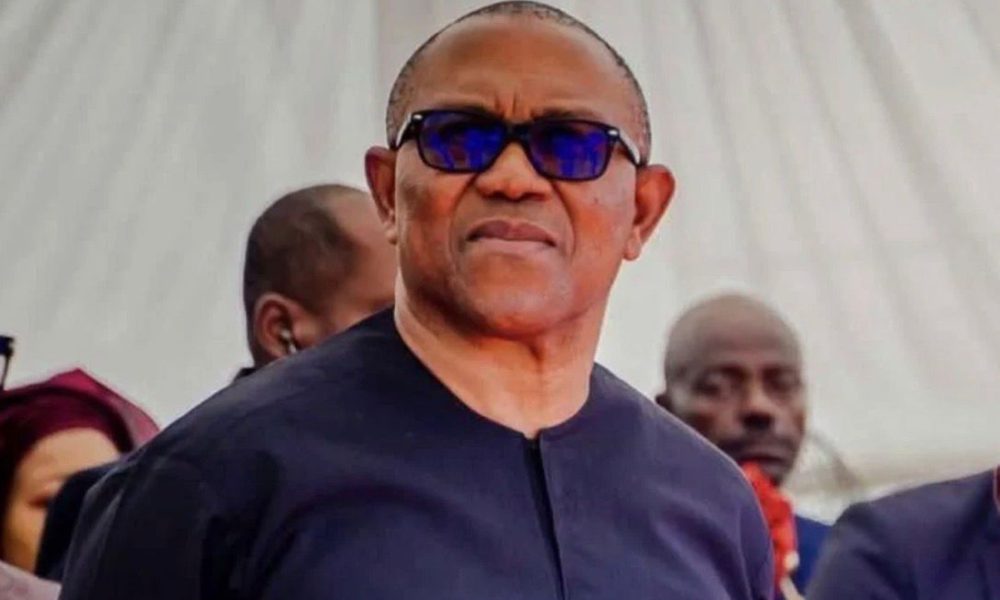
Former Anambra State Governor and 2023 Labour Party presidential candidate, Mr. Peter Obi, has called on the Federal Government to immediately suspend the enforcement of the newly introduced tax law, citing what he described as fundamental flaws in its conception and implementation.
In a statement issued on Tuesday, January 13, Obi said the country’s tax framework appears to have been significantly altered in ways that raise serious policy, legal and administrative concerns. He referenced a report by global consulting firm KPMG, which reportedly identified 31 critical problem areas in the new tax law, including drafting errors, policy inconsistencies and administrative gaps.
Obi said the emergence of such extensive shortcomings should trigger urgent corrective action from the government, expressing concern that the issues only became apparent after private engagements between the National Revenue Service and KPMG.
“If experts require closed-door discussions to understand our tax laws, what hope does the average Nigerian have of comprehending the obligations being imposed on them?” he asked.
He stressed that taxation goes beyond revenue generation, describing it as a social contract between the government and the citizens—one that cannot be sustained if it is neither clearly understood nor trusted.
According to Obi, effective tax systems across the world are justified by visible public benefits such as improved healthcare, quality education, job creation, infrastructure development and functional social safety nets. These, he said, form the foundation of public trust and voluntary compliance.
“In Nigeria, the emphasis appears to be on how much more the government can collect, rather than what it intends to deliver in return. A tax system without visible public benefits is not reform; it is extortion,” Obi stated.
He further noted that in many countries, tax reforms undergo extensive consultations with businesses, labour unions and civil society groups over several months or years before implementation. Citizens, he said, are clearly informed about both their tax obligations and the benefits attached to them.
Obi lamented the absence of such broad consultations in Nigeria, arguing that the lack of public engagement has left many citizens confused about the new regulations and uncertain about the gains they are expected to receive.
He accused the government of rushing into enforcement without building national consensus or providing adequate explanations, noting that Nigerians are still grappling with the effects of fuel subsidy removal, rising food prices, increased transportation costs, declining purchasing power and worsening poverty.
“Instead of first addressing these pressing challenges, Nigerians are being subjected to a sweeping new tax regime riddled with inconsistencies and flagged with 31 major concerns by a leading global firm. This is not responsible governance,” he said.
Obi warned that taxation without trust amounts to punishment, without clarity breeds confusion, and without visible public value becomes exploitation.
He concluded by urging the Federal Government to halt enforcement of the tax law and engage stakeholders transparently, insisting that genuine reform can only be achieved through dialogue, accountability and policies that ease, rather than worsen, the burden on citizens.


