

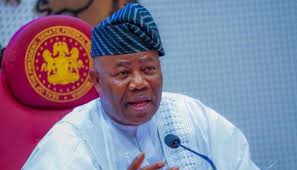
Senate President Godswill Akpabio has urged Nigerians to remain patient with ongoing economic and governance reforms, stating that the current administration never promised immediate miracles but rather committed itself to implementing policies aimed at long-term national development.
Akpabio made the remarks while addressing concerns over the country’s economic challenges and public expectations regarding government performance. His comments come amid growing debates about the impact of ongoing reforms introduced by President Bola Ahmed Tinubu’s administration since assuming office.
According to the Senate President, transforming a nation as complex as Nigeria requires time, consistency, and collective effort. He stressed that while citizens may be eager to see rapid improvements in living conditions, sustainable development cannot be achieved overnight.
“We did not promise miracles,” Akpabio reportedly stated, emphasizing that the administration inherited significant economic and structural challenges that require deliberate and sometimes difficult policy decisions to address.
The Senate President argued that many of the reforms currently being implemented are designed to lay the foundation for future economic growth, job creation, infrastructure development, and improved public services. He maintained that the government remains committed to delivering results despite the challenges associated with economic restructuring.
Nigeria has experienced significant economic pressures in recent years, including rising inflation, exchange rate volatility, increased fuel costs, and growing concerns about the cost of living. These issues have sparked public discussions about the pace and effectiveness of government interventions.
Akpabio acknowledged the hardships being experienced by many Nigerians but insisted that some of the reforms were necessary to prevent deeper economic problems in the future. He noted that difficult decisions are often required when governments seek to stabilize economies and create conditions for long-term prosperity.
The Senate President further stated that the National Assembly continues to support legislative initiatives aimed at strengthening the economy, improving security, and enhancing social welfare. According to him, collaboration between the executive and legislative arms of government remains essential to achieving national objectives.
He also highlighted ongoing investments in infrastructure, education, healthcare, and agriculture as evidence of the administration’s commitment to development. These sectors, he said, are critical to improving productivity, creating employment opportunities, and enhancing the quality of life for citizens.
Supporters of the administration have defended the government’s reform agenda, arguing that policies such as fuel subsidy removal and fiscal restructuring were necessary to address long-standing economic distortions. They contend that while the reforms have generated short-term difficulties, they could yield positive outcomes over time.
Economic analysts note that governments often face challenges balancing immediate public expectations with long-term policy objectives. According to experts, structural reforms frequently require years before their full benefits become visible.
However, critics of the administration argue that many Nigerians are struggling to cope with rising living costs and expect faster relief measures from government. Opposition figures have repeatedly called for stronger interventions to cushion the impact of economic reforms on vulnerable households.
Civil society organizations have also urged policymakers to prioritize social protection programs, food security initiatives, and employment opportunities to help citizens navigate current economic realities.
Akpabio, however, expressed confidence that the country’s economic outlook would improve as reforms continue to take effect. He encouraged Nigerians to remain optimistic and support efforts aimed at strengthening national institutions and promoting economic recovery.
The Senate President also called for unity among political leaders, stakeholders, and citizens, stressing that national development requires cooperation rather than division. He argued that constructive engagement and collective responsibility are essential for overcoming challenges facing the country.
Political observers believe Akpabio’s comments reflect the administration’s broader message that patience is required as economic reforms progress. Many analysts expect discussions around government performance and economic conditions to remain central issues in Nigeria’s political discourse over the coming months.
As Nigerians continue to assess the impact of ongoing reforms, the debate between those advocating patience and those demanding faster results is likely to intensify. For now, Akpabio maintains that while the government did not promise miracles, it remains focused on building a stronger foundation for the nation’s future.


