

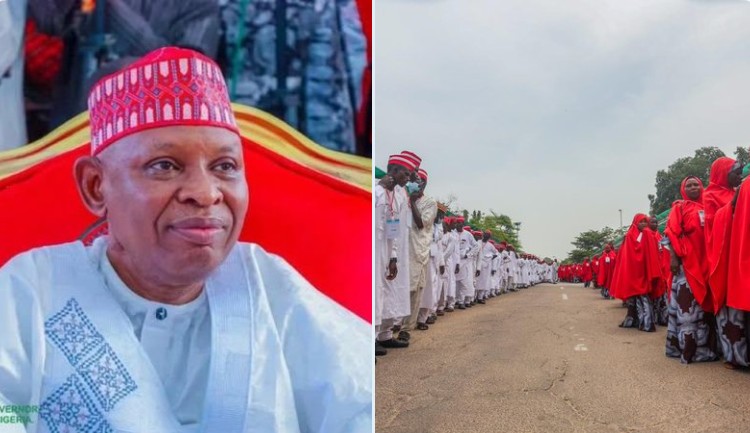
The Kano State Government has allocated ₦1.5 billion for a large-scale mass wedding programme aimed at supporting thousands of low-income couples and promoting family stability across the state.
The initiative, approved by the administration of Governor Abba Kabir Yusuf, is scheduled to take place later this month and is being coordinated by the Kano State Hisbah Board.
According to officials, the programme is expected to cater for up to 3,000 couples selected from more than 5,000 applicants who applied to participate. The beneficiaries are largely drawn from economically disadvantaged backgrounds and include individuals who have been unable to marry due to financial constraints.
Under the scheme, each couple will receive support packages designed to ease the financial burden associated with marriage and family formation. These packages reportedly include household items valued at approximately ₦1 million per couple, as well as a dowry payment and startup capital estimated at ₦100,000.
Organizers say the programme is intended to provide newly married couples with a foundation upon which they can begin family life and pursue economic self-sufficiency.
As part of the selection process, prospective beneficiaries undergo medical screening, including tests for HIV, hepatitis, genotype compatibility, and, where applicable, pregnancy status. Officials say these measures are designed to promote healthy marriages and reduce the risk of preventable health complications within families.
The state government and the Hisbah Board maintain that the programme serves multiple social objectives, including reducing financial barriers to marriage, strengthening family values, promoting social stability, and addressing concerns about out-of-wedlock births.
Supporters of the initiative argue that marriage remains an important social institution and that government intervention can help vulnerable citizens establish stable households. They note that similar programmes implemented in Kano and other northern states have enabled thousands of couples to marry and start families.
Religious and community leaders who support the programme describe it as a form of social welfare that aligns with cultural and religious values while providing practical assistance to individuals facing economic hardship.
However, the allocation has also generated criticism from some members of the public and policy analysts.
Critics question whether spending ₦1.5 billion on a mass wedding programme represents the most effective use of public resources at a time when many communities face significant economic and social challenges.
Some have argued that the funds could instead be directed toward education, healthcare, job creation, and poverty alleviation programmes. Particular concern has been expressed about the large number of out-of-school children in Kano State, a challenge that many stakeholders believe requires urgent intervention.
Others have raised broader questions about population growth, economic sustainability, and the long-term impact of state-sponsored marriage initiatives.
Supporters counter that the programme should not be viewed in isolation, arguing that family stability can contribute to social development and that the beneficiaries are among the state’s most vulnerable residents.
Political analysts note that the debate reflects differing perspectives on the role of government in addressing social welfare and community development.
As preparations for the mass wedding continue, the programme remains one of the most widely discussed public initiatives in Kano State. Whether viewed as a compassionate intervention or a controversial spending priority, it has reignited conversations about poverty, family policy, education, and social development in one of Nigeria’s most populous states.


