

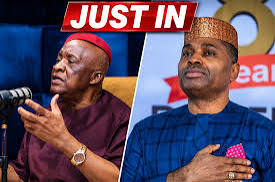
A fresh legal battle has emerged in Nigeria’s political space as former Imo State Governor and National Democratic Coalition (NDC) chieftain, Achike Udenwa, has reportedly instituted a defamation lawsuit against actor-turned-politician, Kenneth Okonkwo.
The suit, filed before a competent court, seeks a public apology from Okonkwo and demands N5 billion in damages over alleged defamatory statements said to have tarnished Udenwa’s reputation.
Background to the Dispute
The legal action is believed to stem from public comments allegedly made by Kenneth Okonkwo concerning the former governor. Udenwa contends that the statements were false, malicious, and damaging to his standing as a respected elder statesman and political figure.
As a former governor of Imo State who served from 1999 to 2007, Udenwa remains an influential voice in Nigerian politics, particularly in the South-East. His involvement in the NDC has further elevated his profile amid ongoing political realignments ahead of the 2027 general elections.
Kenneth Okonkwo, a prominent Nollywood actor turned politician, has in recent years become a vocal commentator on national issues and opposition politics. His public interventions have frequently generated debate across political circles.
Reliefs Sought by Udenwa
In the suit, Udenwa is reportedly asking the court to:
Declare the alleged statements defamatory;
Order Kenneth Okonkwo to retract the statements;
Compel him to publish an unreserved apology in national newspapers and other media platforms;
Award N5 billion as compensation for reputational damage and emotional distress;
Grant any further orders deemed fit by the court.
Defamation Under Nigerian Law
Under Nigerian law, defamation occurs when a false statement is published about a person in a manner that injures their reputation in the eyes of right-thinking members of society. The claimant must generally prove:
That the statement was published to a third party;
That it referred to the claimant;
That it was defamatory in nature;
That it caused reputational harm.
However, defendants in defamation suits may rely on defenses such as truth (justification), fair comment, privilege, or public interest.
Political Implications
The lawsuit adds another dimension to the growing tensions within Nigeria’s opposition politics, especially as political actors reposition themselves ahead of the 2027 elections. Legal disputes involving prominent political figures often transcend the courtroom, influencing public perception and political alliances.
Observers note that the case could become a significant test of the balance between freedom of expression and protection of personal reputation in Nigeria’s democratic space.
As the matter is now before the court, the principle of sub judice applies, meaning the allegations remain unproven until judicial determination.


