

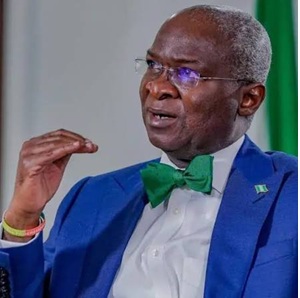
Former Lagos State Governor and ex-Minister of Works and Housing, Babatunde Raji Fashola, has called on opposition parties and political actors to accept election outcomes even when imperfections exist in the electoral process, arguing that no election anywhere in the world can be entirely flawless.
Fashola made the remarks while speaking at the June 12 edition of The Platform Nigeria, where he reflected on Nigeria’s democratic journey and the challenges associated with conducting elections in a large and complex country.
According to him, elections involve extensive planning, coordination, and logistics across thousands of polling units, making absolute perfection unrealistic. He noted that even advanced democracies continue to grapple with electoral disputes, operational challenges, and allegations of irregularities.
Fashola argued that the essence of democracy is not the absence of flaws but the existence of institutions and mechanisms capable of addressing shortcomings and improving future electoral processes.
Drawing comparisons with established democracies around the world, he maintained that political actors must recognize the practical limitations of electoral administration and focus on strengthening institutions rather than delegitimizing every election result.
The former minister further warned that a persistent refusal to accept election outcomes could undermine democratic development and reduce the ability of opposition parties to make meaningful contributions to governance and public discourse.
According to him, opposition parties play a critical role in democratic societies by scrutinizing government policies, presenting alternative ideas, and advocating reforms. However, he suggested that constant rejection of electoral outcomes may distract opposition groups from these responsibilities and hinder their ability to influence national development.
His remarks have generated mixed reactions across political and social circles.
Supporters of Fashola’s position argue that democracy requires political maturity and respect for institutional processes. They contend that while electoral reforms remain necessary, opposition parties should engage constructively within democratic structures rather than focus exclusively on contesting outcomes.
Critics, however, strongly disagreed with the former governor’s comments, describing them as dismissive of legitimate concerns raised by voters and civil society organizations regarding the conduct of recent elections.
Many critics pointed specifically to controversies surrounding the 2023 general elections, including technical challenges associated with the electronic transmission of results through the INEC Result Viewing Portal (iREV), allegations of voter suppression in some areas, delayed result uploads, and concerns over transparency.
They argue that calls for acceptance of election outcomes should not overshadow demands for accountability, electoral integrity, and compliance with established electoral guidelines.
Political analysts note that the debate highlights an enduring challenge within Nigeria’s democracy: balancing the need for political stability and acceptance of lawful outcomes with the equally important demand for credible, transparent, and trustworthy elections.
As discussions continue, stakeholders across the political spectrum agree on one point: strengthening electoral institutions and restoring public confidence in the voting process remain essential for the long-term health of Nigeria’s democracy.
Fashola’s comments have once again reignited national conversations about electoral reforms, democratic accountability, and the role of opposition parties in shaping Nigeria’s political future as preparations gradually begin for the 2027 general elections.


