

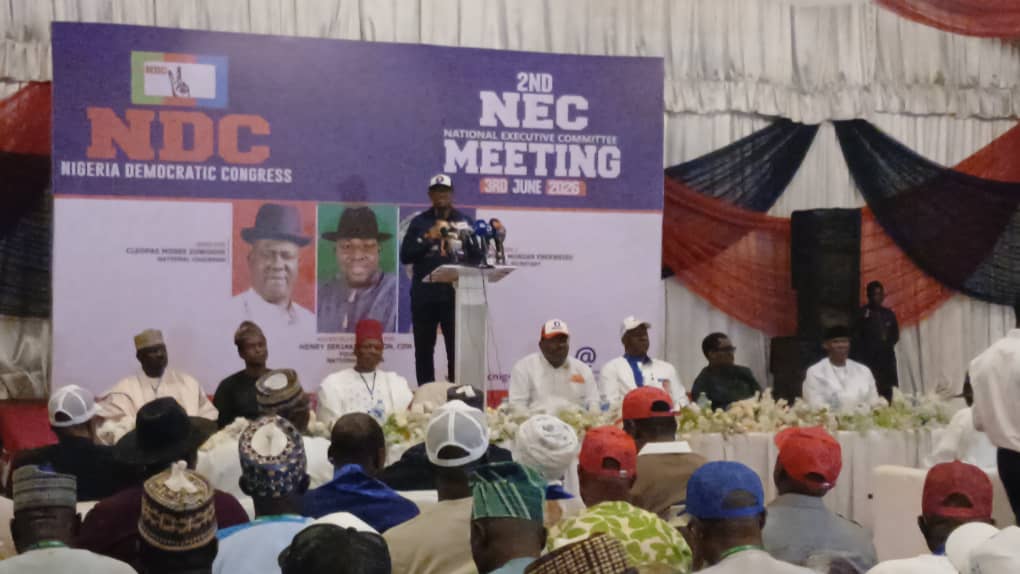
Political commentator and public affairs analyst, Great Imo Jonathan, has argued that the increasing attacks, criticisms, and controversies surrounding the Nigeria Democratic Congress (NDC) and its presidential candidate, Peter Obi, are clear indications that the party has emerged as a major force ahead of the 2027 general elections.
In an article titled “Why the Noise Around Peter Obi and the NDC Proves One Thing: The Party Has Arrived,” Jonathan contended that the volume of attention directed at the NDC is disproportionate to the party’s age and reflects growing anxiety among established political interests.
According to him, the NDC, which entered Nigeria’s political landscape in February 2026, has achieved in less than four months what many older political parties struggled to accomplish over several years.
He pointed to the party’s nationwide presence, claiming that it has successfully fielded candidates for State Houses of Assembly, the House of Representatives, the Senate, and governorship positions across the country.
Jonathan described the rush by politicians seeking NDC tickets as evidence of the party’s growing appeal, noting that even disagreements surrounding party primaries underscore the attractiveness of the platform rather than weakness within its ranks.
Drawing parallels with the Labour Party’s rise ahead of the 2023 elections under Peter Obi, he argued that political establishments often dismiss emerging movements before eventually recognizing their electoral strength.
“The attacks on Peter Obi and the NDC are not signs of weakness but indicators of relevance,” Jonathan wrote, asserting that political opponents generally focus their resources on parties they perceive as genuine threats.
He further maintained that the combination of Peter Obi’s Obidient Movement and the political structure associated with former Kano State Governor Rabiu Musa Kwankwaso under the NDC banner has heightened concerns among rival parties about the party’s prospects in 2027.
According to the analyst, the NDC has successfully positioned itself as a platform for Nigerians seeking alternatives to traditional political structures, bringing together supporters from diverse ethnic, religious, and regional backgrounds.
Jonathan also credited Peter Obi’s political influence since 2023 with shaping national conversations around issues such as economic reforms, insecurity, youth unemployment, foreign exchange management, anti-corruption measures, and electoral reforms.
He argued that the party’s growing popularity among young Nigerians and first-time voters has transformed it into a significant national movement capable of influencing political discourse.
While acknowledging that the NDC still faces challenges relating to institutional development, party structure, and sustaining public trust, Jonathan maintained that such pressures are common for emerging political movements seeking to challenge established power blocs.
He concluded that the sustained criticism directed at Peter Obi and the NDC should be viewed as evidence that the party has become a major contender in Nigeria’s political landscape.
“In Nigerian politics, silence often means irrelevance. The attention, attacks, and scrutiny directed at the NDC today are proof that the party has become impossible to ignore,” he stated.
— Reported from the opinion article by Great Imo Jonathan.


