

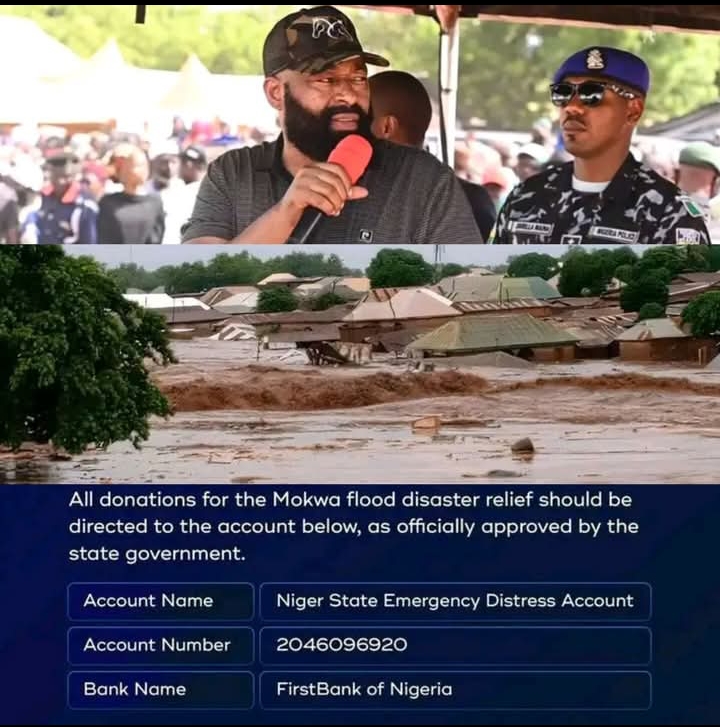
One year after one of the deadliest flood disasters in recent Nigerian history devastated Mokwa in Niger State, many survivors remain displaced, vulnerable, and fearful of another rainy season, while growing questions persist regarding the utilization of billions of naira and massive relief materials donated for victims.
The Mokwa flood disaster claimed hundreds of lives, displaced thousands of residents, destroyed homes, livelihoods, farmlands, schools, and critical infrastructure. In the aftermath of the tragedy, governments, private individuals, corporate organizations, and humanitarian groups rallied support for affected communities through donations running into several billions of naira.
Today, however, many residents and concerned Nigerians are asking a simple question:
What became of the relief funds and promises made to the victims?
Donations Publicly Announced
Records compiled from publicly announced donations indicate that Mokwa flood victims received support from various sources, including:
Federal Government — ₦2 Billion and 20 trucks of grains
Body of Bank CEOs — Over ₦500 Million and relief materials
Governor Babagana Zulum — ₦300 Million
Zenith Bank — ₦300 Million
Aliko Dangote — ₦250 Million
Senator Sani Musa — ₦50 Million and food items
Niger State First Lady and Family — ₦50 Million
Senator Abubakar Sani Bello — ₦50 Million
Taraba State Government — ₦50 Million
Vinicius International Company Limited — ₦50 Million
Hon. Idris Mohammed Malagi — ₦20 Million
Niger Foods — ₦20 Million and 1,000 bags of rice
Peter Obi — ₦20 Million
Hon. Saidu Musa Abdull — ₦20 Million
Arab Contractors — ₦20 Million
Barrister Mahmud Abubakar Magaji SAN — ₦20 Million
Numerous companies and stakeholders contributing between ₦1 million and ₦10 million each
Additional donations in food items, rice, grains, mattresses, blankets, building materials and other relief supplies.
Combined, publicly announced cash donations alone amount to well over ₦4 billion, excluding relief materials whose market value could significantly increase the total intervention package.
The Questions That Refuse To Go Away
Despite the enormous public goodwill generated after the disaster, reports from some affected communities suggest that many victims continue to struggle with accommodation, economic recovery and basic necessities.
Residents and civil society advocates are demanding answers to critical questions:
How much money was eventually received in total?
Which government agency managed the funds?
Was an independent audit conducted?
How many houses were promised?
How many houses have actually been completed?
How many victims received compensation?
What became of the donated grains, food items and relief materials?
What flood mitigation projects have been executed in Mokwa since the disaster?
Why do many flood-prone locations reportedly remain vulnerable today?
These questions become even more urgent as another rainy season approaches and residents fear a repeat of the tragedy.
Transparency Is Not Opposition
Calls for accountability should not be interpreted as political attacks.
Public donations made for disaster victims belong morally and legally to the affected communities. Citizens therefore have a legitimate right to demand detailed information on how such resources were utilized.
Transparency strengthens public trust, encourages future donations and reassures victims that assistance reached its intended destination.
Where funds have been properly utilized, a comprehensive public accounting would help dispel speculation and demonstrate responsible governance.
Victims Deserve More Than Sympathy
Natural disasters often generate emotional reactions and generous support from across the country. However, the true measure of disaster management is not the amount donated but the impact those donations have on the lives of survivors.
A year after the flood, many affected families continue to seek permanent shelter, sustainable livelihoods and protection from future disasters.
For them, accountability is not merely a political issue.
It is a matter of survival.
A Call For Public Disclosure
The Niger State Government should consider publishing a comprehensive report detailing:
Total funds and materials received.
Sources of all donations.
Beneficiaries of interventions.
Procurement records.
Housing projects completed.
Ongoing reconstruction efforts.
Independent audit findings where available.
Such disclosure would honor the generosity of donors, restore public confidence and provide victims with the clarity they deserve.
The people of Mokwa have waited for more than a year.
Their questions deserve answers.
Their suffering deserves action.
And their future deserves protection.


