

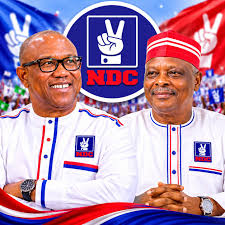
The internal affairs of the Nigeria Democratic Congress (NDC) have come under intense scrutiny following reports that the party’s presidential candidate, Peter Obi, expressed concerns over alleged irregularities during the recently concluded primary elections.
The development has sparked widespread debate within political circles, with party members and supporters calling for greater transparency and accountability in the candidate selection process ahead of the 2027 general elections.
According to reports, concerns were raised regarding allegations of ticket racketeering, delegate influence, and disputes surrounding the conduct of primaries in several states. The controversy has fueled discussions about internal democracy and the challenges political parties face in managing competitive nomination processes.
Political observers say the situation could prove significant for the NDC as it seeks to strengthen its position as a major opposition force ahead of the next electoral cycle.
Concerns Over Internal Party Processes
Reports emerging from party stakeholders indicate that questions have been raised about how some candidates emerged during the primaries.
Several aspirants reportedly expressed dissatisfaction with aspects of the process, alleging that party guidelines were not uniformly applied across all constituencies.
The concerns have generated calls for a comprehensive review of the primaries to ensure that all grievances are addressed through established party mechanisms.
Supporters of internal reforms argue that transparency in candidate selection is critical to maintaining public trust and strengthening democratic institutions.
They contend that political parties serve as the foundation of representative democracy and must therefore uphold principles of fairness and accountability.
Peter Obi Calls for Party Unity
Despite the controversy, Peter Obi has continued to emphasize the importance of party unity and reconciliation.
Sources within the party say the former Anambra State governor has encouraged stakeholders to resolve disputes through dialogue and established internal channels.
Obi has consistently advocated for transparency, good governance, and institutional reforms throughout his political career, making his reported concerns particularly significant to supporters.
Many party members believe his intervention could help encourage a broader conversation about strengthening internal democratic processes.
Political analysts note that maintaining cohesion within the party will be essential as preparations for future elections intensify.
NDC Leadership Responds
Party officials have defended the conduct of the primaries, insisting that the process complied with constitutional provisions and internal guidelines.
NDC leaders have repeatedly maintained that candidates emerged through consultations, grassroots participation, and democratic voting procedures.
The party has also emphasized its commitment to addressing complaints through appeal mechanisms established for aggrieved aspirants.
According to party representatives, reconciliation efforts are already underway to ensure that all stakeholders remain committed to the party’s broader objectives.
Leadership figures have called on members to prioritize unity and avoid actions that could undermine the party’s growth.
Internal Democracy Remains Key Issue
The controversy has once again highlighted the broader issue of internal democracy within Nigerian political parties.
Experts argue that credible primaries are essential for strengthening public confidence in the electoral process.
They note that many of the disputes that emerge during general elections often originate from disagreements surrounding candidate selection.
Political analysts say parties that successfully manage internal conflicts are generally better positioned to compete effectively during national elections.
The debate within the NDC reflects wider concerns about transparency, inclusiveness, and accountability across Nigeria’s political landscape.
Implications for 2027 Elections
With the 2027 elections drawing closer, observers believe political parties will face increasing pressure to demonstrate commitment to democratic principles.
For the NDC, the ability to manage internal disputes and maintain party unity could significantly influence its electoral prospects.
Supporters argue that resolving concerns early will help the party focus on policy issues, voter engagement, and strategic planning for future contests.
Meanwhile, critics contend that unresolved disagreements could create challenges for the party’s efforts to expand its support base nationwide.
The coming months are expected to be crucial as party leaders continue reconciliation efforts and seek to consolidate support among members.
Calls for Reform Continue
Political stakeholders across the country have renewed calls for stronger internal party reforms aimed at improving transparency and fairness.
Many believe that democratic institutions can only thrive when political parties operate according to clear rules and established procedures.
As discussions continue within the NDC, party members and supporters will be watching closely to see how leadership addresses the concerns raised during the primaries.
For now, the focus remains on reconciliation, accountability, and ensuring that the party emerges stronger ahead of future electoral contests.
The unfolding developments underscore the importance of internal democracy as a cornerstone of Nigeria’s evolving political system and the broader quest for credible governance.


