

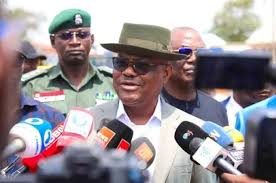
Federal Capital Territory (FCT) Minister Nyesom Wike has declared that former Vice President Atiku Abubakar and the African Democratic Congress (ADC) would fail to secure up to 10 percent of votes in Rivers State during the 2027 presidential election.
Wike made the remarks while addressing members of his political alliance popularly referred to as the “Rainbow Coalition,” a group reportedly made up of factions from the Peoples Democratic Party (PDP), All Progressives Congress (APC), Labour Party, and Action Alliance.
The former Rivers State governor used the occasion to reaffirm his political influence in the oil-rich state and express confidence in the strength of his coalition ahead of future elections.
According to Wike, Atiku lacks the political structure and grassroots support necessary to perform strongly in Rivers State, despite the former vice president’s previous electoral outings in the region.
The FCT minister reportedly mocked Atiku during his speech, describing him as “not ready for work, but ready when food is ready,” a comment that immediately drew reactions from political observers and supporters of both camps.
Wike also suggested that his coalition would play a major role in determining the next governor of Rivers State while continuing to support President Bola Ahmed Tinubu and the ruling APC administration.
The comments have intensified political tensions ahead of the 2027 general elections, particularly within Rivers State, which remains one of Nigeria’s most politically strategic and economically important states due to its large voting population and oil resources.
Political analysts note that Wike’s latest remarks further highlight the widening rift between him and Atiku Abubakar following disagreements that emerged during and after the 2023 presidential election.
Although Wike was a prominent PDP figure and former presidential aspirant, his relationship with Atiku deteriorated after the PDP presidential primary and subsequent political disputes involving party leadership and power-sharing arrangements.
During the 2023 election, official results showed Atiku Abubakar securing approximately 18 percent of votes in Rivers State under the PDP platform, a figure significantly higher than Wike’s recent prediction of less than 10 percent for the ADC in 2027.
Supporters of Atiku have dismissed Wike’s comments as political grandstanding intended to project influence ahead of the next election cycle.
Members of Atiku’s camp argued that Rivers voters are more concerned about governance, economic conditions, and national leadership than personal political rivalries.
Some opposition figures also insisted that political alliances and voter preferences could shift significantly before the 2027 elections, making early predictions unreliable.
Observers say Rivers State is expected to remain a major battleground as political actors intensify consultations, alliances, and grassroots mobilization in preparation for future elections.
The emergence of multiple political coalitions and shifting loyalties within major parties has continued to reshape Nigeria’s political landscape ahead of 2027.
Wike’s “Rainbow Coalition” has attracted attention because of its unusual combination of politicians from rival parties, reflecting the increasingly fluid nature of political alliances in Nigeria.
Political analysts believe the coalition could significantly influence voting patterns in Rivers State if it succeeds in maintaining internal unity and expanding grassroots support.
Meanwhile, supporters of President Tinubu view Wike as a key political ally capable of strengthening the APC’s influence in Rivers and parts of the South-South region.
Critics, however, argue that the growing political realignments could deepen divisions within opposition parties and complicate efforts to build a united front against the ruling party in 2027.
The latest exchange between Wike and Atiku’s supporters has already generated widespread reactions on social media, where Nigerians continue debating the future of opposition politics and the balance of power ahead of the next presidential election.
Analysts say the coming months are likely to witness increased political maneuvering, public confrontations, and coalition-building efforts as major political figures position themselves for the highly anticipated 2027 elections.
For now, Rivers State remains at the center of national political conversations, with Wike’s remarks serving as another reminder of the fierce rivalries already shaping Nigeria’s next electoral contest.


