

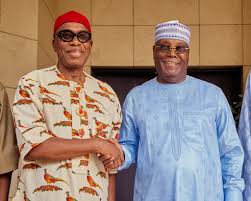
Youth leaders within the African Democratic Congress (ADC) have openly rejected former Vice President Atiku Abubakar as a possible presidential candidate for the 2027 elections, while throwing their support behind former Minister of Transportation Rotimi Amaechi.
The declaration adds fresh momentum to early political alignments ahead of Nigeria’s 2027 general elections, as parties and interest groups begin positioning key figures for the country’s top political office.
The youth bloc said its preference was driven by calls for leadership renewal, performance-based governance, and stronger inclusion of younger Nigerians in national decision-making.
ADC Youth Leaders Take Stand on 2027 Presidency
In their statement, the ADC youth leaders argued that Nigeria needs a shift from repeated presidential bids by long-standing political figures.
They said Atiku Abubakar, despite his extensive political experience, does not represent the generational shift they believe is necessary for national progress.
Instead, the group endorsed Rotimi Amaechi, describing him as a reform-minded politician with the administrative experience required to manage Nigeria’s complex governance structure.
According to the group, Amaechi’s background as a former governor and federal minister makes him better positioned to handle economic and infrastructural challenges facing the country.
They also called on the ADC leadership to ensure youth voices are considered in future political negotiations and candidate selection processes.
Opposition Politics Witness Early Realignments
The position taken by the youth leaders reflects broader political recalibration within Nigeria’s opposition space as parties begin informal discussions ahead of 2027.
Atiku Abubakar remains one of the most influential figures in opposition politics, having contested multiple presidential elections and maintained a strong political network nationwide.
However, debates over leadership renewal have continued to shape discussions among younger political actors and advocacy groups.
Supporters of Rotimi Amaechi argue that his experience in both state and federal government positions gives him a competitive edge in any presidential contest.
ADC’s Role in Emerging Political Conversations
The African Democratic Congress has increasingly featured in national political conversations despite being a smaller opposition party.
Internal restructuring efforts and participation in coalition talks have placed the party under greater public attention in recent months.
Political observers say that differing opinions within the party, such as the youth bloc’s endorsement of Amaechi, highlight ongoing struggles to define a unified political direction.
Analysts believe these internal debates may influence future alliances and negotiations ahead of the 2027 elections.
Youth Demand for Greater Political Inclusion
The ADC youth leaders also used their statement to emphasize the need for increased youth participation in governance and party leadership.
They argued that Nigeria’s large youth population should be better represented in political decision-making processes.
Experts note that youth-driven political advocacy has become more prominent in recent election cycles, with younger voters increasingly vocal about leadership choices and governance expectations.
The group maintained that supporting Amaechi aligns with their broader vision of reform-oriented leadership and national development.
No Official Response Yet
As of the time of filing this report, neither Atiku Abubakar nor Rotimi Amaechi has publicly responded to the ADC youth leaders’ declaration.
Both politicians remain key figures in Nigeria’s political landscape, and their positions are expected to be closely watched as 2027 approaches.
Conclusion: Early Signals of a Competitive 2027 Election
With political conversations intensifying, the ADC youth bloc’s endorsement of Amaechi over Atiku highlights early divisions and preferences shaping Nigeria’s evolving electoral landscape.
As parties continue to engage in consultations and strategic planning, such declarations are expected to play a growing role in shaping narratives ahead of what is anticipated to be a highly competitive 2027 general election season.


