

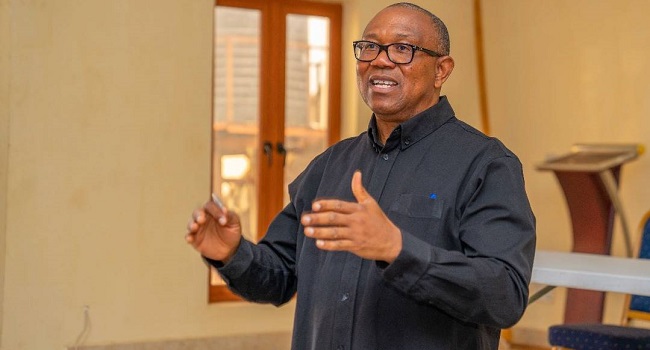
Opposition leader and former presidential candidate Peter Obi has openly questioned the neutrality of the Independent National Electoral Commission (INEC), accusing its chairman, Professor Joash Ojo Amupitan, of allegedly acting in line with the political interests of President Bola Ahmed Tinubu.
Obi made the remarks during preview clips released from his appearance on News Central Television’s political programme “60 Minutes with Mr. Kay,” where he criticised the handling of recent elections and warned about what he described as declining confidence in Nigeria’s electoral process.
The former Labour Party presidential candidate claimed recent polls were “disastrously mismanaged,” arguing that Nigeria’s democracy could face deeper credibility challenges if reforms are not urgently introduced before future elections.
His comments have triggered strong reactions across political and social media spaces, with supporters defending his concerns while critics accused him of attempting to discredit national institutions ahead of the 2027 elections.
Obi Criticises INEC Leadership
During the interview, Obi directly questioned the leadership of Professor Joash Ojo Amupitan, who was appointed INEC chairman in October 2025 by President Tinubu.
According to Obi, recent developments surrounding the electoral commission have raised concerns about transparency, neutrality, and institutional independence.
He suggested that the conduct of some elections under the present leadership appears politically influenced, although he did not provide specific evidence during the programme preview.
Obi stressed that credible elections are essential for democratic stability and warned that continued public distrust in the electoral process could create wider political problems for the country.
Fears Over Upcoming Elections
The former Anambra State governor also linked his criticism to upcoming elections, including the Federal Capital Territory Area Council elections expected in February 2026.
He argued that concerns surrounding the administration of recent elections have increased anxiety about how future polls may be conducted.
Political analysts say debates about election credibility have remained central to Nigeria’s democracy, especially after disputes linked to the 2023 presidential election.
Obi was among opposition candidates who challenged the outcome of that election after President Tinubu of the All Progressives Congress (APC) was declared winner.
Although the courts upheld the result, many of Obi’s supporters have continued to express dissatisfaction with INEC’s handling of the election process.
Opposition Politics and Realignments
Obi’s latest remarks come amid increasing political activity and opposition realignments ahead of the 2027 elections.
The former presidential candidate has recently been associated with the Nigeria Democratic Congress (NDC), as opposition figures continue consultations over alliances and coalition-building.
Observers believe criticisms of INEC and demands for electoral reforms may become major themes in opposition campaigns leading into the next election cycle.
Analysts also note that Obi remains one of Nigeria’s most influential opposition politicians, especially among younger voters and urban-based supporters.
Economic Challenges Also Highlighted
Beyond electoral concerns, Obi also spoke about Nigeria’s worsening economic condition during the interview.
He described the country’s economic hardship as a widespread “disability,” arguing that inflation, unemployment, rising debt, and declining purchasing power are severely affecting Nigerians.
According to him, urgent reforms are needed to improve productivity, strengthen institutions, and stabilise the economy.
The former governor has repeatedly criticised the current administration’s economic management, particularly the rising national debt and increasing cost of living.
Supporters of President Tinubu, however, insist that the administration’s economic reforms are necessary steps toward long-term recovery and structural adjustment.
Reactions Divide Political Supporters
Obi’s comments quickly generated mixed reactions online and within political circles.
Supporters praised him for speaking openly about concerns surrounding Nigeria’s electoral system and governance challenges.
Some members of the Obidient movement argued that he was simply voicing frustrations shared by many Nigerians regarding democracy and economic hardship.
Critics, however, accused Obi of undermining democratic institutions because of dissatisfaction with past election outcomes.
Some APC supporters argued that repeated attacks on INEC could weaken public confidence in elections and increase political tension ahead of future polls.
Others defended Professor Amupitan’s leadership, insisting that electoral officials should be assessed based on institutional performance rather than political assumptions.
Electoral Integrity Remains National Debate
Concerns about electoral transparency and institutional independence continue to dominate political discussions in Nigeria.
Civil society organisations and election observers have repeatedly called for reforms aimed at improving transparency, logistics, and public trust in elections.
Issues surrounding electronic transmission of results, election-day logistics, and institutional accountability remain key areas of debate after recent electoral cycles.
Analysts say discussions about electoral reform are likely to intensify as preparations for the 2027 elections gather momentum.
Obi Continues to Shape Opposition Narrative
Since the 2023 elections, Peter Obi has remained a major figure in Nigeria’s opposition politics.
His campaign attracted millions of supporters nationwide and significantly expanded the political influence of the Labour Party among younger voters.
The political movement surrounding him remains highly active online and continues to influence public discussions about governance, accountability, and democracy.
Observers believe Obi’s latest criticism of INEC forms part of a broader effort to shape the national political conversation ahead of 2027.
Focus Shifts Toward 2027
As Nigeria gradually moves toward another election season, issues surrounding electoral credibility, economic hardship, and opposition unity are expected to dominate political discourse.
For Obi’s supporters, his latest comments reflect growing concern about the future of Nigeria’s democracy and governance.
For critics, the remarks represent political strategy aimed at energising supporters ahead of future elections.
Either way, the controversy has once again placed the country’s electoral system and democratic institutions at the center of national political debate.


