

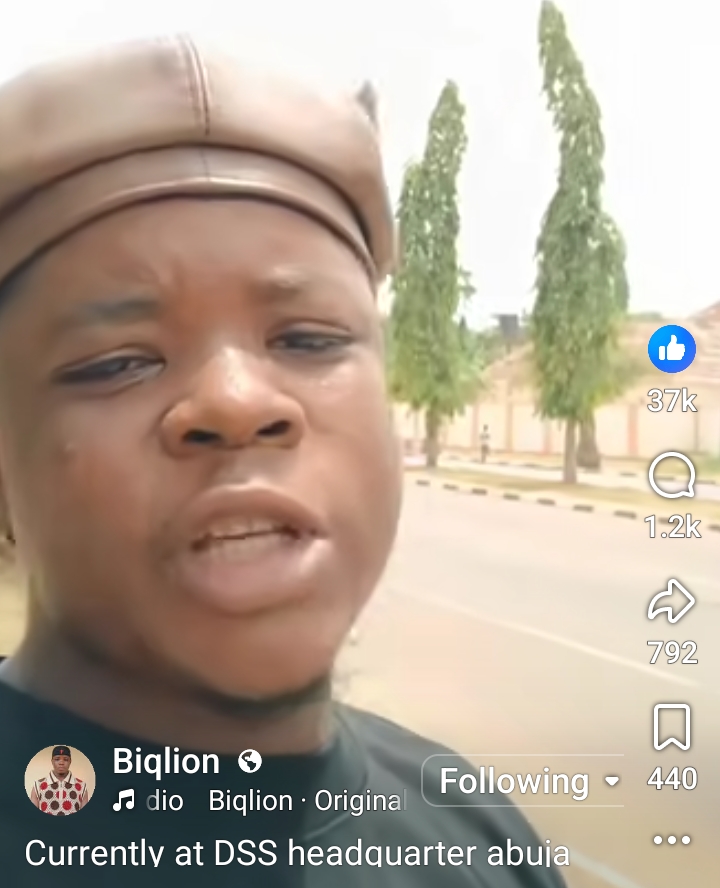
Reports that Nigerian singer Biqlion has been invited for questioning by the Department of State Services (DSS) have ignited fresh concerns over freedom of expression and the treatment of dissenting voices under the administration of Bola Ahmed Tinubu.

According Biqlion, he was invited by the DSS for questioning over songs critical of government performance—raising broader questions about the limits of artistic expression in Nigeria’s democracy. While authorities have not publicly detailed the reasons for the invitation, critics argue that such actions risk creating a chilling effect on musicians, activists, and citizens who use creative platforms to voice dissatisfaction.
The controversy is further amplified by comparisons being drawn with Nigeria’s counterinsurgency approach to Boko Haram fighters. The government has, in recent years, implemented deradicalization and reintegration initiatives for repentant insurgents, including vocational training and structured rehabilitation programs. Supporters say these efforts are part of a broader security strategy aimed at reducing violence and encouraging defections.
However, critics view the contrast as troubling—questioning why individuals accused of violent extremism are reintegrated, while non-violent critics face scrutiny from security agencies.
A Polarizing Narrative
It’s important to separate verified facts from political framing.
Security agencies like the DSS typically state that invitations are part of routine investigations, not necessarily proof of wrongdoing.
Rehabilitation programs for “former” insurgents are internationally recognized counterterrorism tools, though their implementation in Nigeria remains controversial.
What This Means
The situation highlights a recurring tension in Nigeria’s democracy: balancing national security with civil liberties. Artistic criticism has historically played a key role in political discourse—from Afrobeat legends to modern protest music—and any perceived crackdown often generates public backlash.
At the same time, equating security questioning with suppression requires careful scrutiny of available facts. Without official charges or statements, the full context of Biqlion’s invitation remains unclear.
The Bigger Picture
The incident feeds into a wider national conversation about governance, accountability, and the space for dissent. As Nigeria approaches another electoral cycle, how institutions handle criticism may shape both domestic trust and international perception of its democratic health.



What a country we have found ourselves in as Nigerians.Different strokes for different tribes and religion. Almighty God is watching IJN. Gaskia!!!