


Nigeria’s electoral body, the Independent National Electoral Commission (INEC), has complied with the recent ruling of the Supreme Court of Nigeria by restoring the names of David Mark and Rauf Aregbesola to its official party leadership portal.
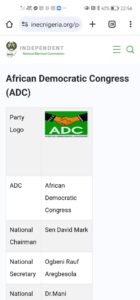
The update follows the apex court’s decision to vacate earlier orders that had created uncertainty around the leadership structure of the African Democratic Congress (ADC). With the judgment effectively recognizing the caretaker leadership, INEC’s action signals formal acknowledgment of the current national executives.
Observers say the development may ease internal tensions within the party while providing clarity ahead of ongoing political realignments toward the 2027 general elections. It also reinforces the principle of institutional compliance with judicial authority in Nigeria’s democratic process.
Party stakeholders are now expected to consolidate on the ruling, address lingering disputes at state levels, and move toward conducting valid congresses and a national convention in line with legal guidelines.
INEC’s Compliance Deepens Legitimacy Shift Within ADC Leadership
The decision by the Independent National Electoral Commission (INEC) to restore David Mark and Rauf Aregbesola on its official portal goes beyond a routine administrative update—it is a decisive institutional endorsement of the current leadership structure within the African Democratic Congress (ADC).
Legal Finality and Institutional Authority
By acting swiftly on the judgment of the Supreme Court of Nigeria, INEC has reinforced the supremacy of judicial decisions in electoral and party governance matters. The apex court’s ruling, which vacated the earlier “status quo ante bellum” directive issued by the Court of Appeal, effectively reset the legal landscape.
INEC’s portal is not merely symbolic—it is the official registry that determines who is recognized to act on behalf of a political party in matters such as candidate nominations, submission of party documents, and participation in elections. With Mark and Aregbesola now reinstated, their authority is no longer in contention from a regulatory standpoint.
Impact on ADC Internal Power Dynamics
This development significantly tilts the balance of power within the ADC. The caretaker leadership led by Mark now enjoys both judicial backing and regulatory recognition, placing it in a stronger position to direct party affairs.
However, the ruling does not automatically dissolve underlying grievances. Factions within the party—particularly at the state level—may still contest issues surrounding congresses, delegate legitimacy, and internal democracy. What has changed is the legal footing: dissenting groups must now operate within the framework defined by the Supreme Court judgment.
Pathway to Reorganization
The reinstatement creates a clear pathway for the ADC to reorganize its internal structures. Key next steps are likely to include:
Conducting fresh, legally compliant ward, local government, and state congresses
Harmonizing parallel party structures that emerged during the crisis
Planning a national convention that aligns with both party constitution and electoral laws
If managed effectively, this process could reposition the ADC as a more cohesive political force ahead of the 2027 elections.
Broader Political Implications
The development carries weight beyond the ADC. It sends a strong signal across Nigeria’s political landscape that:
Judicial pronouncements remain the ultimate arbiter in party disputes
Regulatory bodies like INEC will enforce court decisions without delay
Political actors must prioritize legal compliance over factional maneuvers
For opposition politics, in particular, stability within parties like the ADC could influence coalition-building efforts and realignments in the coming electoral cycle.
The Real Test Ahead
While the legal battle appears settled at the top, the real challenge lies in political reconciliation. The ability of the Mark-led leadership to unify the party, accommodate dissenting voices, and deliver credible internal processes will determine whether this victory translates into long-term stability—or merely a temporary pause in internal conflict.
In essence, INEC’s action has closed the chapter on uncertainty at the national leadership level, but the story of rebuilding the ADC is only just beginning.


