
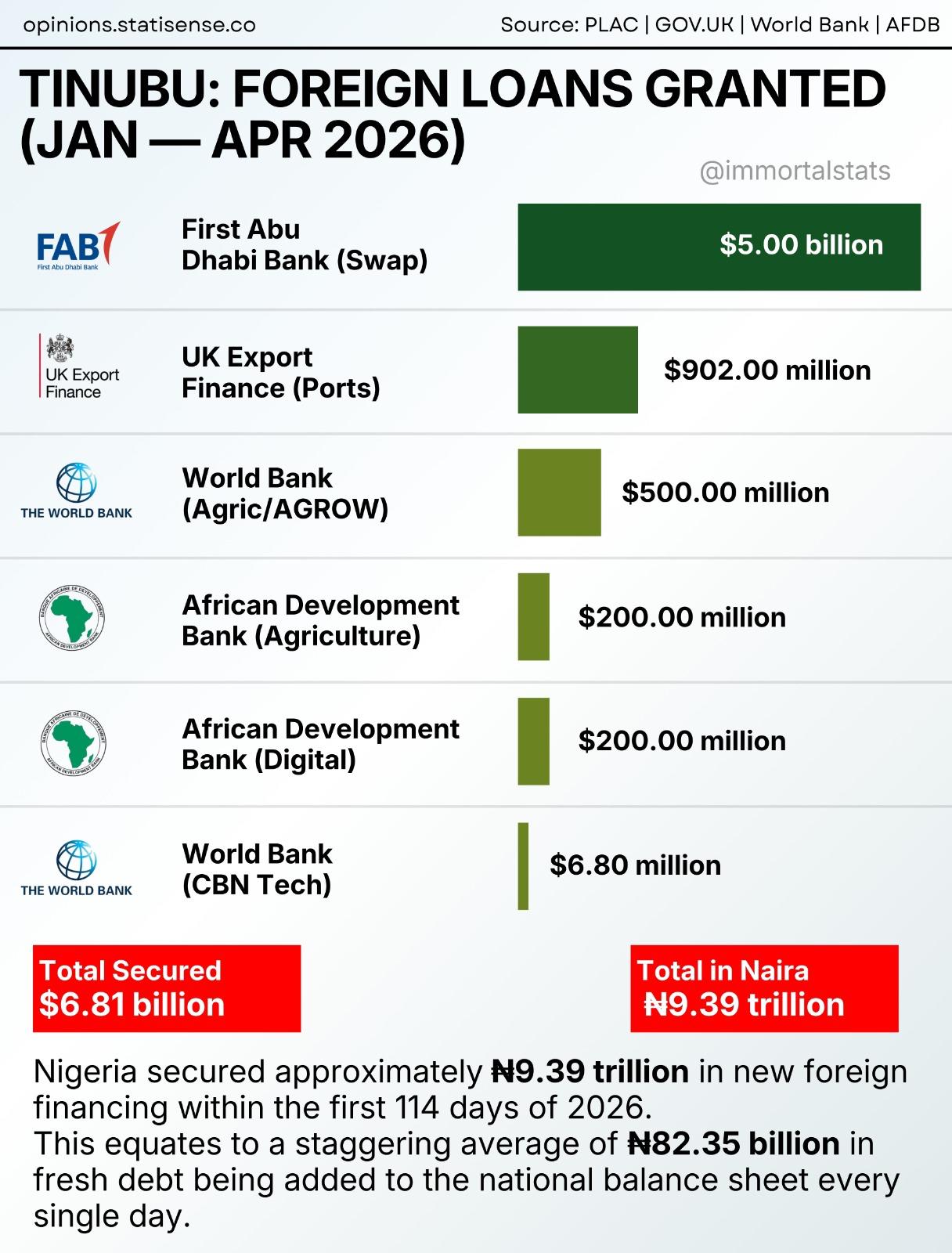
The administration of President Bola Ahmed Tinubu has reportedly secured approximately $6.81 billion (about ₦9.39 trillion) in new foreign loans between January and April 2026, raising fresh concerns over Nigeria’s rising debt profile and long-term fiscal sustainability.
According to data compiled from PLAC, GOV.UK, the World Bank, and the African Development Bank, the loans were granted across key sectors including agriculture, ports infrastructure, digital development, and financial system support.
The largest chunk of the financing came from First Abu Dhabi Bank through a currency swap arrangement valued at $5 billion.
Other major facilities include:
UK Export Finance – $902 million for port development
World Bank – $500 million for Agriculture/AGROW
African Development Bank – $200 million for agriculture
African Development Bank – $200 million for digital development
World Bank – $6.8 million for CBN technology support
This brings the total secured within the first 114 days of 2026 to an average of ₦82.35 billion in fresh debt added daily to Nigeria’s national balance sheet.
The development has triggered widespread public criticism, with many Nigerians questioning the rationale behind continued borrowing despite the removal of fuel subsidy and the aggressive expansion of taxation under the current administration.
Critics are asking: What then is the real benefit of subsidy removal? What is the purpose of increased taxation if government still relies heavily on foreign loans to run critical sectors?
Many have also demanded transparency on the actual deployment of these funds, insisting that citizens deserve to see visible projects, measurable development, and improved living standards that justify such massive borrowing.
Questions continue to mount over where exactly these loans have been invested, which projects are being executed, and why economic hardship continues to deepen despite repeated assurances of reform and recovery.
Opposition voices argue that President Bola Ahmed Tinubu still has many difficult questions to answer regarding fiscal accountability, debt management, and public trust, warning that history will ultimately demand a full account of how every kobo was spent.
Supporters of the administration, however, maintain that strategic borrowing remains necessary to finance critical national projects, stabilize key sectors, and reposition the economy for long-term growth.
The latest figures are expected to intensify national conversations around debt transparency, fiscal discipline, and the long-term economic direction of the Tinubu government.
Tinubu Administration Secures ₦9.39 Trillion in Foreign Loans Within First 114 Days of 2026

- Advertisement -

