

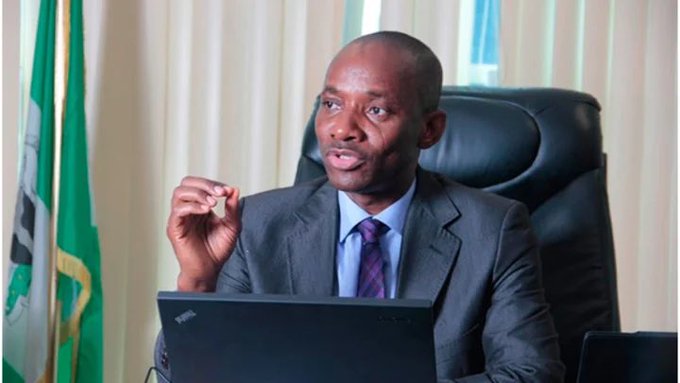
A strongly worded commentary by Nigerian public affairs analyst Sam Amadi has ignited fresh debate over governance and public finance under President Bola Tinubu, with claims of “state capture” and mismanagement of budgetary resources.
In the widely circulated statement, Amadi recounted what he described as an emotional conversation with a senior official in a federal ministry, who allegedly expressed frustration over the government’s failure to release funds for approved projects. According to the account, the official claimed that many technocrats are being undermined, as project funds are either delayed or redirected, leaving contractors unpaid and critical initiatives stalled.
The claims, which have not been independently verified, also referenced concerns about alleged diversion of budgetary allocations into political channels. Amadi cited reports attributed to the World Bank to support broader concerns about fiscal transparency, though no specific report was directly quoted.
The commentary further suggested that internal dissent within government circles may be discouraged, alleging that officials who challenge prevailing narratives risk marginalization. Amadi alluded to recent cabinet changes as evidence of this trend, though he did not provide direct proof linking personnel decisions to such dynamics.
In a particularly critical section of the statement, Amadi argued that public support for the current administration appears limited to specific groups, including political actors, beneficiaries of government spending, and individuals aligned with partisan or economic interests. He questioned whether the broader population feels positively impacted by current policies.
The remarks have generated mixed reactions across political and public spheres. Supporters of the administration have dismissed the claims as exaggerated and politically motivated, arguing that economic reforms—though painful—are necessary for long-term stability. They point to measures such as subsidy removal and fiscal restructuring as evidence of a commitment to reform.
Critics, however, say the statement reflects growing frustration among segments of the population, particularly regarding inflation, delayed payments, and economic hardship. They argue that concerns about transparency and accountability in public spending deserve serious attention.
Political analysts caution that while such testimonies can be powerful, they must be treated carefully unless supported by verifiable evidence. “Anonymous accounts can highlight issues, but they should not replace institutional investigation and data-driven analysis,” one analyst noted.
The federal government has not issued an official response to Amadi’s claims as of the time of reporting. However, officials have previously maintained that budget implementation challenges are being addressed and that efforts are underway to improve efficiency in public finance management.
The debate comes at a time when Nigeria faces significant economic pressures, including rising debt obligations, inflation, and ongoing reforms aimed at stabilizing the economy. Public discourse around governance and accountability has intensified, with citizens increasingly demanding transparency and measurable results.
As reactions continue to unfold, the controversy underscores a broader tension in Nigeria’s political environment—between official narratives of reform and public perceptions of economic reality.
Whether Amadi’s claims will prompt further scrutiny or official clarification remains to be seen, but the statement has undoubtedly added to the growing conversation about governance, accountability, and the direction of the country under the current administration.


