

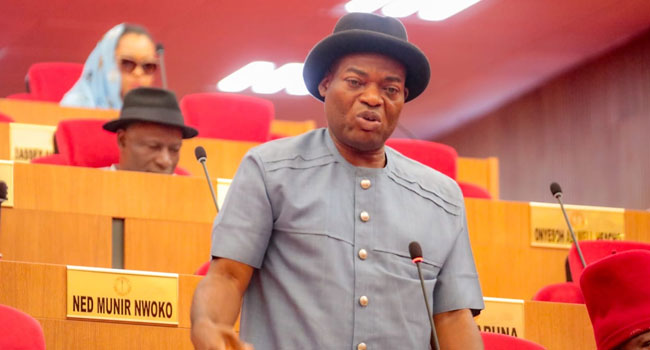
In a development that signals shifting dynamics within Nigeria’s upper legislative chamber, Senator Tony Nwoye of the African Democratic Congress (ADC) has been announced as the new Minority Whip of the Senate.
The appointment marks a significant milestone for both Nwoye and the ADC, a party that has been steadily gaining visibility within Nigeria’s evolving political landscape. As Minority Whip, Nwoye will play a crucial role in coordinating opposition lawmakers, ensuring party discipline, and articulating minority positions on legislative matters within the National Assembly.
Sources within the Senate indicate that the decision reflects ongoing realignments among opposition parties as they seek to strengthen their influence ahead of key legislative debates and the 2027 general elections. The role of Minority Whip, while often operating behind the scenes, is widely regarded as central to maintaining cohesion among non-majority lawmakers and shaping parliamentary strategy.
Senator Nwoye, who represents Anambra North Senatorial District, is no stranger to Nigeria’s political terrain. Known for his grassroots mobilization and vocal stance on national issues, his emergence is seen by supporters as a strategic move to energize the opposition and provide more coordinated engagement in the Senate.
Political analysts suggest that the appointment could also reflect the growing footprint of the ADC within national politics. Once considered a fringe party, the ADC has in recent months attracted prominent figures and increased membership, positioning itself as a potential force in the lead-up to the next electoral cycle.
“This is more than just a leadership change,” one Abuja-based political observer noted. “It speaks to the broader reconfiguration of opposition politics in Nigeria. The ADC is clearly positioning itself to play a more prominent role.”
Within the Senate, the Minority Whip is tasked with rallying lawmakers on key votes, negotiating with majority leaders, and ensuring that opposition perspectives are effectively represented in legislative processes. Nwoye’s ability to navigate these responsibilities will likely shape perceptions of his leadership in the coming months.
Reactions to the announcement have been varied. Supporters of the ADC have welcomed the development, describing it as a sign of the party’s growing relevance and organizational strength. Some have also expressed optimism that Nwoye’s leadership will bring renewed vigor to opposition activities within the Senate.
However, critics have urged caution, noting that leadership positions alone do not automatically translate into effective governance or legislative impact. They emphasize the need for tangible contributions, including policy advocacy and constructive engagement with national issues.
The appointment comes at a time when Nigeria faces significant challenges, including economic pressures, security concerns, and debates over governance reforms. In this context, the role of opposition leaders is expected to be particularly important in providing oversight and alternative perspectives.
As Senator Nwoye assumes his new position, attention will turn to how he leverages the office to influence legislative outcomes and strengthen his party’s standing. For the ADC, the development represents both an opportunity and a test—an opportunity to demonstrate capacity at the national level, and a test of its ability to translate political momentum into meaningful impact.
With the political atmosphere gradually building toward the 2027 elections, developments within the Senate are likely to carry broader implications. Nwoye’s emergence as Minority Whip is one such development, reflecting a changing landscape where alliances, strategy, and leadership will play decisive roles in shaping Nigeria’s future.


