

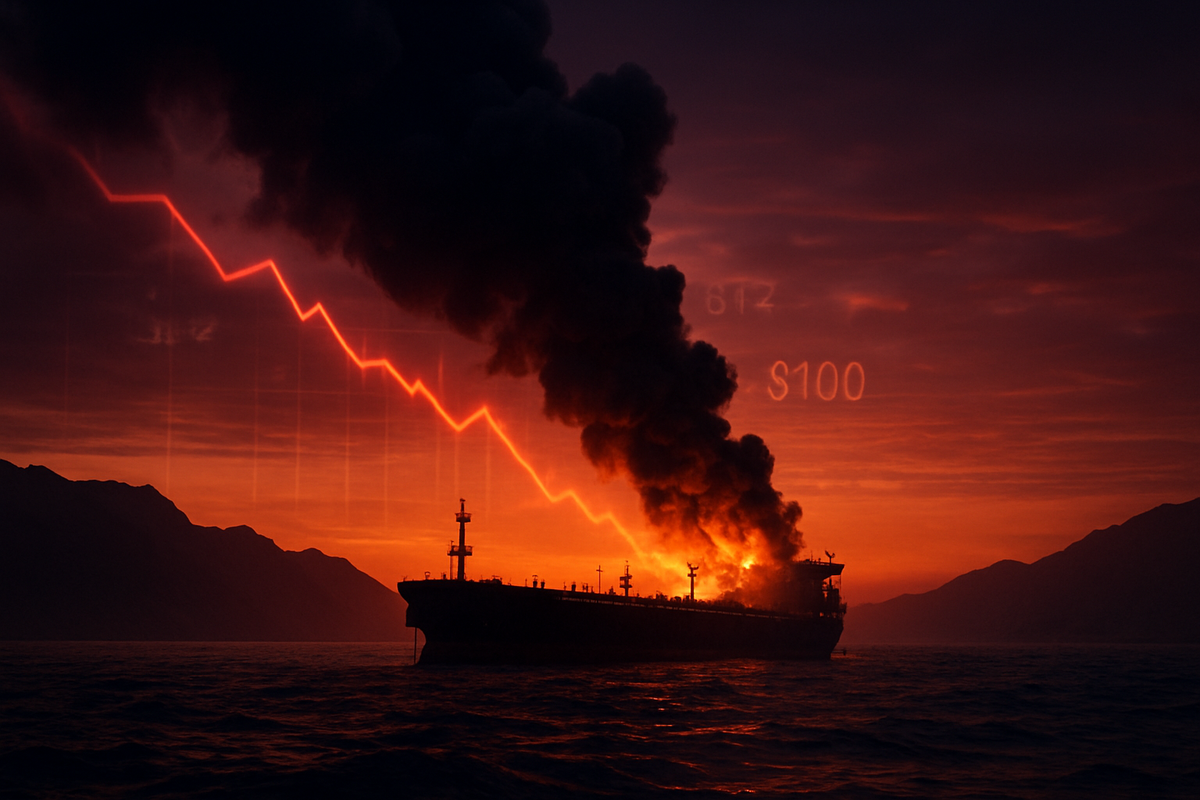
Tensions in the Gulf region surged sharply after the United States Central Command (CENTCOM) released a video purportedly showing a U.S. Navy warship engaging an Iranian-flagged cargo vessel near the strategic Strait of Hormuz.
According to CENTCOM, the guided-missile destroyer USS Spruance fired multiple rounds targeting the engine compartment of a cargo ship identified as the Touska. The U.S. military claimed the vessel had violated a blockade imposed amid escalating hostilities in the region.
In a statement accompanying the footage, CENTCOM said the action was taken to “disable and deter” the ship after it allegedly ignored repeated warnings. The video, which has since circulated widely across international media platforms, appears to show precision fire directed at the vessel, followed by the deployment of U.S. Marines who boarded the ship shortly after it was immobilized.
Military officials described the operation as “controlled and proportional,” emphasizing that the intent was not to destroy the vessel but to enforce compliance with maritime restrictions. “The objective was to neutralize mobility and secure the vessel without unnecessary escalation,” a CENTCOM spokesperson stated.
However, the incident has already sparked fresh controversy, particularly given the sensitive location of the encounter. The Strait of Hormuz remains one of the world’s most critical chokepoints for global oil shipments, with roughly a fifth of the world’s petroleum passing through its narrow waters daily. Any military confrontation in this corridor carries significant implications for international trade and energy security.
Iranian authorities have yet to issue a comprehensive response to the incident, but analysts expect strong condemnation from Tehran, which has consistently rejected U.S. naval presence and enforcement actions in the Gulf. The targeting of an Iranian-flagged commercial vessel is likely to be viewed as a direct provocation, potentially triggering retaliatory measures.
Security experts warn that such encounters, even when limited in scope, increase the risk of miscalculation in an already volatile environment. “We are looking at a situation where a single misstep could spiral into a broader naval conflict,” said one regional analyst. “Boarding operations, especially under fire, are inherently risky and politically explosive.”
The United States has maintained that its maritime operations in the region are aimed at ensuring freedom of navigation and preventing the movement of materials deemed threatening under its strategic framework. Critics, however, argue that unilateral enforcement actions—particularly blockades—raise serious questions under international law.
As the video continues to draw global attention, calls for restraint are mounting from diplomatic quarters. With tensions already elevated between Washington and Tehran, the latest confrontation underscores the fragile balance in one of the world’s most strategically vital waterways.
Whether this incident remains an isolated enforcement action or marks the beginning of a more sustained maritime standoff may depend on the response from Iran in the coming days. For now, the waters of the Gulf remain tense—and heavily watched.