

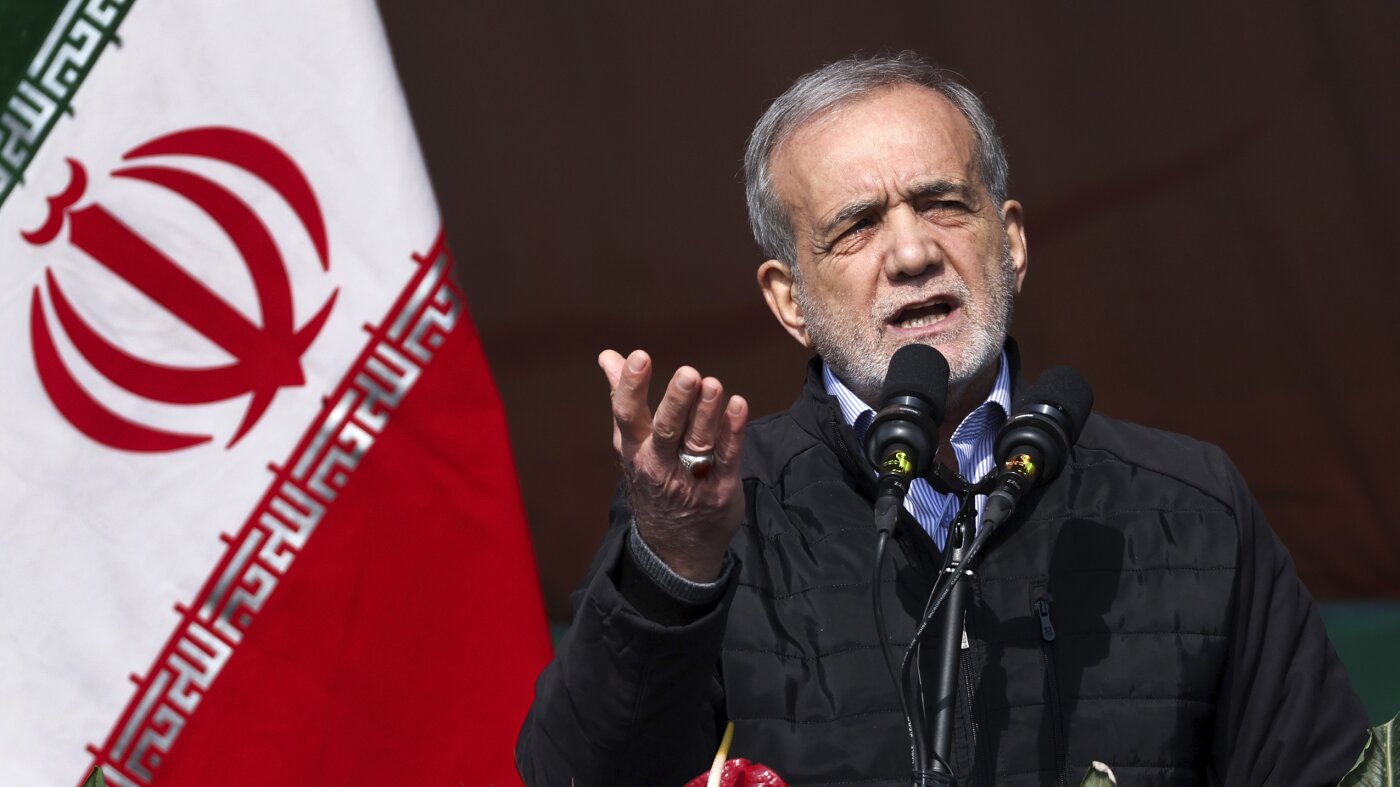
The President of Masoud Pezeshkian has openly challenged the authority of Donald Trump, declaring that the United States has no legal or moral standing to deny Iran its nuclear rights. His remarks come at a time of heightened tensions in the Middle East, with fears mounting over a broader regional conflict.
Speaking amid ongoing hostilities, Pezeshkian questioned Washington’s position, stating that Iran’s nuclear ambitions are lawful and should not be dictated by foreign powers. “The U.S. president says Iran should not make use of its nuclear rights, but he does not answer for what crime,” Pezeshkian said. “Who is he, after all, to deprive a nation of its legal rights?”
Despite the strong rhetoric, the Iranian leader struck a measured tone regarding the possibility of further escalation. He emphasized that Tehran is not seeking to widen the conflict, insisting that its actions remain defensive in nature. “Iran is not seeking to expand the war and has not started any conflict and will not do so,” he said. “We have not attacked any country, and under the current circumstances we have no intention of attacking any side. We are only engaged in legitimate self-defense.”
However, developments on the ground suggest a far more complex and volatile situation. During the course of the conflict, Iran reportedly carried out strikes across a wide swath of the region, targeting multiple countries including Bahrain, Kuwait, Oman, Qatar, and the United Arab Emirates. Additional operations were reported in Jordan, Saudi Arabia, Syria, Iraq, and Turkey.
Notably, Iranian actions were also said to extend beyond traditional regional boundaries, with alleged strikes affecting the British overseas territory of Akrotiri and Dhekelia and areas within the West Bank. Reports have also indicated possible activity in Azerbaijan, though details remain unclear.
The apparent contradiction between Iran’s claim of self-defense and the breadth of its military engagements has raised concerns among global observers. Analysts warn that continued tit-for-tat actions could drag more nations into the conflict, destabilizing an already fragile geopolitical landscape.
The United States has yet to formally respond to Pezeshkian’s latest remarks, but previous statements from Washington have consistently opposed Iran’s nuclear program, citing concerns over regional security and nuclear proliferation.
As diplomatic channels remain strained, the international community faces increasing pressure to mediate and prevent further escalation. With both sides holding firm to their positions, the risk of a prolonged and potentially wider conflict looms large over the region.


