

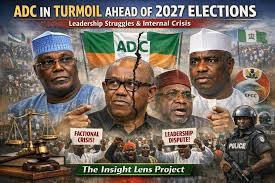
A deepening leadership crisis within the African Democratic Congress (ADC) is threatening the party’s stability, with three rival factions now competing for control as political stakes rise ahead of the 2027 general elections.
Once seen as a credible “third force” alternative to the ruling All Progressives Congress (APC) and the opposition Peoples Democratic Party (PDP), the ADC is increasingly fragmented, with competing blocs advancing separate leadership claims and strategies for the next presidential race.
Three Factions, Diverging Paths
The crisis has crystallized into three major factions:
Mark-Led Coalition Bloc
The faction led by former Senate President David Mark is backed by prominent opposition figures including Atiku Abubakar, Peter Obi, Rabiu Musa Kwankwaso, and Rauf Aregbesola.
This bloc positions itself as a unifying coalition aimed at consolidating opposition forces under one platform to challenge the APC in 2027. It claims legitimacy based on a reported 2025 National Executive Committee (NEC) transition, though its recognition has since been contested.
Gombe Institutional Faction
Led by Nafiu Bala Gombe, a former deputy national chairman, this group argues that it represents constitutional continuity following the resignation of former party chairman Ralph Nwosu.
The faction draws support from some northern state leaders and party loyalists, particularly in Gombe, Kaduna, and Bauchi states. It is currently pursuing legal recognition through cases at the Federal High Court and the Court of Appeal.
Kachikwu–Obinna Grassroots Bloc
The third faction, led by Dumebi Kachikwu in collaboration with Abia ADC chairman Don Norman Obinna, rejects both rival claims as illegitimate.
This bloc has announced a caretaker committee and emphasizes internal democracy, drawing support from several state chapters and grassroots party members. It has also backed the electoral body’s refusal to recognize any faction pending legal resolution.
INEC Maintains Neutrality
The Independent National Electoral Commission (INEC) has declined to recognize any of the factions, citing ongoing litigation and maintaining a status quo position.
This stance has effectively frozen the party’s official activities, including congresses, primaries, and leadership decisions, until the courts provide clarity.
Implications for 2027
Political analysts say the outcome of the crisis could significantly shape Nigeria’s opposition landscape ahead of the 2027 elections:
- If the Mark-led coalition prevails, a potential alliance involving Atiku Abubakar and Peter Obi could emerge, positioning the ADC as a major opposition platform.
- If Gombe’s faction gains legal recognition, the party may pursue a northern-focused strategy, possibly aligning with emerging regional figures.
- If the Kachikwu-led bloc consolidates control, the ADC could reposition itself as a grassroots-driven movement, though questions remain over funding and national reach.
Broader Political Impact
Observers warn that the prolonged internal conflict could weaken the ADC’s relevance if not resolved in time. With no unified leadership or clear direction, the party risks being sidelined in the 2027 electoral cycle.
Analysts note that the crisis may ultimately determine whether Nigeria sustains a viable third political force or reverts to a dominant two-party contest between the APC and PDP.
As legal battles continue and political alliances shift, the ADC’s future—and its role in Nigeria’s democratic landscape—remains uncertain.


