

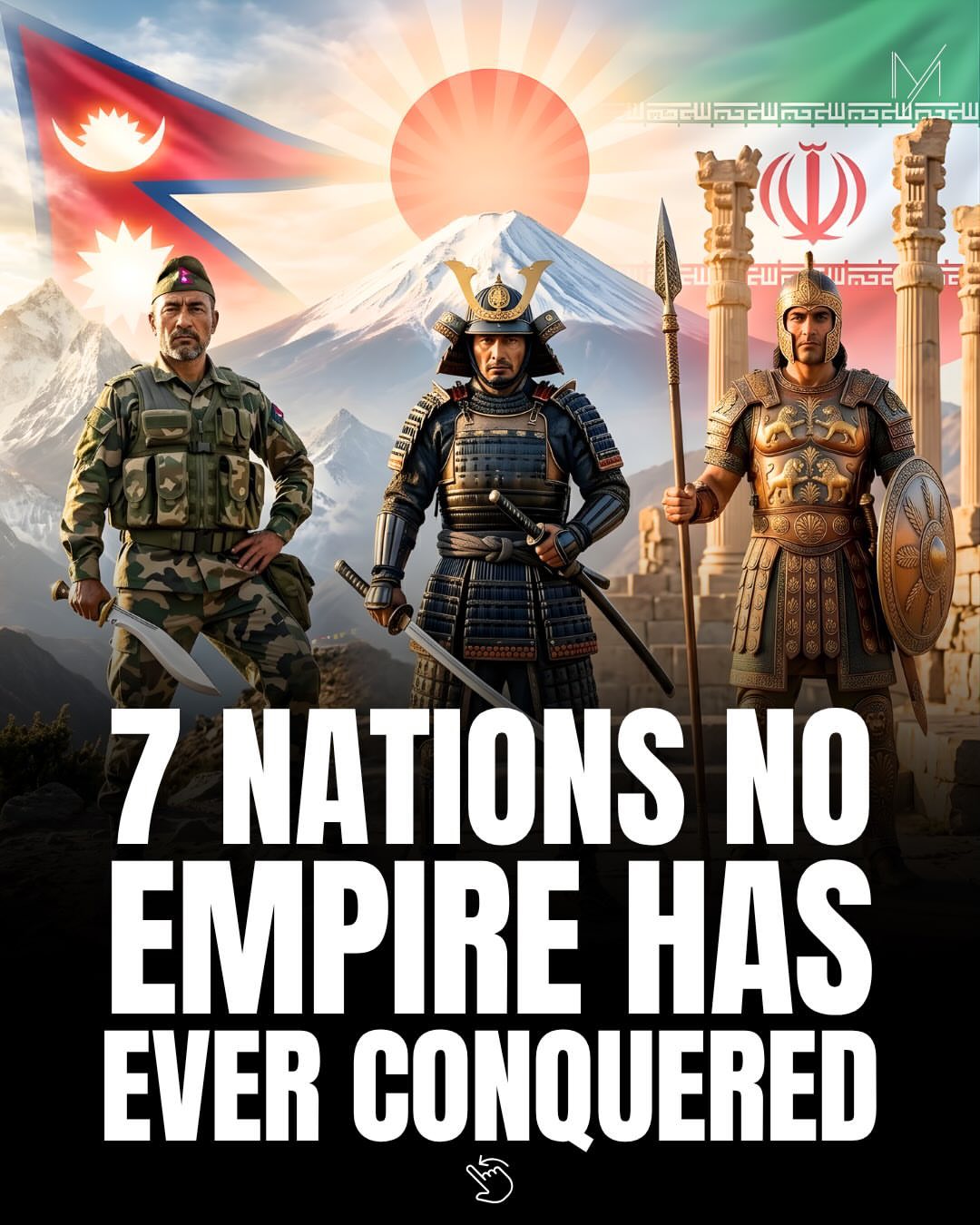
A wave of historical reflection and geopolitical debate has emerged online following renewed global attention on Iran, with commentators highlighting the country’s long-standing resistance to foreign domination and placing it among a group of nations often described as “unconquered.”
The narrative, which has gained traction across social media platforms, argues that Iran’s current posture on the global stage is rooted in a deep historical legacy of survival and resilience. Analysts say the renewed interest is prompting many to revisit world history and reassess the dynamics of empire, resistance, and national sovereignty.
Historically known as Persia, Iran boasts a civilization that spans thousands of years, with cultural and political continuity that has endured invasions, dynastic changes, and geopolitical shifts. While parts of Persia were occupied at various points—such as during incursions by the Mongols and later foreign interventions—historians note that the country maintained a distinct identity and was never permanently colonized in the way many other regions were.
The discussion has also drawn comparisons with other nations frequently cited as having resisted conquest. Vietnam, for instance, is often referenced for its military victories against powerful forces, including the Mongol invasions, French colonial rule, and later conflicts involving the United States and China.

Similarly, Afghanistan has long been described as the “graveyard of empires,” having resisted control by the British Empire, the Soviet Union, and more recently, a prolonged U.S.-led intervention.

In Africa, Ethiopia stands out for its successful resistance against European colonization, most notably its victory over Italian forces at the Battle of Adwa in 1896—a defining moment in the continent’s anti-colonial history.


Asian powers such as Japan and Thailand are also frequently mentioned. Japan’s rapid modernization during the Meiji era enabled it to avoid colonization and instead emerge as a global power, while Thailand (formerly Siam) skillfully navigated colonial pressures through diplomacy, maintaining its sovereignty as European powers divided much of Southeast Asia.

Geography has also played a critical role in shaping national resilience. Nepal, protected by the formidable Himalayas, managed to preserve its independence despite being surrounded by powerful empires.
However, historians caution against oversimplifying the concept of “unconquered nations.” Many of these countries experienced periods of occupation, external influence, or internal upheaval, even if they were not formally colonized. The idea, they argue, should be understood within a broader historical context rather than as an absolute classification.
The renewed focus on these nations comes at a time of shifting global power dynamics, where historical narratives are increasingly being used to frame modern political positions. Analysts suggest that such discussions reflect a growing desire among nations and their citizens to reclaim historical identity and assert sovereignty in a multipolar world.
While the claim that certain nations were “destined to never be conquered” remains a subject of debate, there is little doubt that their histories of resistance continue to inspire conversations about resilience, independence, and the enduring impact of the past on present-day geopolitics.
As global audiences engage with these narratives, experts emphasize the importance of balanced historical understanding—one that recognizes both the triumphs and complexities that have shaped nations across centuries.


