

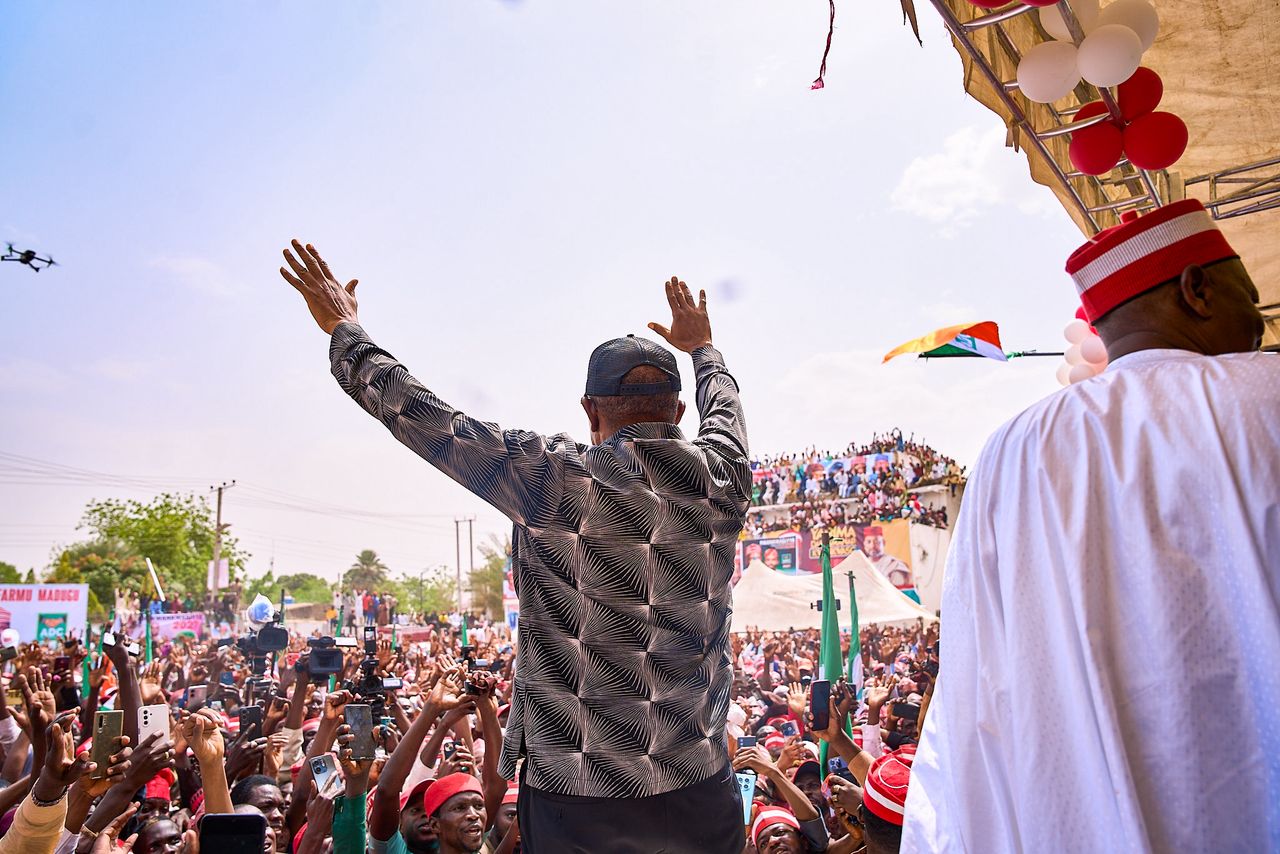
Nigeria’s political landscape is rapidly evolving ahead of the 2027 general elections, with Peter Obi emerging as a major opposition figure attracting support across northern and southern states. Sources indicate that key political figures—including Bala Mohammed of Bauchi State, Seyi Makinde of Oyo State, Siminalayi Fubara of Rivers State, and Hyacinth Alia of Benue State—are actively exploring alternative alignments, with the African Democratic Congress (ADC) emerging as a preferred platform.
Political analysts suggest that these consultations signal the gradual formation of a two‑bloc system, a scenario that could fundamentally reshape the country’s traditionally fragmented political environment. While APC under President Bola Ahmed Tinubu has sought to consolidate power, opposition figures are strategically positioning themselves to present a credible challenge in 2027.
The northern political scene is further complicated by the enduring influence of the Kwankwasiyya movement, led by former Kano State governor Rabiu Musa Kwankwaso. In Kano, the movement has effectively mobilized grassroots support, consolidating the opposition and demonstrating that Tinubu’s APC faces serious resistance in a key northern stronghold. Observers describe this as a symbolic “lockdown” of Kano by the Kwankwasiyas, which could have ripple effects across northern political alignments.
Adding to the growing sense of APC vulnerability, former Kaduna State governor Nasir El‑Rufai has publicly stated that “there is indeed no pathway for Tinubu APC 2027,” citing insecurity, economic challenges, and governance gaps as major impediments to the party’s prospects. El‑Rufai went further, suggesting that under the current trajectory, Tinubu would be “lucky to come third,” reflecting a rare admission of weakness from a former ally and highlighting internal skepticism about APC’s ability to maintain national dominance.
Political commentators note that the convergence of Obi’s growing popularity, northern realignments, and Kwankwasiyya grassroots mobilization is creating a new balance of power in Nigerian politics. While the APC remains the ruling party, the widening opposition coalition is increasingly positioning itself as a viable alternative, capable of challenging Tinubu’s vision of consolidating a dominant one-party system.
As the 2027 elections approach, alliances are shifting, loyalties are being tested, and voter sentiment is becoming increasingly decisive. For Obi and the opposition, the task ahead is to maintain unity and momentum; for Tinubu and the APC, it is a test of whether incumbency and organizational strength can withstand the mounting political realignments and growing public skepticism.
Nigeria, once again, stands at a crossroads where the next election may redefine the nation’s political trajectory and the viability of true multiparty democracy.
Meanwhile, in Kano: Kwakwasiyas Release New Anthem, Target Governor Abba. In a dramatic political statement from Kano, supporters of the Kwankwasiyya movement, popularly known as Kwakwasiyas, have released a new anthem titled “Pele-daya ne.” The song, which has quickly gained traction across social and traditional media, carries a clear political message aimed at Governor Abba, suggesting he is a “one-term governor” for allegedly betraying Rabiu Musa Kwankwaso and the Kwankwasiyya movement.
Observers say the anthem is both a cultural and political tool, designed to consolidate grassroots sentiment and signal continued loyalty to Kwankwaso amid growing defections and realignments ahead of the 2027 elections. Analysts note that such moves are emblematic of the Kwankwasiyya movement’s enduring influence in Kano, where it continues to shape voter attitudes and challenge perceived political opportunism.
The release of “Pele-daya ne” underscores the deepening tensions between Governor Abba and Kwankwaso loyalists, highlighting the high-stakes nature of northern political loyalty and grassroots mobilization. With Kano being a pivotal state in national politics, this musical intervention is being interpreted as both a warning and a rallying cry ahead of the next electoral cycle.
Political commentators suggest that while the song may appear symbolic, it reflects a broader strategy by the Kwakwasiyas to assert their relevance and influence voter behavior in the state.


