

ABUJA — Donald Trump does not need to travel to Nigeria to exercise influence over Nigeria. His administration can achieve much of that influence through trade policy, security cooperation, investment, access to strategic resources and diplomatic pressure, while influential intermediaries with deep Nigerian connections help open doors in Abuja.
At the centre of one such emerging controversy is Massad Fares Boulos, the Lebanese-born businessman and senior Trump adviser whose longstanding commercial connections to Nigeria have placed him in an unusual position at the intersection of business and American foreign policy. The questions surrounding Boulos are therefore bigger than one businessman, one company or one infrastructure project. They go to the heart of a more fundamental question: Is Nigeria negotiating with the United States as an equal strategic partner, or is Washington increasingly using Nigeria’s economic vulnerabilities, security challenges and natural resources to advance American interests?
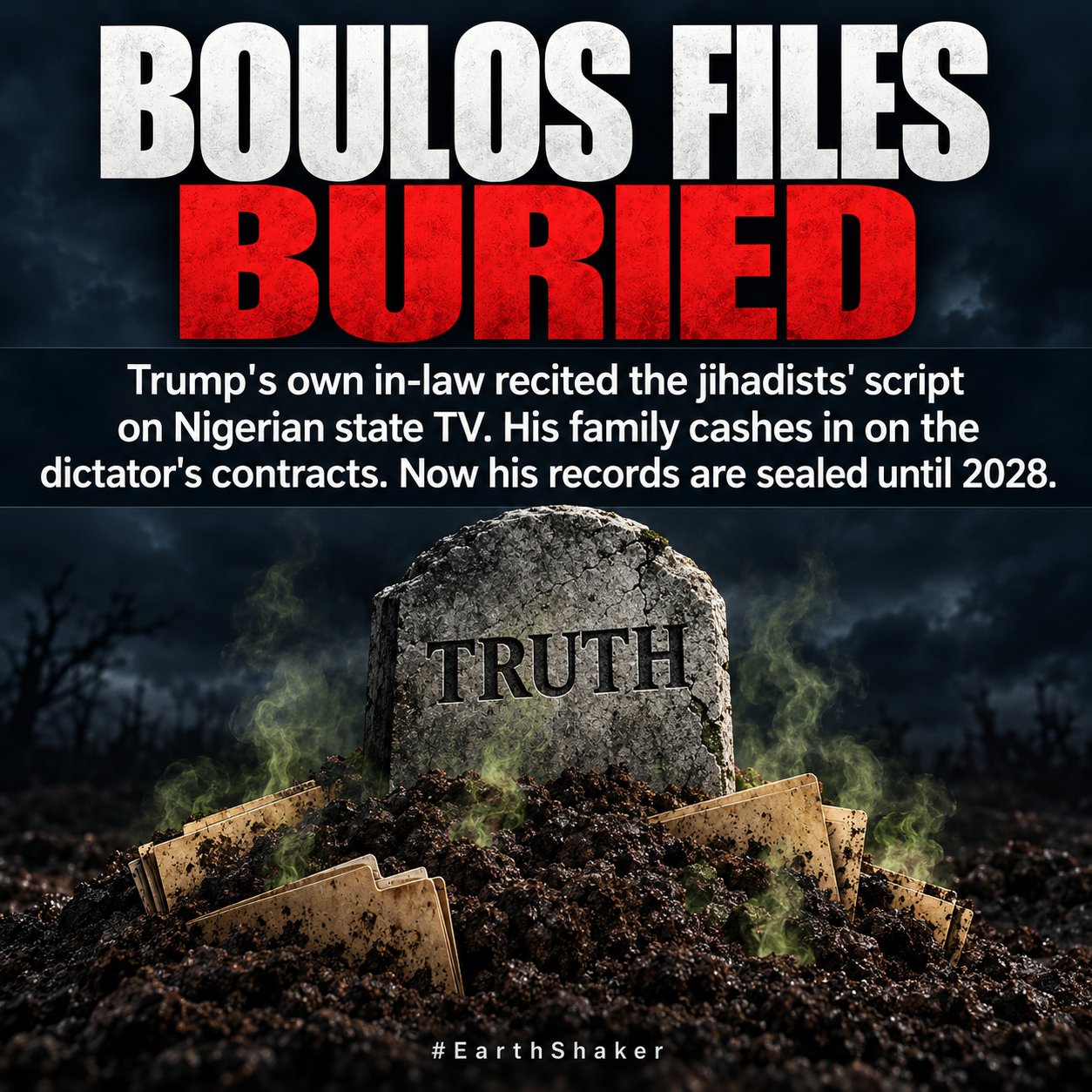
Boulos has longstanding business interests in Nigeria and has been associated with SCOA Nigeria Plc, a company involved in heavy-duty trucks and industrial equipment. His profile rose considerably after his appointment to a senior Trump administration role covering Africa and the Middle East. His proximity to the Trump family is also well known. His son, Michael Boulos, is married to Tiffany Trump, the daughter of President Donald Trump.
That combination — Nigerian business experience, proximity to the Trump family and a senior role in American foreign policy — makes the Boulos story particularly significant. It raises legitimate questions about transparency, potential conflicts of interest and the boundaries between private commercial interests and public diplomatic responsibilities.
Reports have linked SCOA Nigeria with the supply of equipment to Hitech Construction Company, a division of the Chagoury Group, in connection with the Lagos-Calabar Coastal Road. The reports generated controversy and allegations concerning whether Boulos or businesses associated with him benefited from the massive infrastructure project.
There is, however, an important qualification. Boulos, members of his family and SCOA Nigeria have denied the allegations and threatened legal action over publications they considered defamatory. No conclusion of criminal wrongdoing should therefore be drawn merely from the allegations. The appropriate journalistic approach is to distinguish between claims requiring investigation and facts that have been independently established.
The legitimate question is not whether an accusation automatically establishes guilt. It does not. The legitimate question is whether the public has enough information to understand the boundaries between Boulos’s private Nigerian business interests and his responsibilities as a senior U.S. presidential adviser.
That question becomes even more important as Washington and Abuja deepen cooperation in infrastructure, energy, trade and security.
Trump does not need to exploit Nigeria directly in the traditional sense. The modern form of geopolitical influence is rarely colonial in appearance. It does not necessarily involve troops occupying government buildings or foreign officials running ministries. It can operate through economic dependence, trade arrangements, strategic investments, security relationships, diplomatic pressure and control over access to capital and technology.
This is where the Trump administration’s approach becomes important. Trump has repeatedly demonstrated a transactional approach to international relations, in which tariffs, investment decisions, financial power and security relationships can become instruments of American foreign policy. For Nigeria, that presents both opportunities and risks.
Washington wants reliable partners in Africa. Nigeria, with its huge population, large economy, oil and gas reserves, strategic location and potentially valuable mineral resources, is too important to ignore. But what America considers a strategic opportunity, Nigeria must also examine from the perspective of national economic sovereignty.
The global competition for critical minerals has transformed Africa’s natural resources into an even more valuable geopolitical asset. Washington is seeking to diversify strategic supply chains and reduce dependence on China. Nigeria, meanwhile, possesses significant mineral resources that could become increasingly important to global industries.
This raises a critical question: Will Nigeria merely export its resources, or will Nigerians participate meaningfully in the wealth created from them?
If American or other foreign companies extract Nigerian minerals, ship them abroad, process them elsewhere and return finished products to Nigeria at many times the original value, Nigeria could once again find itself trapped in the familiar cycle of exporting raw materials and importing wealth. That would be resource dependence dressed up as foreign investment.
Security provides another avenue through which external influence can develop. Nigeria faces terrorism, banditry, kidnapping, communal violence and other security threats and consequently needs international cooperation, intelligence, equipment and training.
But dependence can create leverage. When a powerful country provides security assistance to a weaker partner, it naturally acquires influence over that partner’s strategic choices. Nigeria must therefore ask whether security cooperation is producing a stronger Nigerian security architecture or merely creating greater dependence on foreign powers.
Trade provides another instrument of leverage. The United States is a major destination for Nigerian exports, while Nigeria remains heavily dependent on imports and foreign currency. Tariffs or restrictions imposed by Washington can consequently affect Nigerian businesses, government revenue, employment and foreign exchange.
This is the essence of modern economic power. A country does not have to threaten another country militarily when it can influence the cost of access to its market, capital, technology and financial system.
For Nigeria, the lesson should be clear: the country must never negotiate from desperation.
There is also another dimension to the story — the intensifying strategic competition between the United States and China. Washington wants to prevent Beijing from dominating critical minerals, infrastructure, telecommunications and strategic markets across Africa.
Consequently, some American initiatives in Africa may serve two purposes simultaneously: promoting American commercial interests while limiting Chinese influence.
Nigeria must therefore avoid becoming a chessboard on which Washington and Beijing compete for geopolitical advantage. Nigeria should trade with America. It should trade with China. It should trade with Europe, India, the Middle East and every other serious economic partner. But Nigerian interests must remain at the centre of Nigerian foreign policy.
The greatest danger is not American investment itself. Nigeria desperately needs investment. The danger is an unequal economic relationship in which Nigeria supplies crude oil, gas, minerals, agricultural commodities, labour and market access, while foreign partners retain the greater share of processing, technology, financing, intellectual property and high-value employment.
That model does not develop a country. It develops a market for other countries.
Nigeria’s negotiations with foreign governments and corporations should therefore demand local processing, technology transfer, Nigerian ownership, local employment, transparent contracts and measurable economic benefits.
This is why the Boulos story deserves public scrutiny. The issue is not about demonising a Lebanese-American businessman because he has Nigerian business interests. Nor is it about automatically accepting allegations against him as fact. It is about asking whether the Nigerian public can independently determine where private commercial interests end and public diplomatic responsibilities begin.
When an individual with longstanding commercial connections to Nigeria occupies a powerful position within the American administration, transparency becomes particularly important.
Nigeria should know what interests the official has in Nigeria, what companies or assets he controls or influences, what ethical safeguards govern his official dealings with Nigeria, whether potential conflicts are disclosed and who benefits from major investment and infrastructure arrangements.
Above all, Nigerians deserve to know whether national interests are being adequately protected.
These are not anti-American questions. They are questions any responsible sovereign country should ask.
Nigeria must also stop confusing friendship with foreign policy. International politics has no permanent friendships; it has permanent interests. America will pursue American interests. China will pursue Chinese interests. Britain will pursue British interests. Nigeria must pursue Nigerian interests.
The mistake would be to interpret diplomatic smiles, presidential handshakes and investment announcements as proof that foreign governments are acting primarily for Nigeria’s benefit. They may be partners, but they are strategic partners pursuing their own national objectives.
Nigeria must do the same.
A confident Nigerian government can turn foreign competition into an advantage by forcing competing powers to offer better terms. Nigeria can welcome investment while insisting that its resources are processed locally, that foreign technology comes with meaningful knowledge transfer, that capital creates Nigerian jobs, that infrastructure contracts are transparent and that security cooperation strengthens Nigeria’s own capacity.
The Boulos File, therefore, is bigger than Massad Boulos. It is about the architecture of modern power. It is about how influence can travel through boardrooms instead of barracks, through investment agreements instead of occupation, through tariffs instead of blockades and through diplomatic relationships instead of colonial governors.
Trump does not need to come to Abuja to influence Nigeria. American economic power, Nigerian dependence, strategic resources, security vulnerabilities and political access can do much of the work.
But that does not mean Nigeria is powerless.
A sovereign and strategically confident Nigeria can negotiate from strength. It can make foreign powers compete for access to its vast market and resources while ensuring that Nigerians receive a fair share of the value created.
The real question behind the Boulos File is therefore not simply whether America is Nigeria’s friend. It is whether Nigeria is sufficiently organised, transparent and strategically confident to ensure that every international partnership ultimately serves the Nigerian people.
Nigeria’s resources must first serve Nigerians.


