

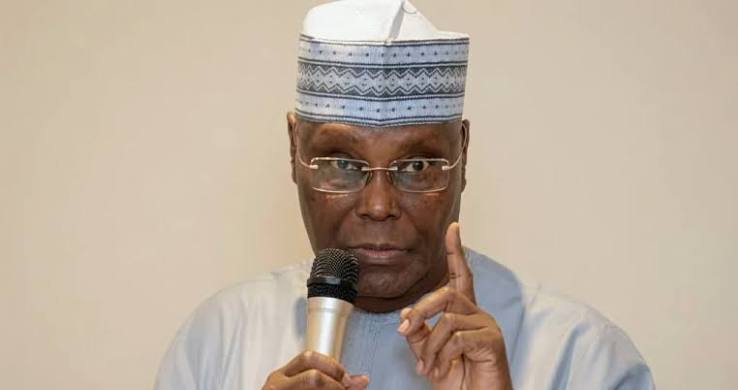
Former Vice President and African Democratic Congress (ADC) presidential candidate Atiku Abubakar has described the reported ₦266.07 billion net outflow from Nigeria’s equities market in the first seven months of 2026 as a sign of declining investor confidence in the country’s economy.
According to data cited by Atiku’s media team, foreign investors brought ₦513.36 billion into the Nigerian equities market between January and July but withdrew ₦779.43 billion, resulting in a net outflow of ₦266.07 billion. The figures were attributed to data from the Nigerian Exchange.
Atiku said the development was more than an investment statistic, arguing that it reflected investors’ assessment of Nigeria’s economic direction under President Bola Tinubu.
“This is not merely an investment statistic. It is a confidence verdict on the Tinubu economy,” Atiku said.
He linked the capital outflow to other economic pressures, including rising government borrowing and difficult financing conditions for businesses. Atiku also cited the reported ₦24.7 trillion domestic borrowing between January and August 2026, arguing that increased government borrowing could crowd out private-sector access to credit.
The former vice president further argued that businesses and households were struggling with high operating and living costs while foreign investors were reducing their exposure to Nigerian assets.
The development is significant because sustained foreign portfolio outflows can affect liquidity and investor sentiment in the capital market. However, portfolio investment movements alone do not provide a complete picture of the Nigerian economy. Recent economic assessments have also pointed to improvements in foreign-exchange stability, inflation and external reserves, while noting continued pressure on households and businesses.
Atiku called for policies aimed at restoring investor confidence, lowering business costs and encouraging private-sector-led economic growth.
Nigeria’s equities market remains an important channel for domestic and foreign capital, while the government continues its broader economic reform programme.


