

Katsina, Nigeria 2nd September 2026
There is something deeply troubling about the reported decision of the Nigeria Police Force to accuse a citizen of treasonable felony over the alleged destruction of a billboard bearing President Bola Tinubu’s image. The development raises serious questions about proportionality, due process and the proper application of Nigeria’s criminal laws.
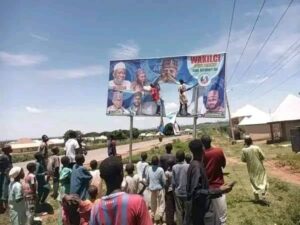
If the allegation is simply that the man destroyed or damaged a political billboard, the Nigeria Police owe Nigerians a clear explanation: under what specific provision of Nigerian law does such an act amount to treasonable felony? The public deserves to know the legal foundation of such an extraordinary charge and the evidence connecting the alleged act to an offence against the constitutional order.
This is not an argument in support of vandalism. Nobody should be permitted to destroy another person’s property with impunity. If a citizen has committed an offence, the law should take its course. However, the law must be applied proportionately, objectively and within the limits prescribed by statute.
Treasonable felony is not an ordinary property offence, nor should it become a convenient legal label attached to every act considered offensive to the government or a powerful political figure. If the police possess evidence of conduct beyond the alleged destruction of the billboard, Nigerians should be told what that evidence is.
The matter becomes even more disturbing when placed against Nigeria’s broader political and security environment. We live in a country where opposition parties and political movements have complained of restrictions on peaceful rallies, alleged disruption of opposition activities by political thugs, and controversial billboard and political advertising charges that critics say create unnecessary barriers to political participation.
Yet, when an alleged act involving a political billboard occurs, the police suddenly appear to have discovered an extraordinary zeal for defending political property. How did the police suddenly find their voice against the weak?
Where is this same urgency when citizens are kidnapped? Where is the same determination when communities are attacked? Where is the same institutional confidence when Nigerians demand protection from terrorism, banditry, kidnapping and other violent crimes?
The Nigerian people deserve a police institution that protects citizens equally—not one that appears, rightly or wrongly, to be more aggressive when the interests of the politically powerful are involved.
It is particularly baffling that an alleged billboard offence could attract the language of treasonable felony in a country still struggling with serious security challenges. Nigerians expect security agencies to devote their resources and attention to protecting lives, communities and critical infrastructure from genuine threats to national security.
The credibility of law enforcement depends not merely on its ability to arrest citizens, but on its ability to distinguish between different offences and apply the law without fear, favour or political consideration.
The fundamental question is therefore not whether a billboard should be destroyed. It should not. The fundamental question is whether the alleged destruction of a billboard, standing alone, can legitimately be elevated to treasonable felony without evidence of an intention or act directed at unlawfully overthrowing or undermining constitutional government.
If the police have such evidence, Nigerians deserve to see the legal basis of the charge. If they do not, then the decision raises legitimate concerns about legal overreach, intimidation and possible abuse of criminal law.
A democracy cannot survive when citizens begin to believe that ordinary political disagreement or acts of vandalism can suddenly be transformed into grave offences simply because they involve the image or interests of those in power.
Political billboards are advertisements. They are not the Constitution.
President Tinubu is a constitutional office holder, not a political monarch whose campaign posters automatically acquire the status of national sovereignty. The police must therefore be careful not to confuse political opposition, criticism of government, destruction of property and treason. These are distinct legal and political questions requiring distinct legal treatment.
Nigeria has witnessed enough examples of selective outrage. When opposition groups seek to exercise their right to peaceful assembly, the state has a responsibility to protect them. When political thugs disrupt rallies, the perpetrators should face the law. When campaign advertisements are vandalised, the law should respond appropriately. And when terrorists attack communities, the security agencies must respond decisively.
The law cannot be strong when dealing with the powerless and suddenly become complicated when dealing with the powerful.
This is why Nigerians are entitled to demand transparency from the police in this case. Tell Nigerians the offence. Tell Nigerians the law. Tell Nigerians the evidence. And, most importantly, tell Nigerians why an alleged billboard offence has suddenly acquired the vocabulary of treason.
A country that criminalises every form of political dissent eventually creates more resentment than order. Nigeria needs law enforcement that is firm but fair, powerful but restrained, and politically neutral.
Otherwise, we risk becoming a country where the law is no longer judged by its consistency, but by who is standing on the other side of it.
Nigeria must apply the law—not political convenience.


