

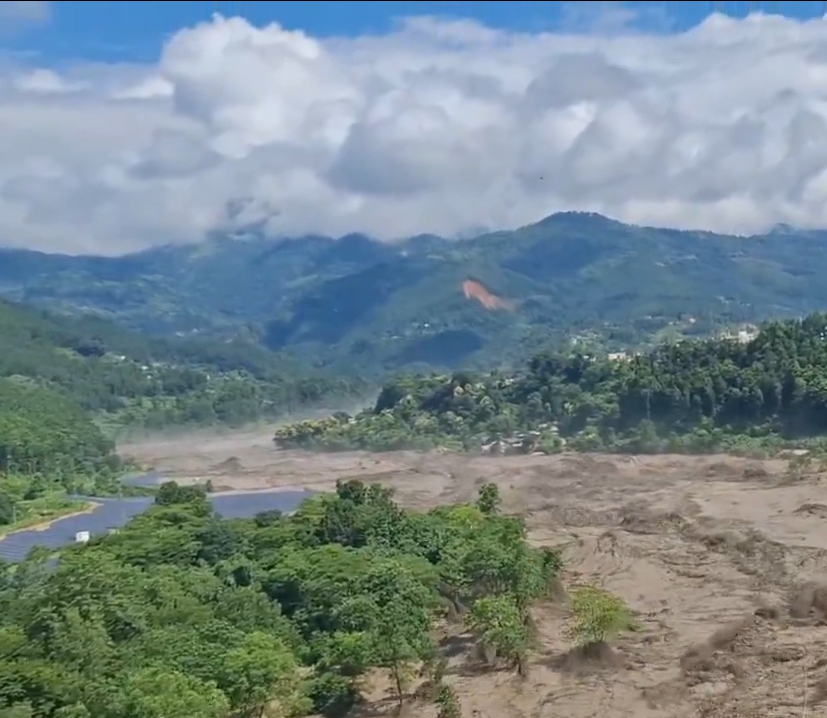
A catastrophic flash flood and landslide disaster has struck Nepal and adjoining areas of Tibet, leaving hundreds dead and thousands of people missing as rescue teams race against time to locate survivors.
The disaster occurred on Wednesday, August 26, after the collapse of a glacier in the Himalayas triggered a massive surge of water, mud, rocks and debris through mountain river systems along the Nepal–China border. Entire communities, roads, bridges and border facilities were swept away.
The latest reports put the combined death toll at more than 600, while roughly 2,400–3,000 people remain unaccounted for, although figures continue to change as authorities reconcile reports from affected areas.
More than 90,000 people have been affected, according to the Red Cross, while critical infrastructure—including bridges, roads and hydropower facilities—has suffered extensive damage.
Rescue operations have been severely hampered by difficult Himalayan terrain, heavy mud, damaged roads and the threat of additional flooding. At one hydropower facility in Nepal, more than 100 people are believed to be trapped in mud-filled tunnels, prompting urgent efforts to reach them.
The tragedy has also affected foreign nationals, including tourists and pilgrims travelling toward the sacred Mount Kailash region. Families across several countries are anxiously awaiting information about relatives who remain missing.
Nepal has begun accepting specialist international assistance, with rescue and technical teams from countries including India, China, South Korea and Australia offering support.
Authorities and rescuers remain focused on finding survivors as the crucial early rescue window narrows.
The Himalayan disaster is already being described as one of the most devastating flood catastrophes to hit the region in recent years.


