

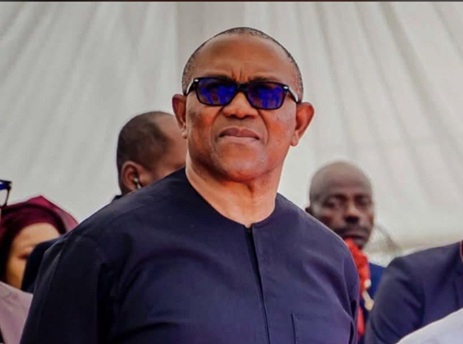
Former Anambra State Governor and 2023 presidential candidate, Peter Obi, has reignited debate over Nigeria’s political future after suggesting that the outcome of the 2023 presidential election and the developments that followed under Presidents Muhammadu Buhari and Bola Tinubu could be viewed as part of a divine plan for the country.
Obi’s remarks have added fresh momentum to discussions about the possibility of a stronger opposition alliance ahead of the 2027 presidential election, particularly calls for former Vice President Atiku Abubakar to work with him in a bid to unseat the ruling All Progressives Congress.
The 2023 election remains central to the argument over opposition cooperation. Bola Tinubu was declared winner with 8.79 million votes, while Atiku Abubakar received 6.98 million and Obi polled 6.10 million votes. The three leading opposition figures were separated by a relatively narrow margin compared with the combined strength of their individual vote totals.
Obi has continued to argue that the events of the past several years should compel Nigerians to critically assess the direction of the country and the quality of governance delivered since the 2023 election.
His comments come as opposition politicians intensify efforts to develop a strategy capable of challenging the APC in 2027. In April, major opposition figures, including Obi and Atiku, participated in an opposition summit in Ibadan where parties declared their intention to work towards presenting a single presidential candidate for the 2027 election.
The search for a unified opposition candidate has been driven by the recognition that a divided opposition could once again allow the governing party to benefit from vote splitting. A June 2026 political forecast by CellHub similarly argued that opposition fragmentation was strengthening Tinubu’s prospects for re-election.
Supporters of an Obi-Atiku understanding have therefore renewed calls for the former vice president to subordinate individual ambitions to a broader opposition strategy. They argue that combining political structures, regional networks and voter bases could create a formidable challenge to the APC.
However, such an alliance remains politically complicated. Atiku has previously indicated that he is open to genuine opposition cooperation, but the question of who should lead a unified ticket remains one of the most difficult issues confronting opposition negotiations. In August, Atiku said he was favourably disposed to initiatives aimed at advancing opposition cooperation ahead of the 2027 polls.
Obi’s supporters, meanwhile, point to his performance in the 2023 election as evidence of his growing appeal beyond his traditional political base. He won 11 states and the Federal Capital Territory and secured particularly strong results in parts of the South-East and South-South, while also attracting substantial support in urban centres outside those regions.
The economic situation has become another major factor in the emerging political contest. The removal of the petrol subsidy and the liberalisation of the foreign exchange market under Tinubu triggered significant economic adjustments and contributed to a sharp increase in the cost of living.
Atiku has criticised aspects of the government’s economic policies and has advocated measures aimed at reducing the burden on Nigerians, including a return to a more regulated approach to fuel pricing. Obi, on the other hand, has continued to emphasise prudent governance, production, human capital development and greater investment in young Nigerians.
Beyond the economy, insecurity, electricity shortages, unemployment and declining household purchasing power remain major concerns among voters. These issues are expected to shape the political conversation as parties begin positioning themselves for the 2027 contest.
Yet, analysts and political observers remain divided over whether opposition leaders can overcome longstanding rivalries and agree on a single candidate. Previous attempts at opposition cooperation have repeatedly been weakened by disagreements over leadership, party structures, regional interests and presidential ambitions.
The challenge is therefore not simply to unite opposition politicians on paper but to create an electoral structure capable of translating that unity into votes across Nigeria’s diverse political regions.
For Obi, the argument that the events since 2023 may have served as a revelation of Nigeria’s deeper problems provides a broader political message: that voters should judge leaders not merely by campaign promises, but by the consequences of their policies on ordinary citizens.
With the 2027 election approaching, the opposition’s ability to convert public frustration into a coherent political alternative will be crucial. Whether Obi, Atiku and other opposition leaders can overcome their differences and build a genuinely unified platform may ultimately determine whether the APC faces a fragmented challenge or the most coordinated opposition campaign since 2023.