

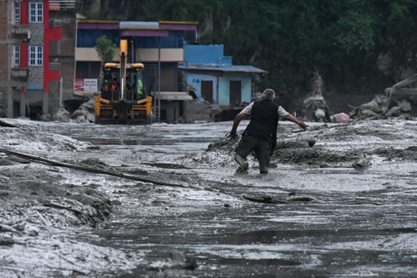
At least 160 people have died and another 647 remain missing after catastrophic floods and landslides swept through Himalayan communities along the Nepal-Tibet border, destroying homes, roads, bridges and vital infrastructure.
The disaster struck on Wednesday after a sudden surge of floodwater, mud and debris swept through valleys on both sides of the China-Nepal border. Nepal has reported 157 deaths, while Chinese state media confirmed three deaths in Tibet, bringing the combined death toll to 160.
The number of missing people has also risen sharply, with Nepali authorities reporting 391 missing people in Nepal, including 291 foreigners. Chinese state media reported another 265 missing in Tibet.
The scale of the disaster has complicated rescue operations, with damaged roads, destroyed bridges and disrupted communications cutting off several affected communities. Rescue teams are working to reach areas where survivors may still be stranded, while authorities continue searching for hundreds of people whose whereabouts remain unknown.
Nepal’s Rasuwa district has emerged as one of the worst-affected areas. The powerful floodwaters swept through settlements and damaged major transport routes connecting Nepal with Tibet. Infrastructure including hydropower facilities, roads and bridges was severely affected, according to reports from the disaster zone.
The disaster has also raised international concern because a large number of foreign nationals were among those reported missing. Tourists, trekkers and pilgrims travelling through the Himalayan region were caught in the disaster, with missing nationals reportedly including people from India, the United States, Australia, Britain and Canada.
Officials are still working to establish the precise circumstances that triggered the devastating surge. Initial reports suggested that an earthquake may have caused a landslide that blocked a river before the obstruction gave way. However, subsequent assessments indicated that a glacial collapse or the sudden movement of ice and rock may have played a major role in triggering the flood.
The event has renewed concerns about the vulnerability of Himalayan communities to climate-related disasters. Rising temperatures and the instability of glaciers and glacial lakes can increase the risk of sudden floods capable of sending enormous volumes of water and debris downstream.
The geography of the affected region has further complicated the emergency response. Steep valleys, destroyed roads and unstable terrain are making it difficult for rescue personnel to reach some locations. Helicopter operations have also faced challenges because of the extent of the destruction and difficult weather conditions.
Authorities in Nepal and China have continued rescue and recovery efforts while warning residents in vulnerable areas to remain alert to further flooding and landslides.
The disaster is already being described as one of the most severe natural catastrophes to hit the region in recent years. With hundreds still missing, officials fear that the death toll could rise as rescuers gain access to isolated communities and begin accounting for people who remain uncontactable.
For families across Nepal, Tibet and several countries whose citizens were travelling through the affected region, the immediate priority remains locating missing relatives and bringing survivors to safety.
As rescue operations continue, the scale of destruction serves as another stark reminder of the growing risks faced by communities living in the world’s most environmentally fragile and rapidly changing mountain regions.


