

As Nigeria enters another presidential election cycle, the debate over fuel subsidy is once again taking centre stage, raising fundamental questions about the country’s economic direction.
At the heart of the debate is a simple but consequential choice: should government continue using public funds to keep petrol prices artificially low, or should those resources be redirected towards building a productive economy and lifting citizens out of poverty?
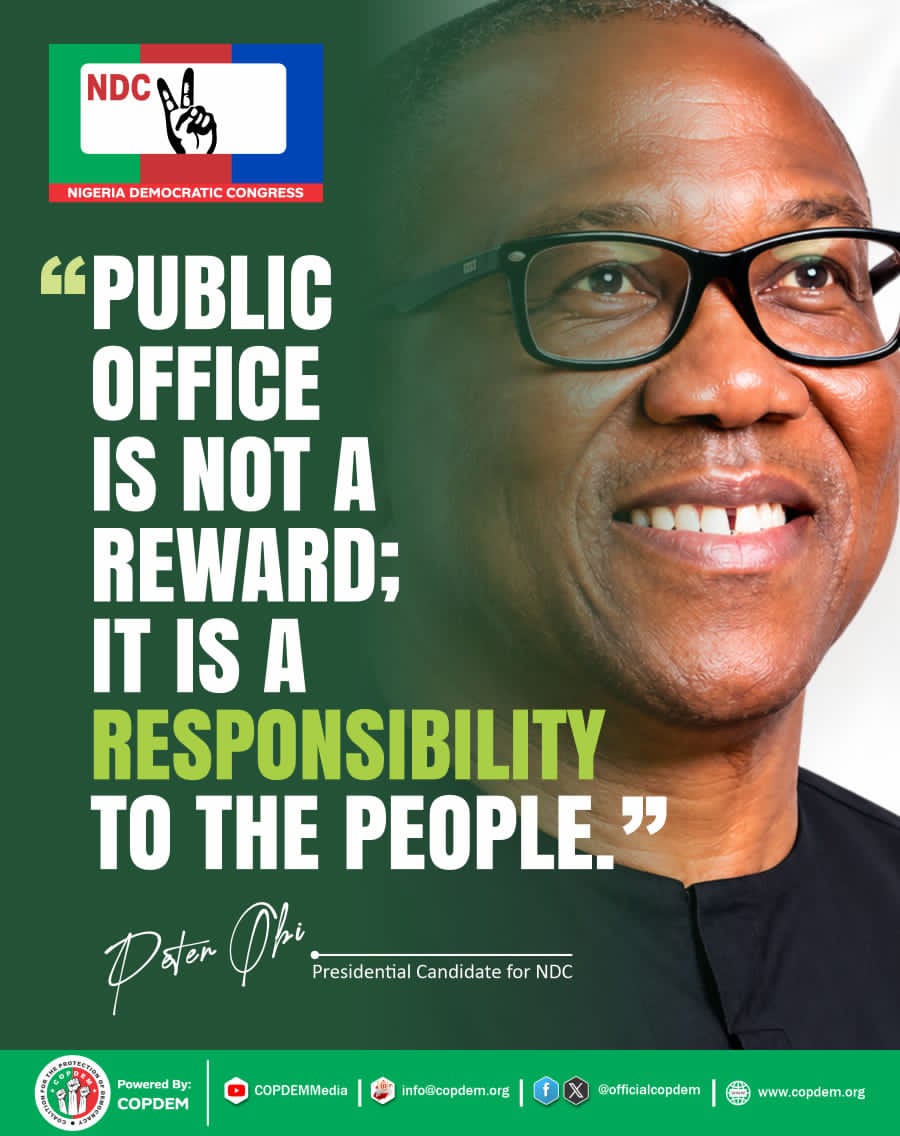
President Bola Ahmed Tinubu removed the petrol subsidy. Former Vice-President Atiku Abubakar has advocated its restoration. Peter Obi, however, has taken a different position: rather than simply returning to the old subsidy regime, Nigeria should reform the policy while ensuring that resources released through subsidy reform are transparently deployed to reduce poverty and strengthen economic productivity.
Of the three approaches, Obi’s position arguably deserves closer economic examination.
The Subsidy Question Is Bigger Than Petrol Prices
For years, Nigeria treated fuel subsidy as a form of social protection. The argument was straightforward: because petrol prices affect transportation, agriculture, manufacturing and household expenses, keeping petrol relatively cheap helps shield Nigerians from inflation.
There is truth in that argument.
But a universal petrol subsidy is a poor mechanism for transferring wealth to the poorest citizens.
A wealthy motorist, middle-class commuter, commercial operator and generator-dependent business can all benefit from subsidised petrol. Meanwhile, a poor Nigerian who owns neither a vehicle nor a generator may receive little direct benefit while still bearing the wider economic consequences of the policy.
The fundamental question should therefore be:
Is subsidising a commodity the most efficient way to subsidise the poor?
Increasingly, the answer is difficult to defend.
Tinubu’s Reform: Necessary but Incomplete
President Tinubu deserves recognition for taking a decision that successive administrations had repeatedly postponed.
The subsidy regime had placed considerable pressure on public finances and was accompanied by longstanding concerns about transparency, petroleum accounting, importation, smuggling and the administration of subsidy claims.
Removing the subsidy was therefore not, in itself, an irrational economic decision.
The problem was what followed.
For millions of Nigerians, subsidy removal became synonymous with a dramatic increase in the cost of living. Transportation became more expensive, food prices increased and businesses faced higher operating costs.
Families already struggling with declining purchasing power were pushed further towards the margins.
The central problem was not necessarily the decision to reform the subsidy system. It was the failure to establish a sufficiently credible and comprehensive social and economic transition programme capable of cushioning the immediate impact.
Government cannot ask citizens to absorb the pain of economic reform indefinitely without demonstrating corresponding benefits.
That is where the debate must move beyond the simplistic question of whether subsidy should exist.
Atiku’s Proposal: Attractive Politics, Difficult Economics
Atiku Abubakar’s advocacy for restoring fuel subsidy is politically understandable.
For citizens facing a severe cost-of-living crisis, cheaper petrol represents immediate and tangible relief. It is a message that requires little explanation.
But a presidential candidate must answer a more difficult question:
How will the subsidy be financed, and how will government prevent the structural problems associated with the previous system from returning?
Nigeria has already committed enormous public resources to maintaining artificially low fuel prices. The country has also faced controversies involving subsidy payments, petroleum imports, smuggling and opaque pricing arrangements.
Simply returning to the old model without fundamentally redesigning it could recreate the same problems.
More importantly, every naira committed to a universal petrol subsidy is a naira that cannot simultaneously be committed to other national priorities.
Government has limited resources.
It cannot spend the same naira twice.
Peter Obi’s Position Deserves Closer Examination
Peter Obi’s position is more nuanced than the simple claim that he merely supports subsidy removal.
His argument is essentially that Nigeria should move away from an inefficient universal subsidy while ensuring that resources released through reform are properly accounted for and redirected towards productive investment and targeted support for vulnerable Nigerians.
That distinction is critical.
There is a profound difference between saying:
“The subsidy has been removed; Nigerians must endure the consequences.”
And saying:
“The subsidy is unsustainable, but the resources released by reform must be converted into tangible economic and social benefits.”
The first amounts to austerity without a clear social bargain.
The second represents economic restructuring.
Nigeria needs the latter.
The Real Question Is What Happens to the Savings
The most important question arising from subsidy reform is not simply how much petrol costs.
It is:
What does Nigeria do with the money it no longer spends subsidising petrol?
If those resources disappear into government overheads, debt obligations, political patronage or poorly executed projects, Nigerians will understandably conclude that subsidy removal merely transferred the burden from government to citizens.
But if the resources are intelligently invested, the long-term outcome could be different.
Nigeria could direct substantial resources towards mass public transportation, electricity generation and distribution, agricultural productivity, healthcare, education, vocational training, industrial infrastructure and targeted social protection.
These investments can reduce the underlying cost of living rather than merely masking it.
Nigeria Should Subsidise Productivity, Not Consumption
This may be the most important principle in the debate.
Nigeria should gradually move from subsidising consumption to subsidising productivity.
The farmer needs affordable transportation, irrigation, storage and access to markets.
The manufacturer needs reliable electricity and efficient infrastructure.
The small business needs affordable capital and a predictable regulatory environment.
The student needs quality education and employable skills.
Young Nigerians need opportunities to acquire skills and participate meaningfully in the economy.
Poor households need targeted assistance that reaches them directly.
These interventions have a multiplier effect.
A petrol subsidy lowers the price of petrol.
Investment in productivity can increase incomes.
That is the distinction Nigeria must understand.
Targeted Intervention May Be More Effective
If subsidy removal creates hardship for vulnerable Nigerians, the answer should not necessarily be to subsidise petrol for everyone.
Government can instead direct support towards those most affected through affordable public transportation, targeted cash transfers, food security programmes, healthcare, education and employment initiatives.
Such programmes can be designed to reach citizens who actually need assistance rather than providing a blanket benefit that can disproportionately favour those who consume more fuel.
This is central to the economic argument behind Obi’s position.
The objective should not simply be to make petrol artificially cheap.
The objective should be to make Nigerians economically secure enough that petrol prices no longer determine whether a family can afford basic necessities.
But Obi Must Go Further
Supporting the principle behind subsidy reform should not mean giving any future government a blank cheque.
If Peter Obi seeks the presidency, he should be prepared to subject subsidy reform to the highest standards of transparency and accountability.
Nigerians should never again be told that enormous public resources have been saved without being shown precisely what happened to those savings.
Any administration implementing such a policy should establish a transparent mechanism for tracking subsidy-related fiscal savings.
Citizens should be able to determine:
how much was saved;
how much was spent;
where the money was spent;
which projects were funded;
how many citizens benefited; and
what measurable economic outcomes resulted.
The figures should be independently audited and publicly reported.
That would give subsidy reform something it has repeatedly lacked in Nigeria: a verifiable social contract between government and citizens.
The 2027 Election Must Be About More Than Petrol
The danger in an election-year subsidy debate is that politicians may reduce a complex economic question to a simple campaign slogan.
“Restore subsidy.”
“Remove subsidy.”
Neither slogan, by itself, constitutes an economic programme.
The real question is what kind of Nigerian economy each candidate intends to build.
Nigeria cannot sustainably borrow to subsidise consumption while failing to invest adequately in production.
It cannot continue importing what it has the potential to produce.
It cannot expect prosperity while millions remain outside productive economic activity.
And it cannot permanently shield citizens from the consequences of an inefficient economy without confronting the structural problems responsible for that inefficiency.
Nigeria needs to transition from an economy heavily dependent on distributing oil wealth to one capable of creating wealth.
That requires sustained investment in human capital, infrastructure, energy, agriculture, manufacturing, technology and enterprise.
The Choice Before Nigerians
Atiku’s proposal offers immediate political comfort: restore the subsidy and reduce the price Nigerians pay at the pump.
Tinubu’s policy removed the subsidy but has left many Nigerians questioning whether the economic sacrifice has translated into corresponding benefits.
Peter Obi offers a different proposition: do not simply return to the old subsidy system. Reform it, protect vulnerable citizens and ensure that resources released through reform are deployed towards building an economy capable of generating jobs, higher incomes and sustainable prosperity.
It is not necessarily the easiest political message.
But presidential leadership cannot always be about choosing the easiest message.
Sometimes leadership means confronting citizens with an uncomfortable economic reality while providing a credible path through it.
Nigeria’s problem is not simply that petrol is expensive.
Nigeria’s deeper problem is that too many Nigerians are poor.
The ultimate solution, therefore, cannot be a permanently cheaper litre of petrol.
It must be a more productive Nigerian economy in which citizens earn enough to afford basic necessities without depending indefinitely on government subsidies.
That is why Peter Obi’s position deserves serious national debate.
The objective of economic policy should not merely be to reduce what Nigerians pay for consumption.
It should be to increase the capacity of Nigerians to earn, produce and prosper.
If the resources released through subsidy reform can be transparently transformed into infrastructure, jobs, productive investment and targeted protection for vulnerable citizens, Nigeria may finally begin turning one of its most contentious economic challenges into an opportunity for structural transformation.
Daniel Elombah
August 2026


