

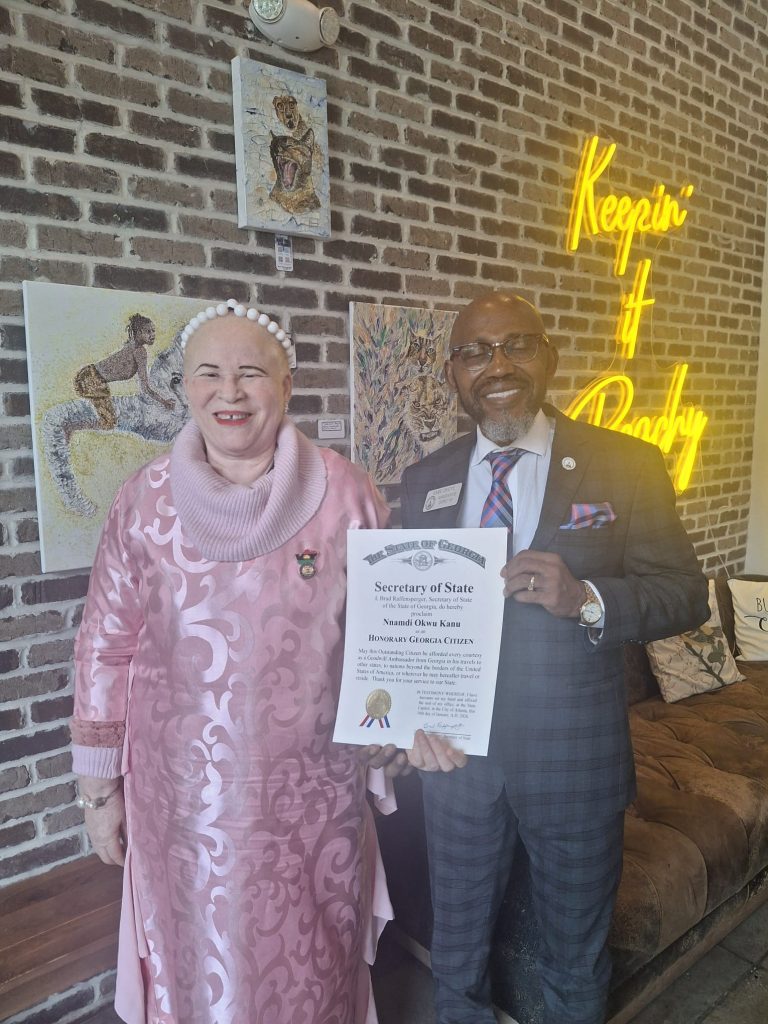
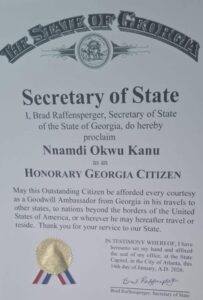
Reports that the U.S. State of Georgia has conferred honorary citizenship and goodwill recognition on Mazi Nnamdi Kanu, leader of the Indigenous People of Biafra (IPOB), have generated intense debate across legal, political, and diplomatic circles. While the development is unusual and symbolically significant, legal experts caution against conflating honorary recognition with substantive citizenship or judicial consequence.
From a publishing standpoint, it is important to clarify that honorary citizenship granted by a U.S. state is largely symbolic. Under the U.S. constitutional framework, citizenship is a federal matter, not within the powers of individual states. As such, Georgia’s action—however framed—does not confer U.S. nationality, diplomatic protection, immunity, or consular rights on Kanu. It does not grant residency, travel privileges, or legal standing before U.S. federal authorities.
On the question of legality, the recognition does not alter the jurisdiction or validity of Kanu’s ongoing case in Nigeria. His detention and prosecution remain matters under Nigerian law and the authority of Nigerian courts. International legal principles are clear that symbolic honours from subnational entities do not override the sovereignty of a state or invalidate domestic criminal proceedings. Therefore, claims that the development automatically weakens or nullifies the Nigerian government’s case have no firm legal foundation.
However, where the development carries weight is in the court of global opinion. Such recognition, even if honorary, amplifies international attention on Kanu’s detention, the circumstances surrounding his arrest and rendition, and broader concerns about human rights, due process, and political dissent in Nigeria. It provides moral and political leverage for advocacy groups seeking international scrutiny rather than a direct legal shield.
In effect, Georgia’s gesture—breaking from diplomatic convention—functions more as a political and symbolic statement than a judicial intervention. It does not affect the legality of the charges against Nnamdi Kanu, nor does it bind Nigerian courts or authorities. What it does achieve is renewed global focus on a case that has increasingly transcended national boundaries and entered the realm of international discourse.
As events unfold, the distinction between symbolic solidarity and enforceable legal consequence remains critical. For now, Georgia’s action may influence narratives and diplomacy, but it does not, in law, rewrite the status of Nnamdi Kanu’s case before Nigerian courts.


