

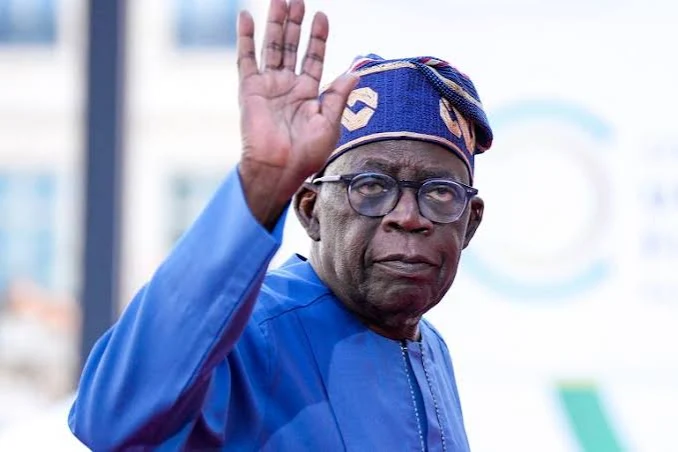
11 August 2026. Nigeria’s democratic credentials have come under renewed scrutiny after a new assessment by the Human Rights Foundation (HRF) classified the country as being ruled by a “fully authoritarian regime.”
The assessment, published on the foundation’s Tyranny Tracker platform and reported by The ICIR on August 6, 2026, evaluates countries against three broad indicators: electoral competition, freedom of dissent and institutional accountability. According to the report, Nigeria performed poorly across all three areas.
The HRF assessment comes more than two decades after Nigeria returned to civilian rule in 1999 and highlights what it describes as a progressive weakening of democratic institutions under successive administrations.
Executive power and weakened institutions
The foundation argued that successive Nigerian governments have increasingly consolidated power across the executive, legislature and judiciary, leaving inadequate checks on executive authority.
It also pointed to what it described as entrenched corruption, clientelism and impunity, alongside persistent insecurity and maladministration.
According to the assessment, Nigeria’s democratic deterioration is particularly troubling because the country has historically been regarded as a key democratic actor in Africa and experienced a peaceful transfer of power between governing and opposition parties in 2015.
2023 election under scrutiny
The report also criticised the conduct of the 2023 presidential election, which resulted in President Bola Ahmed Tinubu emerging as the declared winner.
HRF described the election as flawed, citing legal challenges, protests, election-related violence, alleged disenfranchisement and irregularities in the electoral process.
The foundation further alleged that more than one million voters were disenfranchised and that violence associated with the election claimed more than 100 lives.
These claims form part of the foundation’s broader argument that Nigeria’s electoral environment has become increasingly tilted in favour of the incumbent political establishment.
Opposition parties face mounting obstacles
Under its assessment of electoral competition, HRF alleged that opposition parties operate in an uneven political environment.
The report cited alleged restrictions on opposition campaigns, limited access to public facilities and state-owned media, high administrative costs and alleged interference by security agencies.
It further raised concerns about voting irregularities, delayed transmission of results, voter-register issues and what it described as politically influenced appointments to the Independent National Electoral Commission (INEC).
The foundation argued that these factors undermine the independence of the electoral management system and weaken public confidence in elections.
Crackdown on dissent and critical voices
HRF also raised concerns about the treatment of journalists, civil society organisations, activists and ordinary Nigerians who criticise government policies.
The assessment referenced arrests and detention of journalists during the August 2024 protests, prosecutions under the Cybercrimes Act and actions against labour leaders and activists.
It also criticised the government’s handling of the #EndBadGovernance protests, alleging excessive use of force and mass arrests.
The foundation further cited restrictions on critical expression, including the reported intervention by the National Broadcasting Commission over the broadcast of Eedris Abdulkareem’s protest song, Tell Your Papa.
Judiciary and legislative oversight
The report did not spare Nigeria’s judicial and legislative institutions.
HRF questioned the effectiveness of the judiciary as a check on executive power, alleging delays and dismissals in election-related and other cases challenging government actions.
It also raised concerns over alleged non-compliance with some judgments of the ECOWAS Court of Justice.
On the legislative front, the foundation cited the National Assembly’s handling of the March 2025 declaration of a state of emergency in Rivers State, particularly the use of a voice vote, which critics argued raised constitutional questions.
Culture of impunity
Another major concern identified by HRF is what it described as a persistent culture of impunity.
The organisation alleged that security personnel accused of human-rights violations have frequently escaped meaningful prosecution, reinforcing concerns about accountability within the security establishment.
The report therefore portrays Nigeria’s democratic challenge as extending beyond elections to encompass institutional independence, human rights, accountability and freedom of expression.
Government’s position
The assessment is not without contest.
The ICIR noted that the Nigerian government has previously rejected international criticism of its human-rights record and electoral management, maintaining that the country remains a constitutional democracy with functioning institutions.
Nevertheless, the HRF classification represents a serious warning about Nigeria’s democratic trajectory and is likely to intensify debate ahead of the 2027 general elections.
The central issue now is whether Nigeria’s political institutions can reverse the alleged erosion of democratic safeguards and restore public confidence in free elections, independent institutions, freedom of expression and genuine accountability.


