

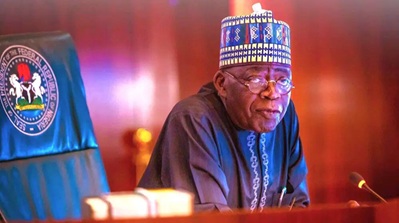
President Bola Ahmed Tinubu’s recent remarks on hunger in Nigeria have ignited fresh political debate, with opposition figures accusing the administration of insensitivity while supporters argue the President was merely acknowledging longstanding national challenges.
Speaking during a meeting with Catholic bishops in Abuja on July 28, 2026, President Tinubu stated that hunger had existed in Nigeria long before his birth and urged religious organisations, particularly churches, to continue supporting vulnerable citizens through charitable interventions and food assistance.
The President’s comments, however, drew swift criticism from former Anambra State Governor and Nigeria Democratic Congress (NDC) presidential candidate Peter Obi, who argued that the focus should not be on the historical existence of hunger but on the worsening economic realities confronting Nigerians today.
In a statement responding to the President’s remarks, Obi contended that available estimates indicate acute food insecurity has risen significantly since the current administration assumed office in 2023. He also expressed concern over increasing levels of extreme poverty, urging the government to adopt policies capable of reversing the trend.
According to Obi, leadership should be judged by measurable improvements in the welfare of citizens rather than by the challenges inherited from previous administrations.
He called for greater investment in agriculture, improved security, expanded support for small businesses, job creation, education and healthcare, arguing that these sectors remain essential to reducing poverty and strengthening food production.
The exchange comes against the backdrop of persistent economic challenges, including rising food prices, inflation and declining purchasing power, issues that continue to dominate national discourse.
Supporters of President Tinubu, however, defended his remarks, insisting that he was acknowledging the structural nature of Nigeria’s economic difficulties rather than dismissing the hardships currently experienced by citizens.
They argue that the administration inherited complex economic and security challenges that require sustained reforms and long-term policy implementation to resolve.
Government officials have repeatedly pointed to ongoing economic reforms, infrastructure development and agricultural initiatives under the Renewed Hope Agenda, maintaining that these measures are designed to stabilise the economy and improve living standards over time.
Political analysts observe that the differing interpretations of the President’s comments reflect the increasingly competitive political environment ahead of the 2027 general elections, where economic performance is expected to remain a central campaign issue.
They note that while political leaders often differ on the causes of Nigeria’s socioeconomic challenges, there is broad agreement that addressing food insecurity, unemployment and poverty should remain among the country’s highest policy priorities.
Economic experts also continue to advocate increased agricultural productivity, stronger security in farming communities, targeted social protection programmes and policies that stimulate private-sector investment as critical steps toward improving food availability and reducing hardship.
As political debate over the state of the economy continues, stakeholders have urged both government and opposition leaders to focus on practical solutions capable of improving the lives of millions of Nigerians facing rising living costs and economic uncertainty.
The controversy surrounding the President’s remarks has further underscored the growing prominence of economic issues in Nigeria’s political discourse as preparations for the next general elections gradually intensify.


